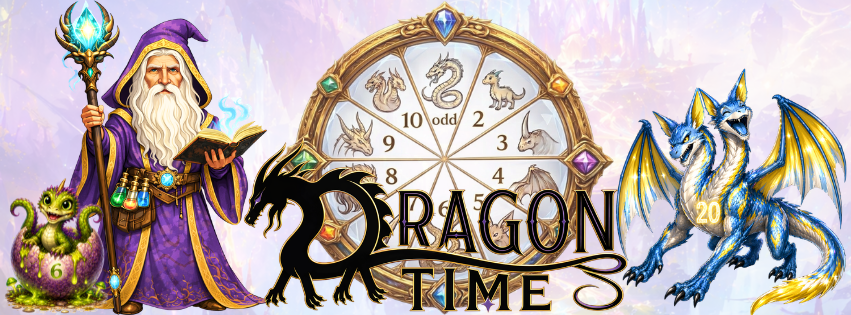
Dragon Times is Now Digital — A Realm of Dragons, Numbers, and Magic
Everything you love about the best-selling Dragon Times card game — now with ten games, four guides, glowing portals, and hatchling dragons waiting for you.
A Card Game You Could Hold. Now a Realm You Can Walk Into.
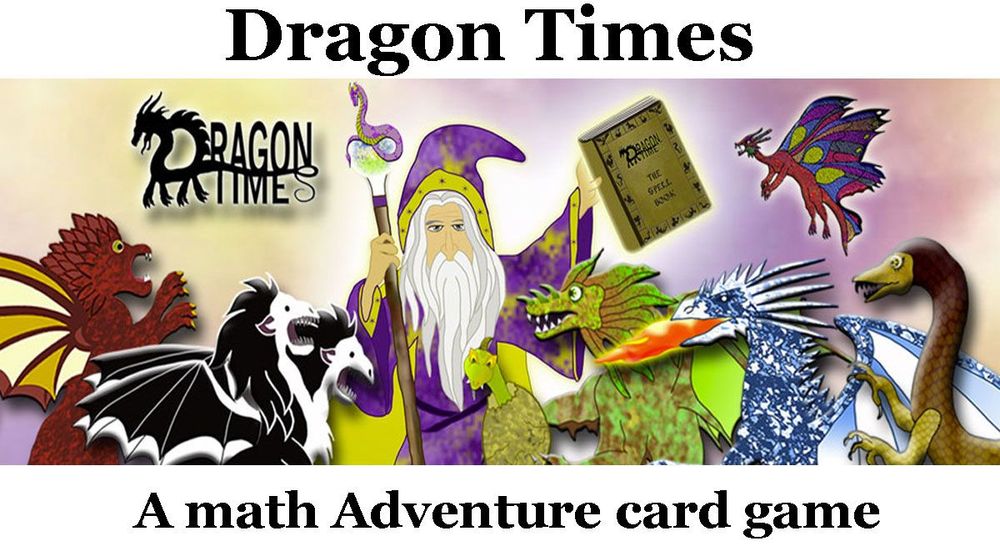
For years, teachers and parents have used Dragon Times, our best-selling multiplication card game, as a playful way to build number fluency. Students learned to recognise dragons by their numbers, combine spell cards to free them, and practice their tables without a single flashcard in sight.
Now we're bringing that realm to your screen.
Dragon Times: The Digital Realm is a web-based companion to the card game — and a rich learning experience in its own right. A single tap opens a magical forest where ten unique games teach multiplication, division, factors, multiples, divisibility, primes, and more — each with its own story, setting, and progression.
The Story
When players first enter, they meet the Spellweaver — a wizard who needs their help. The realm is full of dragons, each carrying a number. Some are trapped by evil magic. Some need training to grow strong. Some have hidden traits only a guardian can read. Others are primal dragons — rare, wild, only visible at night — and they need to be found and protected.
Your mission: become a Guardian of the Realm. Learn to read the dragons' numbers. Cast the right spell. Keep them safe.
Every game in Dragon Times is built around this story. Math isn't a worksheet here — it's how you save the dragons.
Ten Games, One Realm
Each game teaches a different skill, using a different mechanic. They share one vocabulary — the dragon numbers — so a child who plays Path to Freedom is already ahead when they meet Prime Forge.
🐉 1. Path to Freedom — Multiplication in action
Dragons are trapped in blue holographic cages. You have a hand of spell cards (1–10). Combine them by multiplying to match the dragon's number, then cast. The trap fades, the dragon flies free.
Skills: multi-factor multiplication, flexible decomposition, mental math.
🔥 2. Wheel of Fire — Reading traits
A spinning wheel reveals a trait — Multiple of 3, Divisible by 7, Square. Tame the dragon whose number matches, before it slips away.
Skills: divisibility recognition, pattern matching, quick thinking.
📖 3. The Spell Book — The realm's reference library
Three guides, one page: the Times Table, the Wheel Guide (every trait matched to a dragon feature), and Divide and Rule — an illuminated book page of divisibility rules with sketched-dragon marginalia.
Students can open The Spell Book from any game, any time. Learning happens in the flow, not as a separate "homework" step.
⚗️ 4. Factor Energy — Finding every factor
A dragon appears. Potions numbered 1–10 line the shelf. Choose the potions whose numbers divide the dragon — every factor, one by one.
Skills: finding factors, understanding "divides evenly," systematic checking.
⚒️ 5. Prime Forge — Breaking numbers into primes
Forge dragon tokens by multiplying prime jewels. Level 2 — Spirit Dragons — adds the jewel 11, and the dragons get bigger, with numbers up to 400.
Skills: prime factorisation, understanding primes as building blocks.
🔍 6. Trait Tracker — Deducing dragons from their traits
The wizard reveals one or two traits. Which dragon matches? Three levels — from spotting a dragon by a single trait to decoding hidden clues in Shadow Clues.
Skills: deductive reasoning, combining divisibility rules.
🕊️ 7. Release the Dragons — Division down to 1
Trained dragons are ready to fly. Pick divisor spells (2–10) that evenly divide the dragon's number. Keep dividing until you reach 1 — and the dragon is released. Five levels, including the Spirit Release (primes only: 2, 3, 5, 7), the Grand Release (numbers 100–200), the Grand Prime Release (with jewel 11), and the Release Challenge — two dragons, a curated subset of spells, and only one can cross.
Skills: division, factoring, strategic choice, prime recognition.
⭕ 8. Odd One Out — Finding the misplaced dragon
The wizard sorts dragons into Training Circles by shared trait. But one dragon is always misplaced. Spot it, then tap the trait the others share. Answers vary — because multiple interpretations can be valid.
Skills: comparative reasoning, identifying shared vs. unique properties, flexible thinking.
🌙 9. Primal Instincts — The guardian of rare primes
Rare Prime Dragons only emerge at night, gathering quietly with their kin. Your task is to spot them and mark them, so they can be studied, protected, and guided safely in the realm.
A grid of twelve silhouetted dragons appears under moonlight. Each carries a number (10–100). Tap the primes; mark them for study.
Skills: prime identification, abstract number recognition (no visual cues — just the math).
✨ 10. The Hatchling Passage — Divisibility as a gate
A magical portal shows a 3-digit key. Below, nine hatchling dragons (2–10). Send every hatchling whose number divides the key through the portal — they mature into the realm. Level 2 — The Trap Portal — introduces prime keys: when no hatchling can cross, you call "It's a Prime Trap!" instead.
Skills: divisibility rules applied to larger numbers, prime recognition, multi-select confirmation.
Why It Works
Instant Feedback
Every click — every spell, every mark, every confirmation — produces immediate, visual feedback. Correct moves glow gold and green; mistakes pulse red or shake. Learners never wait for a teacher to grade them — the realm tells them at the speed of thought.
Scaffolding by Design
Each game starts simple. Path to Freedom begins with one dragon at a time. Prime Forge starts with just four primes. Release the Dragons begins with small numbers. Levels then add: more dragons on screen, bigger numbers, new primes, timer pressure, new mechanics. Students build fluency before they face complexity.
Flexibility, Not Racing
Most levels have no timer — students explore at their own pace. Optional timer levels (Sand Glass in Odd One Out) let teachers or parents add challenge when ready. No one is punished for thinking.
Multiple Mental Models
Across the ten games, the same number skills are revisited from different angles. A dragon's number 36 appears in Path to Freedom as "6 × 6," in Prime Forge as "2²·3²," in Factor Energy as "divisible by 1, 2, 3, 4, 6, 9, 12, 18, 36," in Trait Tracker as "even and divisible by 9 and a perfect square." The same number. Six different conceptual handles.
Skills at a Glance
- Multiplication (1–10 and beyond)
- Division (down to 1)
- Factors (finding and recognising all)
- Multiples (and the "multiple of N" mindset)
- Prime numbers (recognition and production)
- Prime factorisation (numbers as products of primes)
- Divisibility rules (÷2, ÷3, ÷4, ÷5, ÷6, ÷7, ÷8, ÷9, ÷10)
- Square numbers
- Even/odd recognition
- Flexible decomposition and regrouping
- Inductive reasoning from traits to numbers
- Prime recognition under 100
The Spell Book — Always One Tap Away
Players can open The Spell Book from any game. Inside: the full times table, the Wheel Guide mapping traits to dragon features, and Divide and Rule — the divisibility guide, styled as an illuminated old-book page with hand-sketched dragons in the margins.
The Connection to the Card Game
The digital version doesn't replace the card game — it extends it. Every dragon has the same number. Every spell value is the same. A student who plays Dragon Times on the tablet is practicing the exact skills they'd practice with the cards — plus exploring new mechanics the card medium couldn't easily support (animated wheels, scrolling portals, timed trials, magical revealing of runes).
Use the card game for the social, tactile, around-the-table experience.
Use the digital realm for solo practice, extension concepts like prime factorization, and the games the deck can't replicate.
Together, they give learners both: hands-on and hands-off, social and private, physical and magical.
Who It's For
- Teachers — as a Friday-afternoon choice, a maths-centre rotation, a reward for focused work, or a homework-lite option
- Parents — as screen time that builds real fluency (and looks beautiful)
- Homeschoolers — as a multi-concept curriculum companion
- Enrichment / gifted programs — the higher levels (Prime Forge L2, Hatchling Passage L2, Release Challenge) offer genuine challenge
Ready to Walk Into the Realm?
Every dragon is waiting to be freed, trained, or protected.
The wizard is at the gate.
What will you cast first?
Developed by the mathcurious team. Built for teachers, parents, and the young Spellweavers of the realm.