Digital Hundred Chart Game-100 Monster Hunt
The hundred chart is one of the hardest-working tools in a primary classroom. It's on the wall all year, it costs nothing, and — once children learn to read it — it quietly teaches place value, skip counting, number words and adding and subtracting within 100.
The trick is getting students to use it. 100 Monster Hunt, our no-prep digital hundred chart game for grades 1–3 encourages students to explore the 100 chart in a fun and stress free way. Works for whole-class warm-ups, partner work and math centres.
Meet 100 Monster Hunt
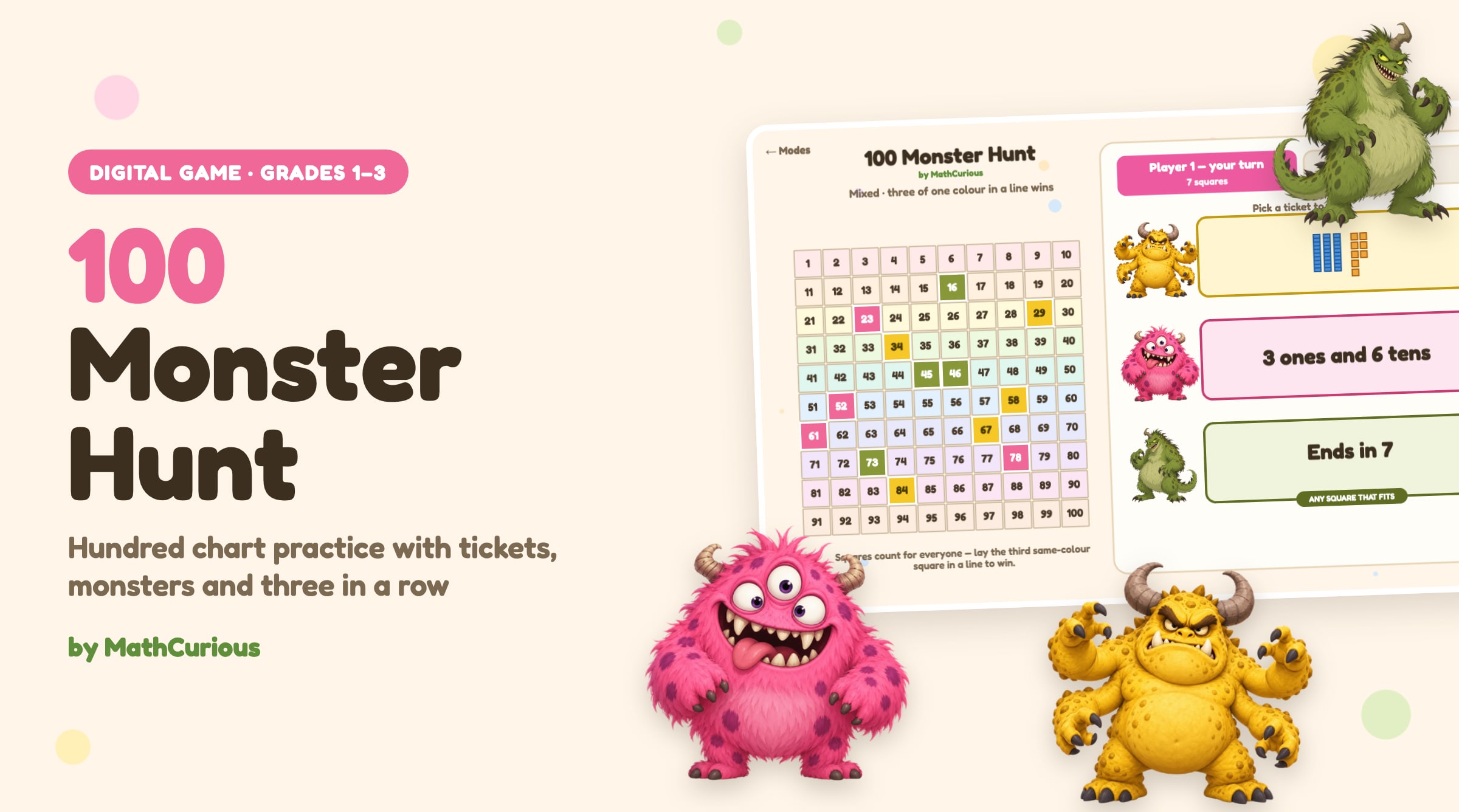
100 Monster Hunt is a digital hundred chart game for grades 1–3. It plays in a web browser — nothing to print, cut or laminate, and no logins.
Pick a monster's ticket
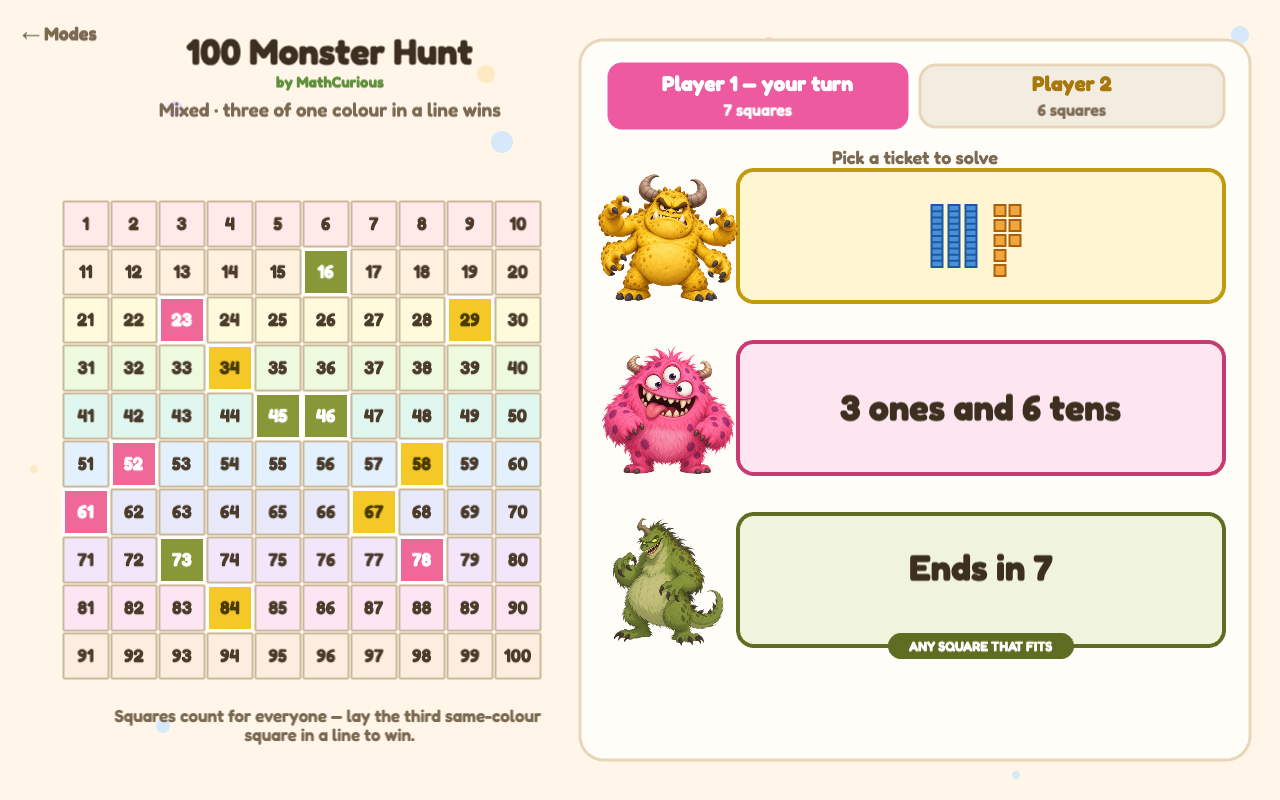
Every turn, three monsters — green, pink and yellow — each hold out a ticket. Every ticket is a number from 1 to 100 in disguise. Students choose one, work it out, and tap that number on the chart. The square fills in the colour of the monster's ticket.
"Any square that fits" tickets
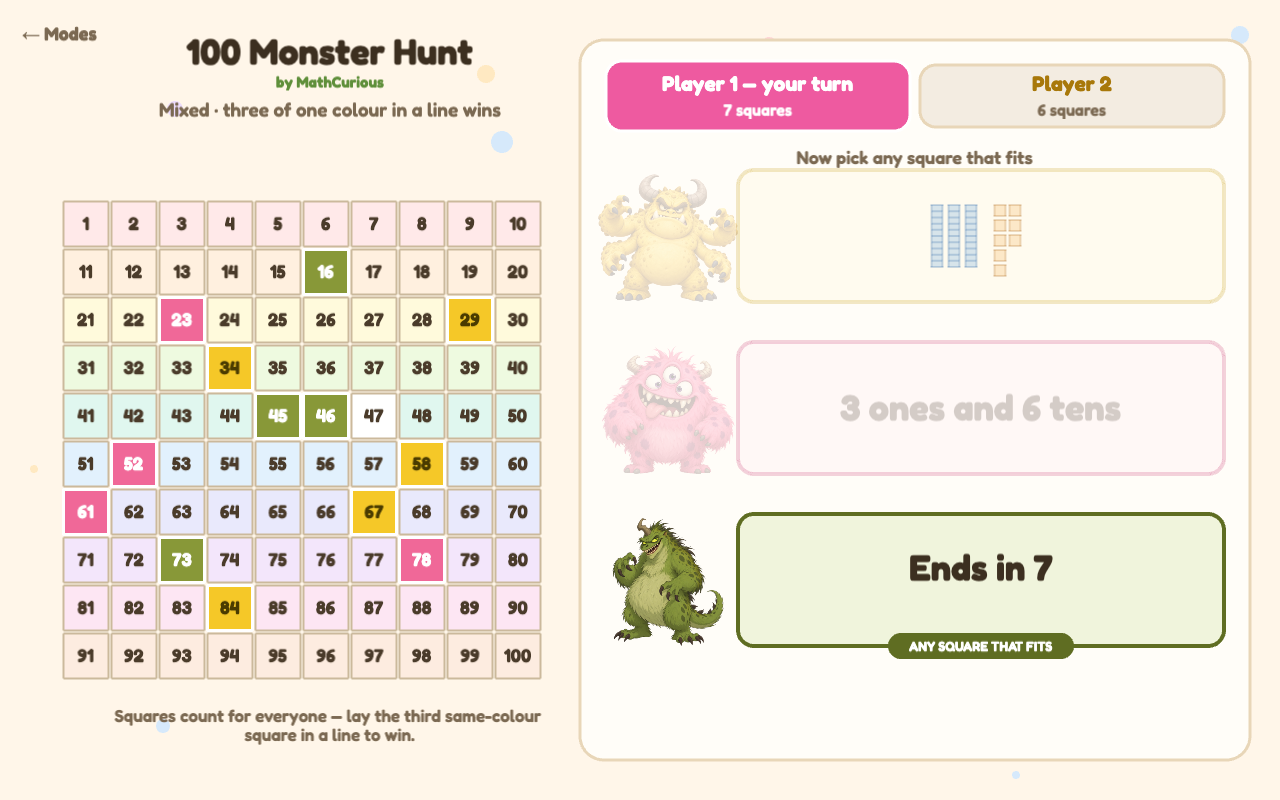
Some tickets describe a whole family of numbers: Ends in 7, The digits add up to 9, Rounds to 60, In the same row as 40. Students choose any square that fits. These are where the strategy lives — here, the green "Ends in 7" ticket lets Player 1 take 47, right next to two green squares.
Three of a colour in a line wins
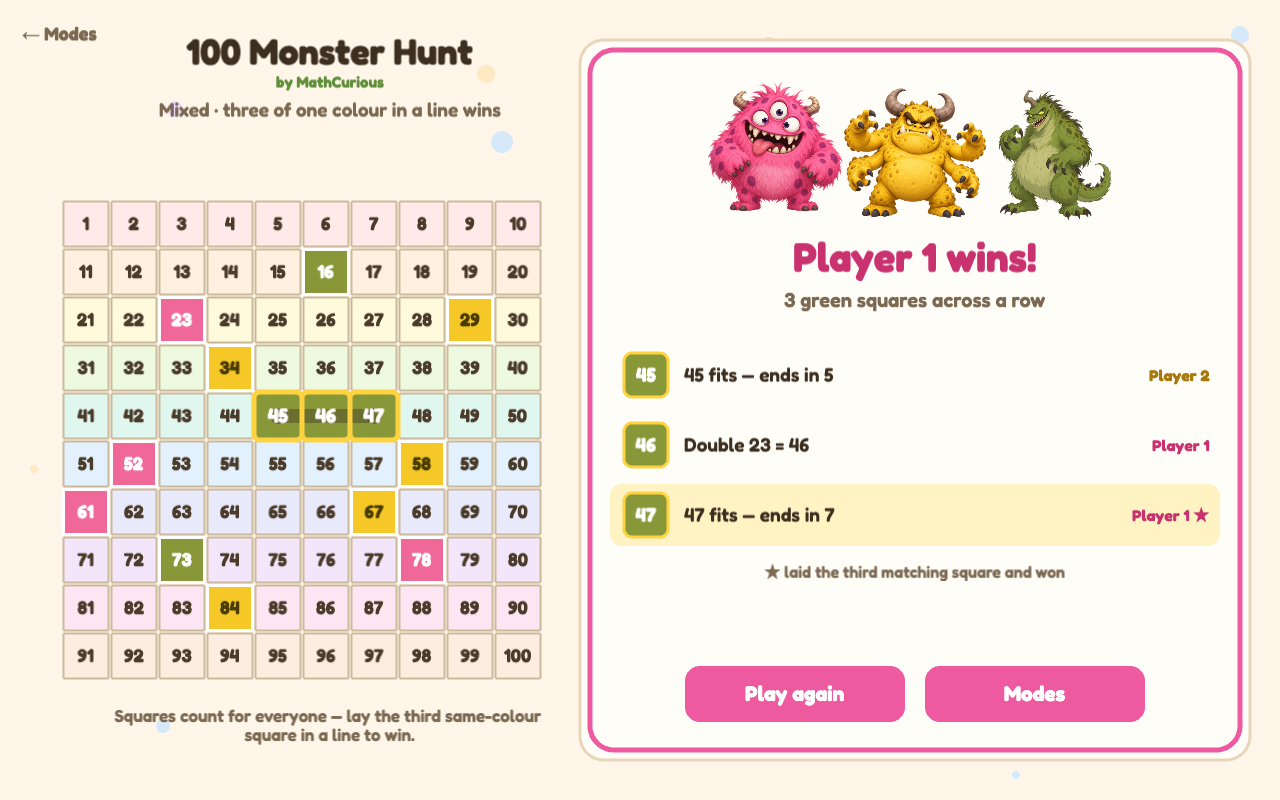
Squares count for everyone. The player who lays the third square of one colour in a line wins. The win screen draws the line on the chart and lists every square in it, the ticket that filled it, and who put it there — a ready-made talking point.
Every ticket is a number in disguise
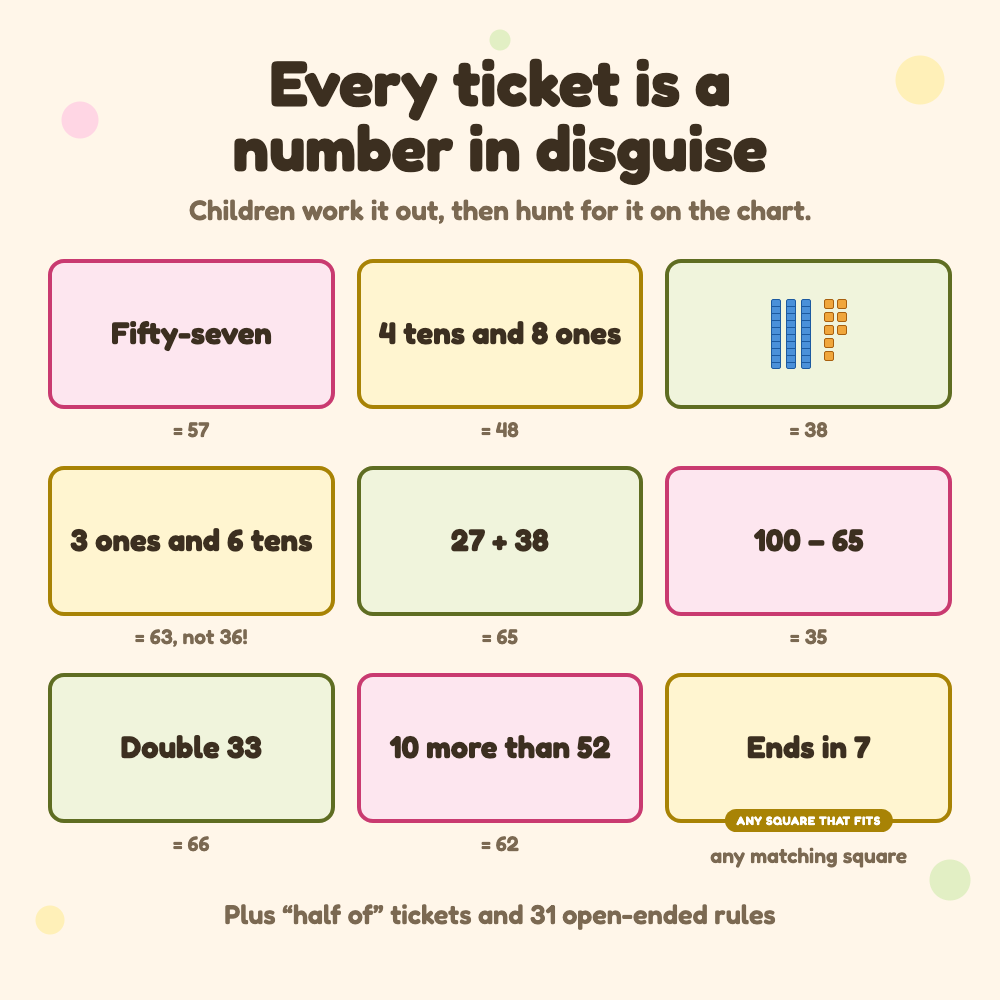
What's included:
- A hundred chart game with every answer between 1 and 100
- Ticket types: number words (21–100), tens and ones, ones-first tens and ones, base-ten blocks, expanded form, addition and subtraction within 100, 1 and 10 more and less, half of and double
- More than 30 "any square that fits" rules: odd and even digits, digit sums, rounding to the nearest ten, skip counting by 2s, 5s and 10s, rows, columns and more
- Three decks: Mixed, Place Value, and Add & Subtract
- Solo, or 2, 3 or 4 players taking turns on one device
- Self-checking: a wrong answer shows the correct one and passes the turn
- A solo best score (fewest turns) for each deck
How to use it in class
- Warm-up on the board. Play the class in two teams. Let each team argue about which ticket to take before they tap.
- Partner station. Two students, one device. They'll check each other's thinking without being asked.
- Small groups. Three or four players on one device; everyone watches every turn.
- Early finishers. Solo mode asks: how few turns can you make a line in?
- Sub plans. The rules are on screen. "Open the link and play in pairs" is the whole instruction.
Teaching tips
- Say it before you tap it. Ask students to read the ticket aloud and say the number before choosing a square.
- Start with the Place Value deck. It focuses on tens and ones, words and blocks before mixing in addition and subtraction.
- Talk about the trap. When 3 ones and 6 tens comes up, stop and ask why 36 is wrong.
- Use the win screen. Every square in the winning line shows its ticket. Ask: "Which ticket would you have chosen instead?"
- Ask "why that colour?" Taking a ticket because of its colour, not its number, is real strategy — and a great reason to look at the whole chart.
Quick answers
Do students need accounts? No. It's a link — nothing to sign in to.
Is there anything to print? Not for the digital game. The free activities above use a printed hundred chart.
How many can play? One to four players, taking turns on one device.
What grades is it for? Grades 1–3. Every answer is a number from 1 to 100.
Can I project it? Yes — the chart and tickets are large enough for whole-class play on the board.
Get 100 Monster Hunt
Hundred chart practice doesn't have to be another worksheet. Give students three monsters, a choice to make every turn, and feedback the moment they need it, and they'll find dozens of numbers in a single game.
Get 100 Monster Hunt on Teachers Pay Teachers
More from Math Curious
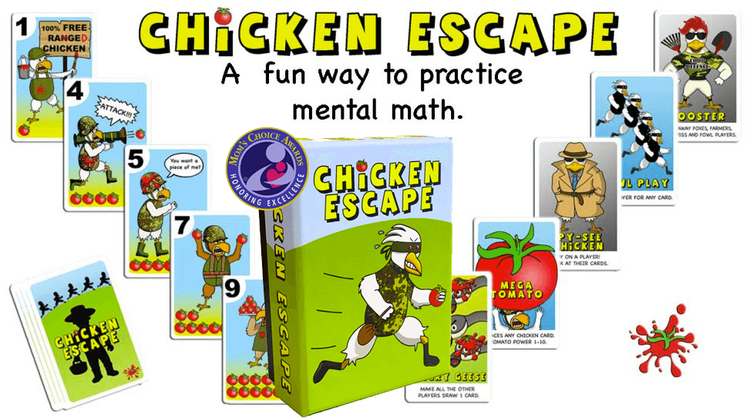
- Chicken Escape – Chapter 1 — make 10, place value and regrouping with a farm full of chickens
- Digital Place Value Tools – 3 to 6 Digits — build numbers with base-ten blocks