Math Talk Slides That Check Themselves: 124 Self-Checking Math Talks for Grades 3-5
A math talk slide deck is one of the simplest routines there is, and one of the best. The picture gets everyone looking at the same thing. The question gets them talking.
But a slide can't tell a student whether their thinking holds up. When the talk is over and students go back to the slides on their own, at a center, as an early finisher or at home, nobody is there to say "yes, that works" or "look again".
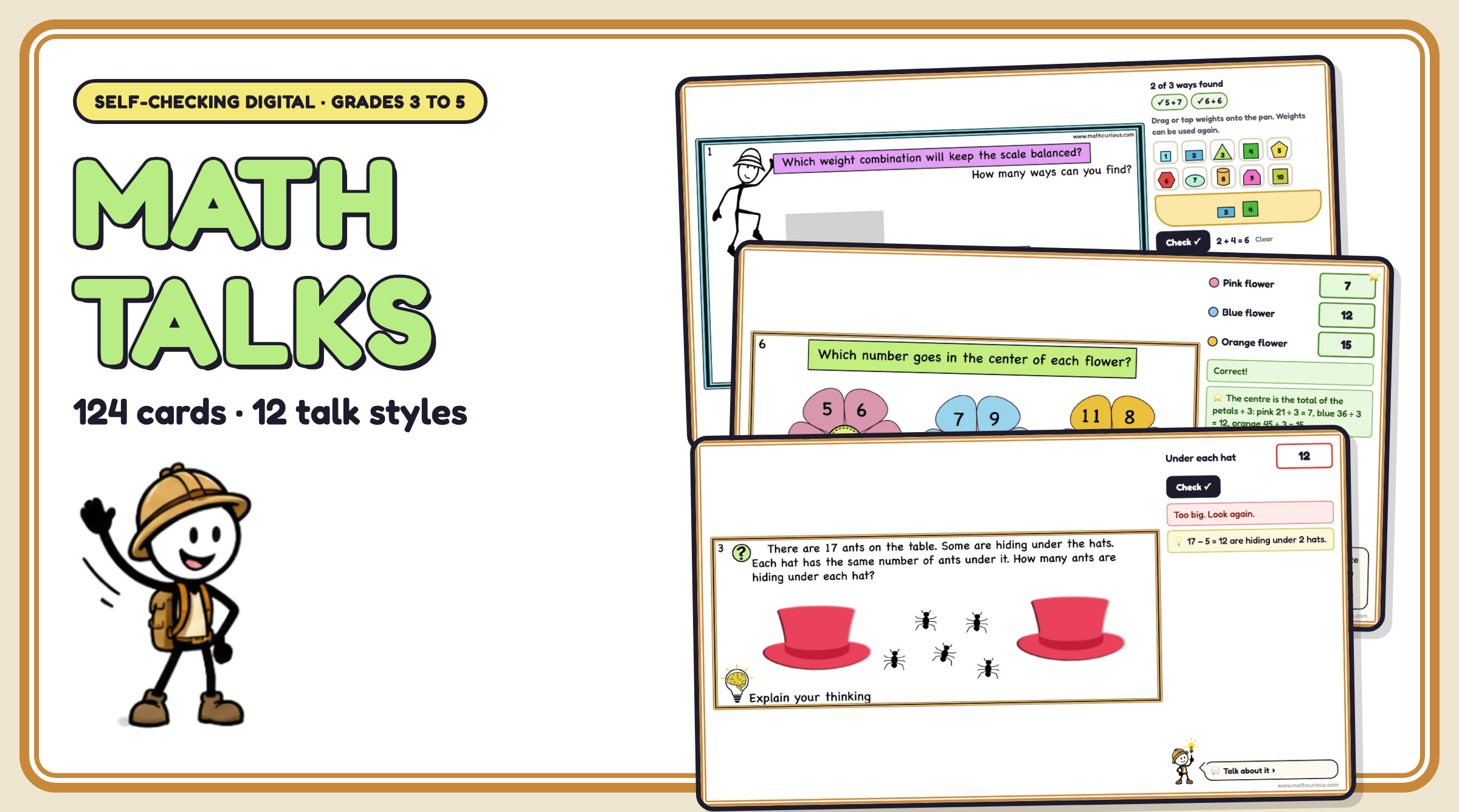
So we took our Math Talks slide deck, all 124 slides, and made every one of them self-checking. Same pictures, same questions, same explorer. Now students type or tap an answer, press Check, and know straight away.
Watch it in action
It runs in any web browser, one card at a time, so you can project it for the whole class or put it on student devices. There's nothing to print and no logins.
The slides you know, untouched
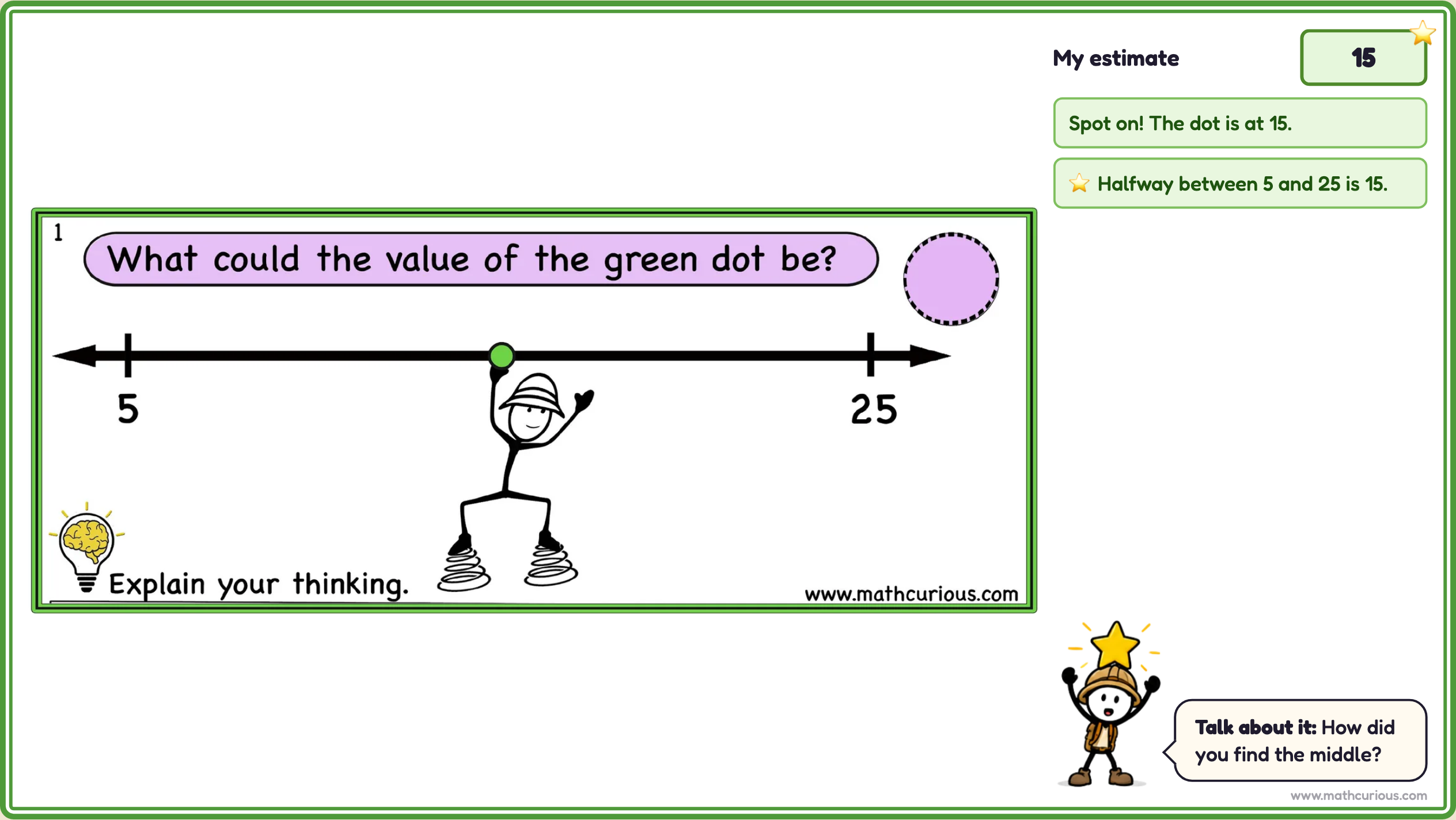
We didn't redraw the slides or squeeze them into a new layout. Every card shows the original slide picture, with the question right where it always was. Next to it is a small answer panel and the explorer buddy, who asks a Talk about it question for the class discussion.
That matters for a math talk. The picture is the conversation starter, so it has to be big, clear and the same one students saw on the board this morning.
Open-ended slides still check themselves
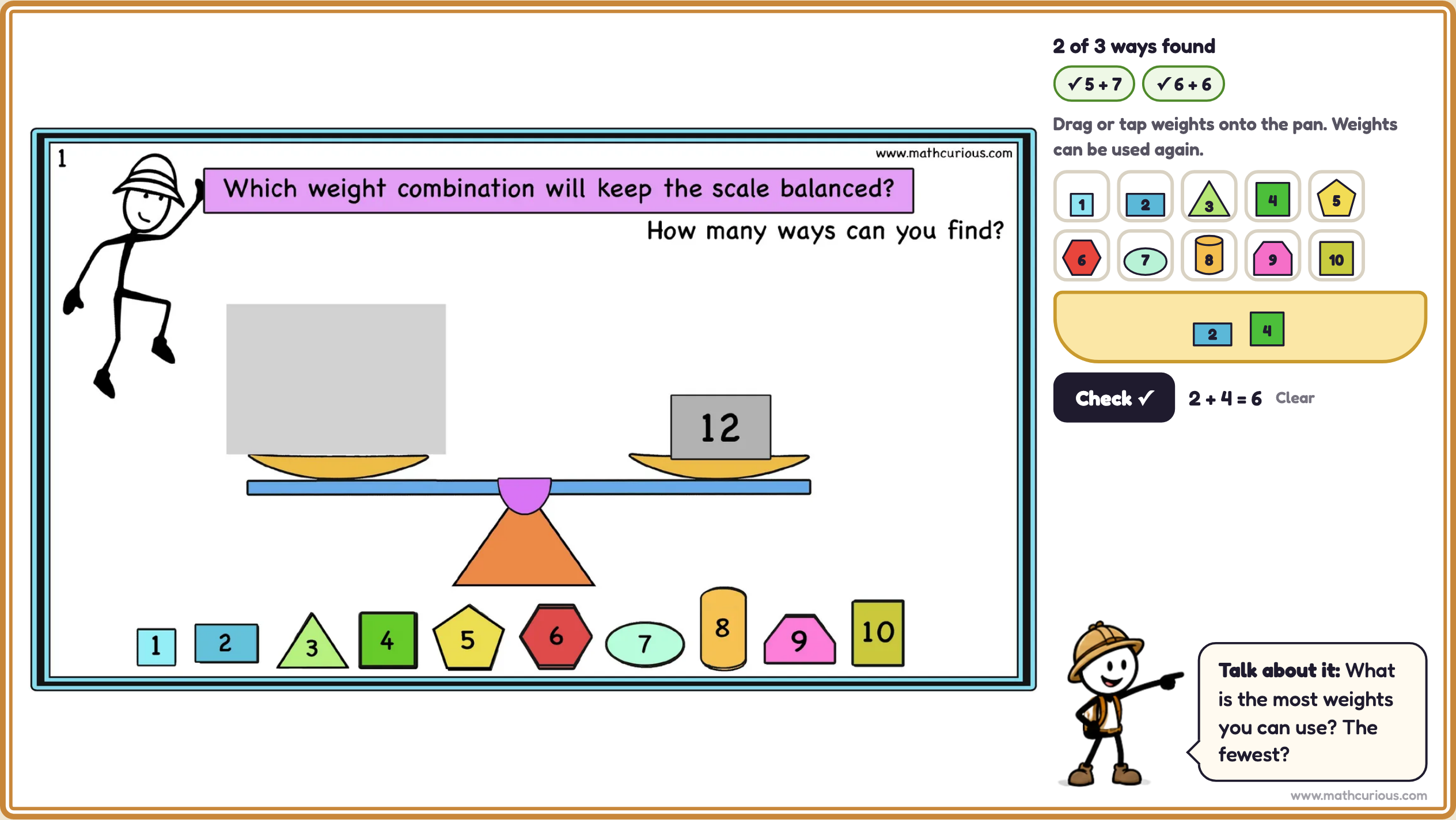
The best math talk questions have more than one right answer. "Which weights keep the scale balanced? How many ways can you find?" doesn't end when the first student answers. That's what makes it a talk.
It's also what makes it hard to check. So on open-ended slides, the card accepts every correct answer and asks for two or three different ways. On the balance scales, students drag weights onto the pan, and the same weight can be used again, so 6 + 6 counts as well as 5 + 7.
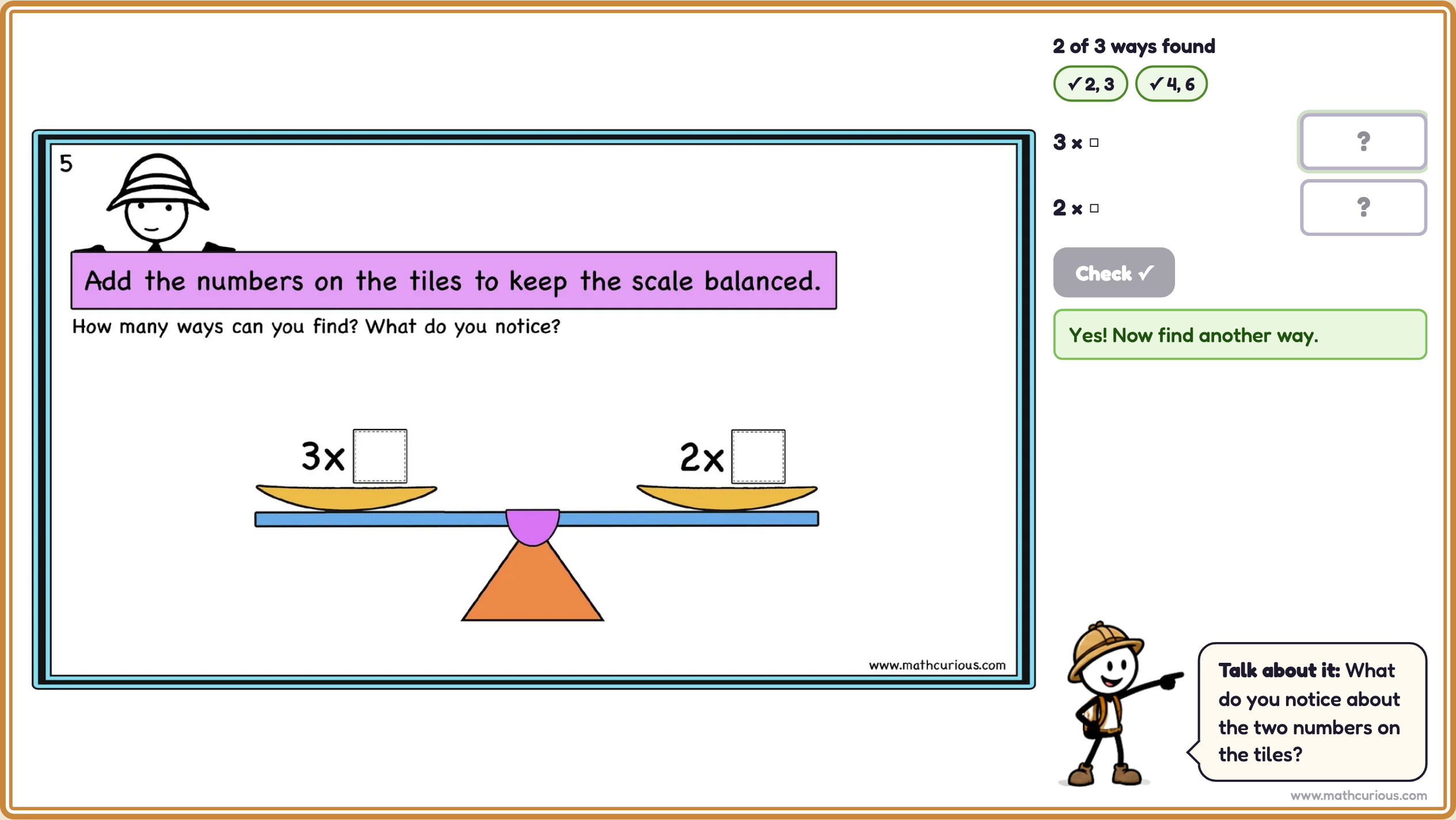
The tile scales work the same way. Any pair of numbers that keeps 3 × □ and 2 × □ balanced is right, and after a few ways the talk question asks what students notice about the numbers on the tiles.
Feedback that helps, not just "wrong"
A wrong answer says what went wrong and gives a hint that points back to the picture.
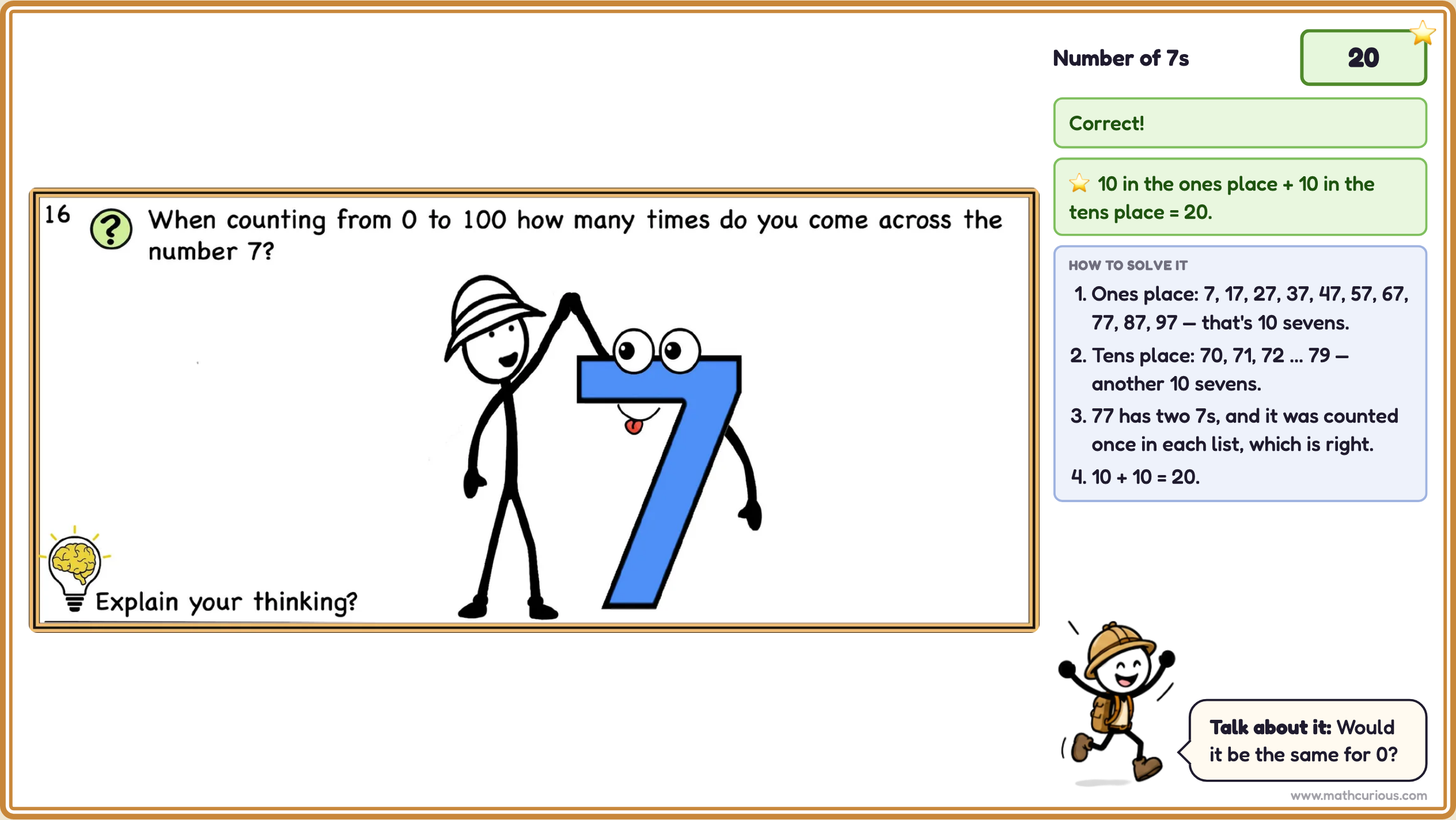
After two tries, students can ask to see an answer. A right answer shows a short explanation, so the reasoning is always there, not just the number.
Every puzzle has a step-by-step solution
The last 25 slides are puzzles: logic, patterns, missing shapes and number puzzles. These are the ones students love and teachers sometimes dread, because the answer alone doesn't explain much.
So every puzzle card has a See the solution button with the full working, step by step. Students can open it after they solve the puzzle to compare their thinking, or when they're stuck to see how to get started.
12 talk styles
The deck covers the routines that make math talks work in grades 3 to 5:
- Balance the Scales: weights and tiles that keep the scale balanced
- What Do You See?: dot pictures, fractions and the hundred chart
- Representing: base-ten blocks, circles and numbers
- Formations: arrangements and growing patterns
- Number Lines: estimate whole numbers, fractions and decimals
- Scales with Numbers: place value and decomposing
- Ants in the Hats: same colour hats hide the same number of ants
- Blocks Arrangements: count the cubes in 3D structures
- Would You Rather?: work out both, then decide
- Same or Different?: compare, then tick the true sentences
- Solution Steps: find the problem, find the mistake
- Puzzles: with step-by-step solutions
Stars, saved on the device
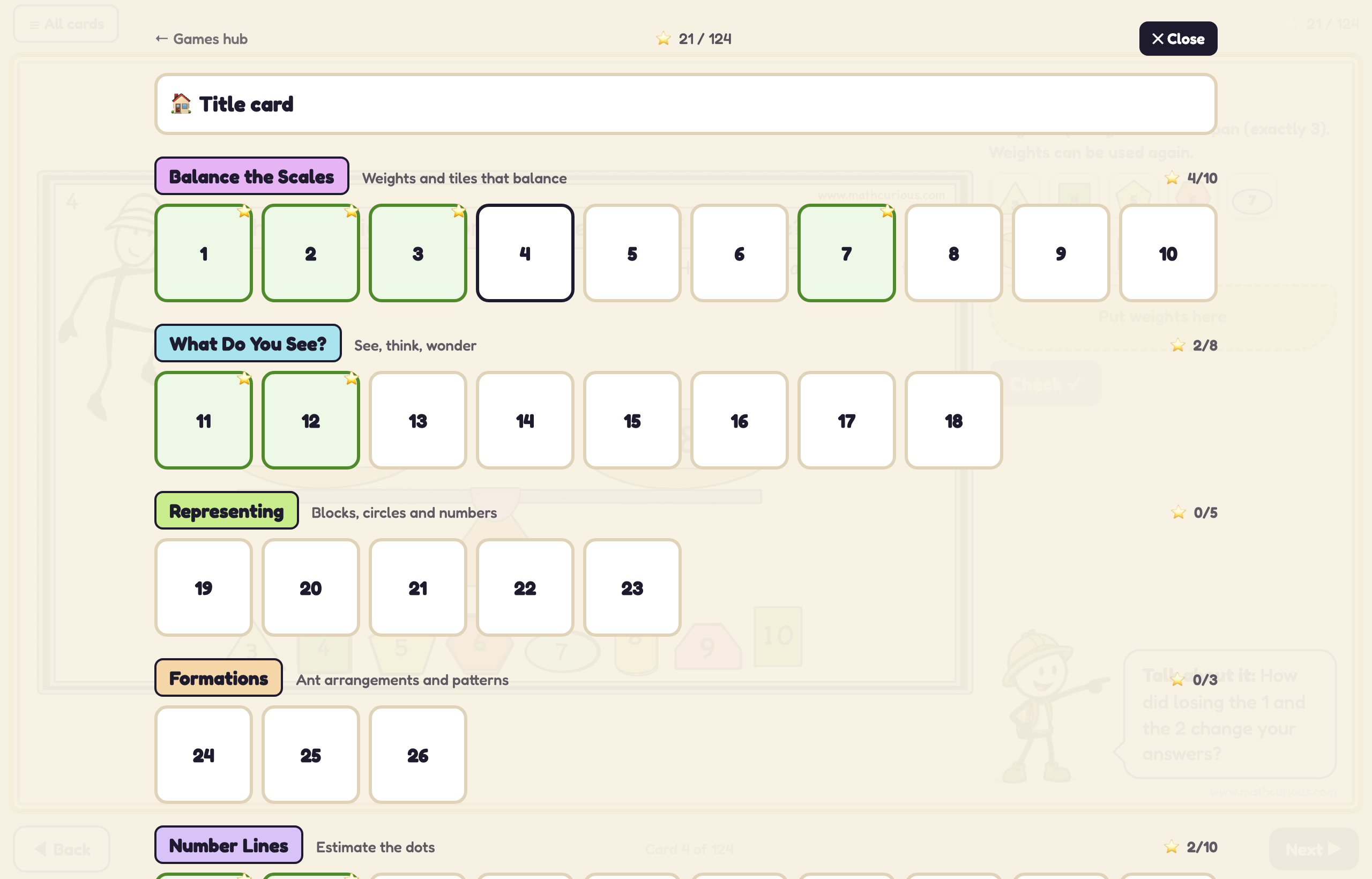
A right answer earns a star. All cards shows every slide grouped by talk style, with the stars earned in each section, so students can see what they've finished and jump straight to any card. When a new class sits down, Reset stars clears them.
How to use it in your classroom
- Talk first, check second. Project a card, give quiet think time, and collect strategies before anyone presses Check. The check is the end of the talk, not the start.
- Collect every way. On open-ended slides, write each different answer on the board, then ask what they have in common and whether there are more.
- Use the puzzle solutions as a second talk. After the class solves a puzzle, open the solution and ask: is that how you did it? Which way is quicker?
- Close with the talk question. The buddy's Talk about it question works as a turn-and-talk or an exit ticket.
- Centers and early finishers. Every card checks itself, so students can work through a section on their own.
Quick answers
Do students need accounts? No. It's a link, so there's nothing to sign in to.
What devices does it work on? Any device with a web browser, including Chromebooks, iPads, laptops and the classroom board.
What grades is it for? Grades 3 to 5.
Do I need an answer key? No. Every card checks itself, including the open-ended ones, and every puzzle has a full solution.
How is this different from the 150-card Math Talks 2? The 150-card set is all new cards in 15 talk styles. This one is the original slide deck, all 124 slides, made self-checking.
Get Math Talks
124 slides, 12 talk styles, open-ended questions that check themselves and puzzles with step-by-step solutions.