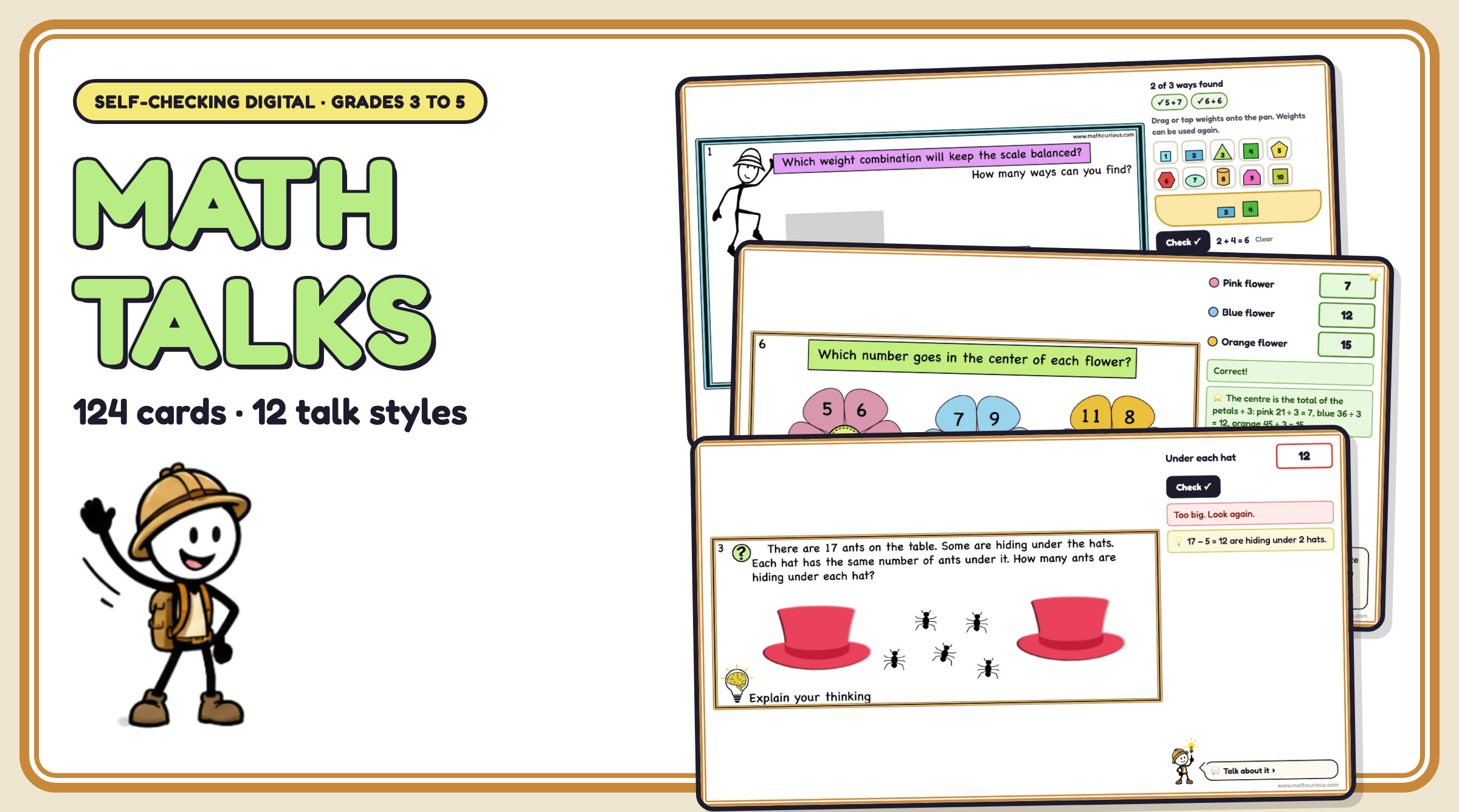
Math Talk Slides That Check Themselves: 124 Self-Checking Math Talks for Grades 3-5
Our Math Talks slide deck, all 124 slides, now self-checking: open-ended slides that accept every correct answer, hints that point back to the picture, and step-by-step solutions for every puzzle. Grades 3 to 5.
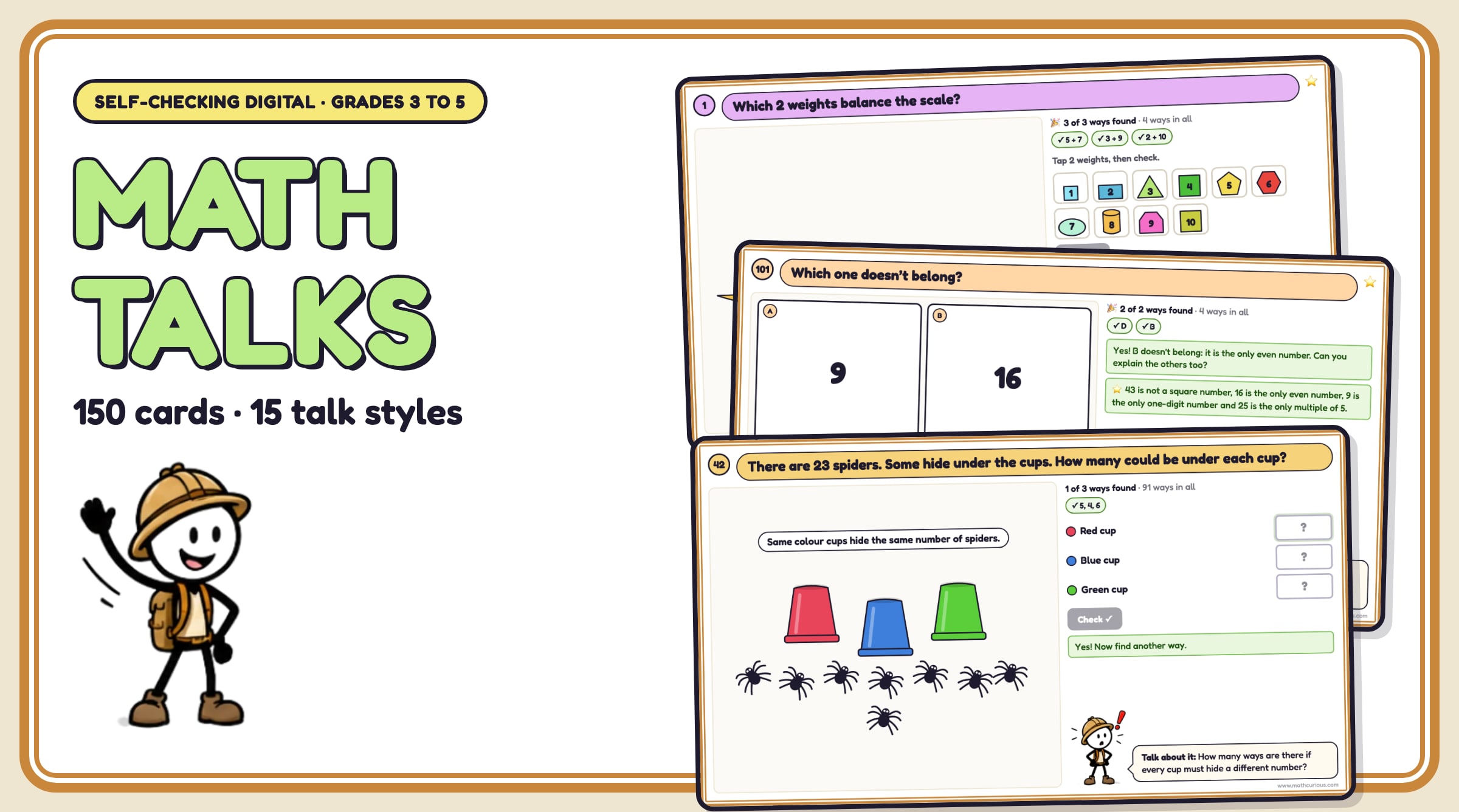
Math Talks : Why Open-Ended Questions Matter, and 150 That Check Themselves
Why math talks build reasoning and number sense, why open-ended questions with more than one right answer matter most, and a self-checking set of 150 math talk cards in 15 styles

Exploring Math Concepts Through the Beauty of Nature
Nature isn’t just a feast for the eyes—it’s also a wonderful classroom for learning math! From the symmetry of flowers to the spirals of seashells, nature is full of mathematical wonders. Here are a few concepts that can be taught simply by observing the natural world: Symmetry Symmetry is everywhere …

The Power of Real-World Examples in Mathematics
Mathematics, often perceived as a complex web of numbers and formulas, can become significantly more engaging and understandable when linked to real-world examples. Using practical scenarios not only helps demystify complex concepts but also demonstrates the relevance of math in everyday life. Let’s delve into the importance and effectiveness of …

How can we reduce gender gaps in mathematics education?
Bridging the Gap: Addressing Gender Disparities in Math Education The gender gap in math education has been a topic of concern and discussion for decades. Traditionally, mathematics and related fields have seen a dominance of male students and professionals, leading to an underrepresentation of females. This disparity raises questions not …
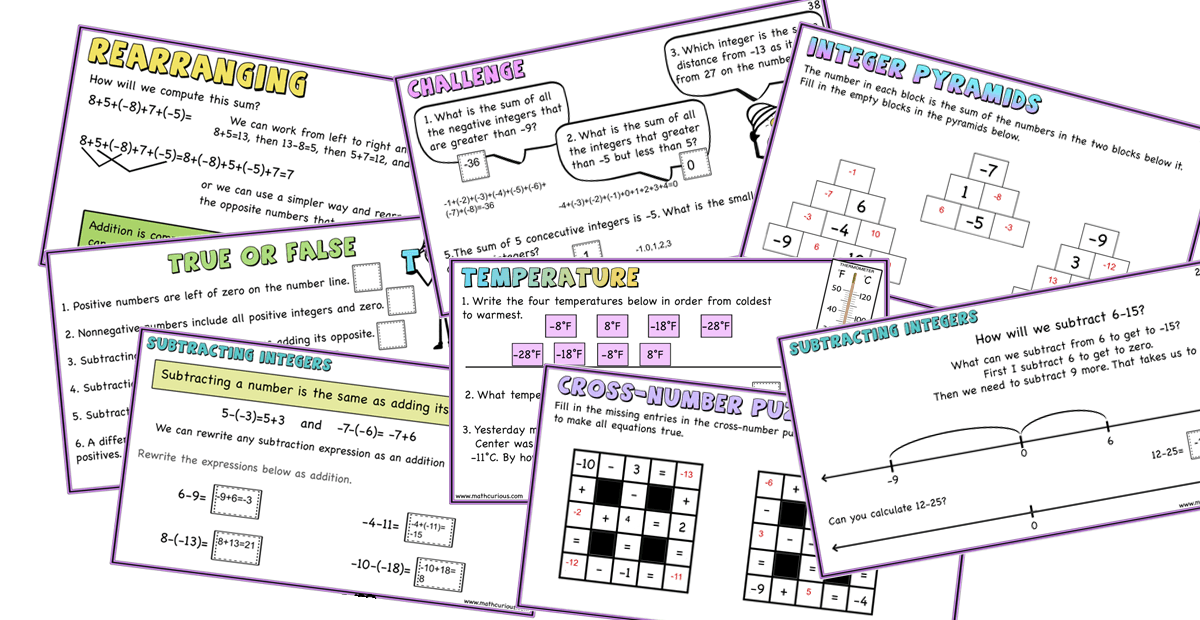
Introducing, adding, subtracting, multiplying, and dividing integers
Integers and their operations are an important concept in mathematics, typically introduced in the middle or early high school grades. While integers are often used in everyday life, this concept can be challenging for students. The introduction of negative numbers, numbers that are less than zero, is new to students …
Mental Math Strategies- Multiplication
Using Mental Math strategies means solving a math problem mentally using a conceptual understanding of the numbers. Teaching Mental math Strategies to students is very important as it develops their flexible thinking and boosts their confidence in math. Being able to use the multiplication properties to apply mental math strategies …
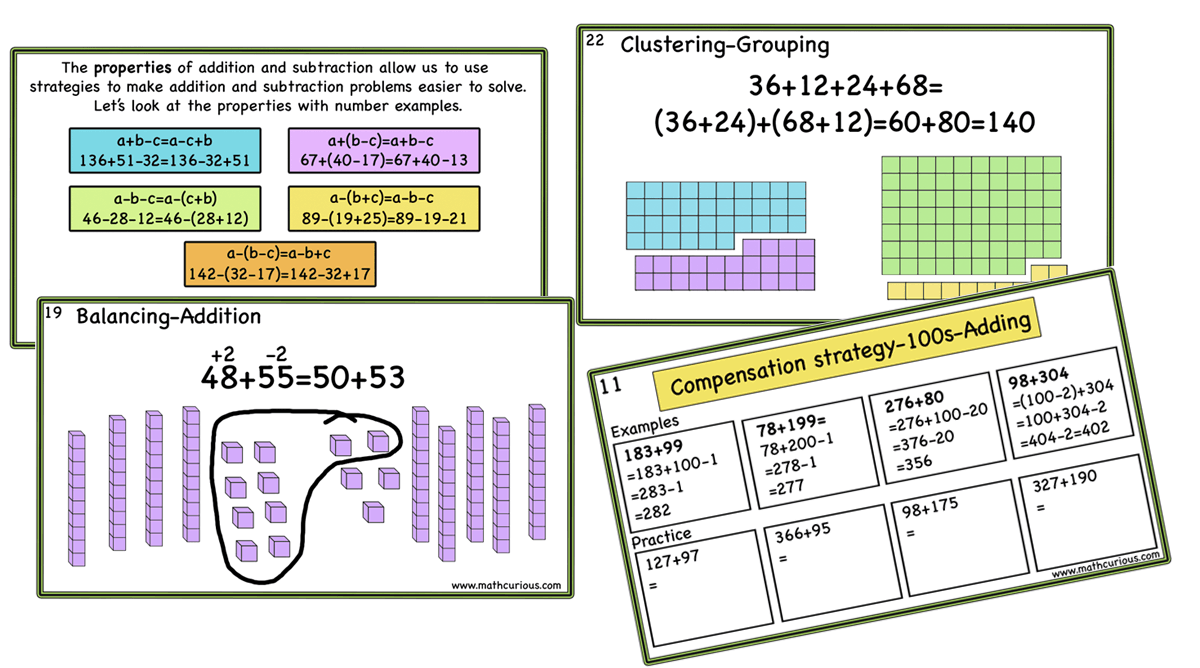
Mental Math Strategies – Addition and Subtraction
Using Mental Math strategies means solving a math problem mentally using a conceptual understanding of the numbers. We teach mental math strategies like making 10, splitting, and regrouping in grades 1 and 2, however, I think it is important to teach strategies to older students as well. I noticed that …