




















What is a digital escape adventure?
An escape room is a game where a team is locked in and has to solve a chain of puzzles to get out. A digital escape adventure brings that idea into the classroom: each puzzle is a math problem, each correct answer opens the next room, and a story ties it all together. Instead of a worksheet of 20 questions, students get a mission.
Why they work in math class
- A reason to solve the problem. The story gives every question a purpose, so students who tune out a worksheet keep going to see what happens next.
- Instant feedback. Students know right away whether an answer is correct. A wrong answer sends them back to think again, not on to the next question with a misconception.
- Productive struggle. Puzzles take more than recall. Students reason, try strategies and check their thinking, and the reward for sticking with it is the next door opening.
- Talk and teamwork. In pairs or small groups, students explain their thinking to each other, which is where a lot of the learning happens.
- Review without the groan. They are a natural fit before a test, after a unit, before a holiday, or any day that needs a little extra energy.
How to use them
Each adventure is sold on Teachers Pay Teachers. Your download includes a private link: share it through Google Classroom or any learning platform, or open it on the classroom board. Students play in the browser on Chromebooks, tablets or computers, with no accounts and no logins.
- Whole class: project it and solve each puzzle together, voting on answers.
- Small groups: teams race to escape first, sharing one device.
- Independent: early finishers, centers, homework or sub plans.
The Math Curious escape adventures
There are 22 adventures (plus 9 money-saving bundles) for grades 2 to 10, from 3-digit addition to systems of equations. Here is what is inside each series.
Night at the Museum
Grades 4–6 · division
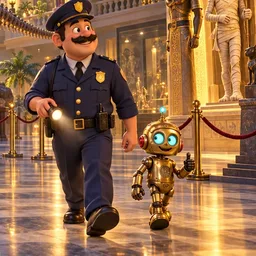
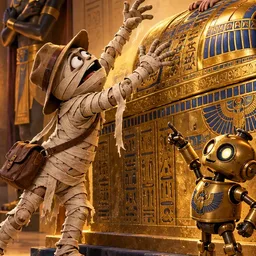
At midnight the museum wakes up and every exhibit is in the wrong place. Students crack a sarcophagus code in Ancient Egypt, use remainders to open a pirate treasure room, work backwards to place moon rocks in the space gallery and follow quotients out of a lava maze, all before the morning guard arrives. Read more
The Museum Comes to Life
Grades 2–5 · 3- and 4-digit addition and subtraction
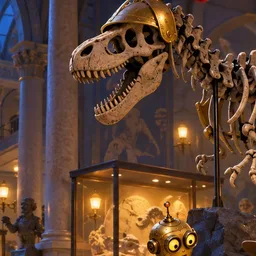
Dinosaurs, mummies and pirates have escaped their displays. Two adventures, one for addition and one for subtraction, turn regrouping practice into a rescue mission through the museum. Read more
Greek Mythology
Grades 3–9 · multiplication, division and algebra
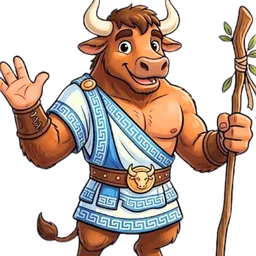
Students face the trials of Olympus with Athena, Poseidon, the Minotaur and Medusa. The multiplication and division adventures practise multi-digit algorithms and mental strategies; Algebra 1 and 2 build and solve linear equations on the way to the Golden Fleece. Read more
Time Travel
Grades 4–8 · spiral review
A time machine sends students through history: hieroglyphic numerals in Ancient Egypt, Viking shipyards, Inca quipus, Roman numerals, a Chinese magic square, fair shares in the Gold Rush and angle proofs in Ancient Greece. Three adventures, each a mixed review. Read more
Multiplication & Division Facts
Grades 2–7 · facts, multiples and factors
Trapped in a fantasy realm full of trolls and elves, students earn their way out one fact puzzle at a time. Two adventures with ten interactive puzzles each. Read more
Fractions Review
Grades 4–8 · fractions
Professor Madlock has captured the Binions. To free them, students convert improper fractions, load crates with equivalent fractions, simplify to unlock rooms and compare mixed numbers. Level 2 adds multiplying and dividing fractions. Read more
Algebra, Exponents and Number Theory
Grades 4–10
Climb the Tower of Powers to stop Dr. Helena Vortex (exponents), escape the Haunted Mansion with systems of equations, solve the Linear Quest in Equilibria, survive a medieval adventure built on word problems, or join the rebel crew cracking codes with primes, divisibility, LCM and GCF. Read more
Winter Holidays
Grades 3–7 · mixed review
Santa, elves and snowmen bring holiday puzzles across addition, multiplication, division, order of operations, integers and patterns. A December activity that is still real practice. Read more
Which one should I choose?
- Grades 2–3: The Museum Comes to Life (addition and subtraction), Multiplication & Division Facts 1.
- Grades 4–5: Night at the Museum (division), Greek Mythology multiplication and division, Fractions Review 1, Winter Holidays.
- Grades 6–8: Time Travel, Greek Mythology Algebra, Exponents, Primes & Divisibility, Linear Equations.
- Grades 7 and up: Halloween Algebra (systems of equations) and the Exponents escape.
Teaching across a few grades, or want the whole series? The bundles cost less than buying each adventure on its own. Back to all adventures ↑