Subtraction with Regrouping Game: Subtraction Smash
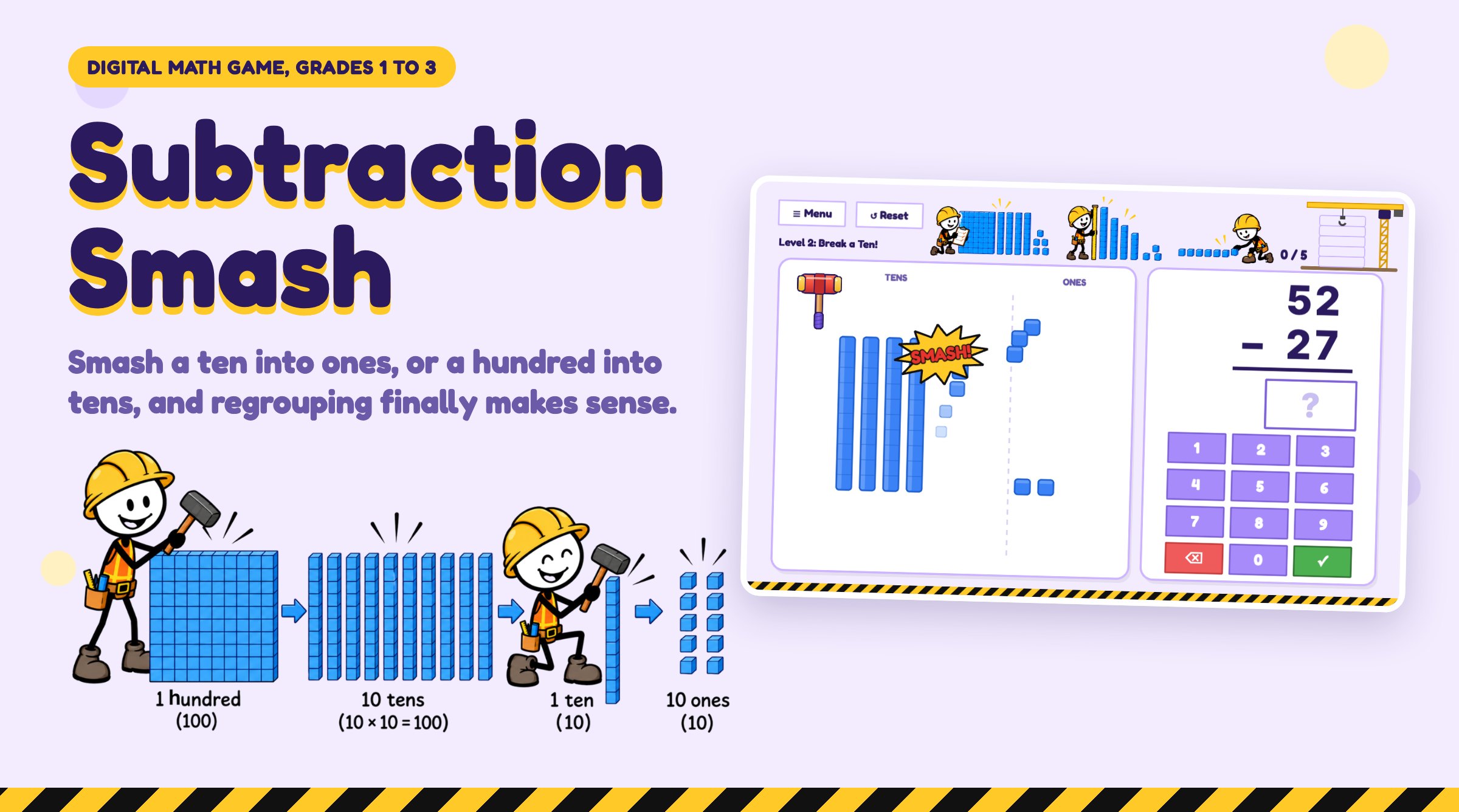
Subtraction Smash turns regrouping into something students can see and do. Every problem is built from base-ten blocks, and when there aren't enough ones to take away, students grab the hammer and smash a ten into 10 ones.
It's a digital game for grades 1 to 4 that practises two-digit subtraction with and without regrouping, three-digit subtraction across tens and hundreds, and the place value idea underneath it all: 1 ten is 10 ones, and 1 hundred is 10 tens.
Watch it in action
The game plays in any web browser. There's nothing to print, cut or laminate, and students don't need logins.
How it works
The top number, in blocks
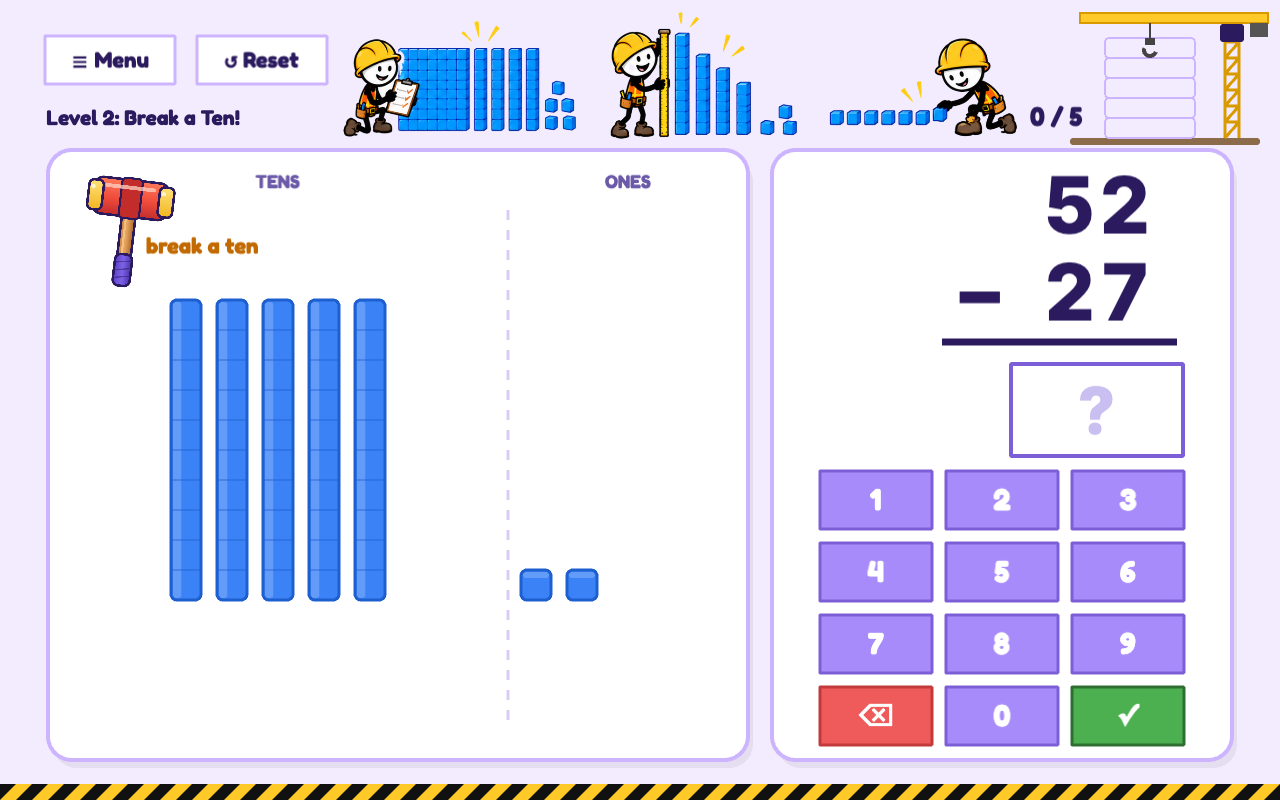
Each problem starts with the top number built in base-ten blocks: 52 is 5 tens and 2 ones. The problem is written on the right, the way students see it on paper.
Not enough ones? Smash a ten!
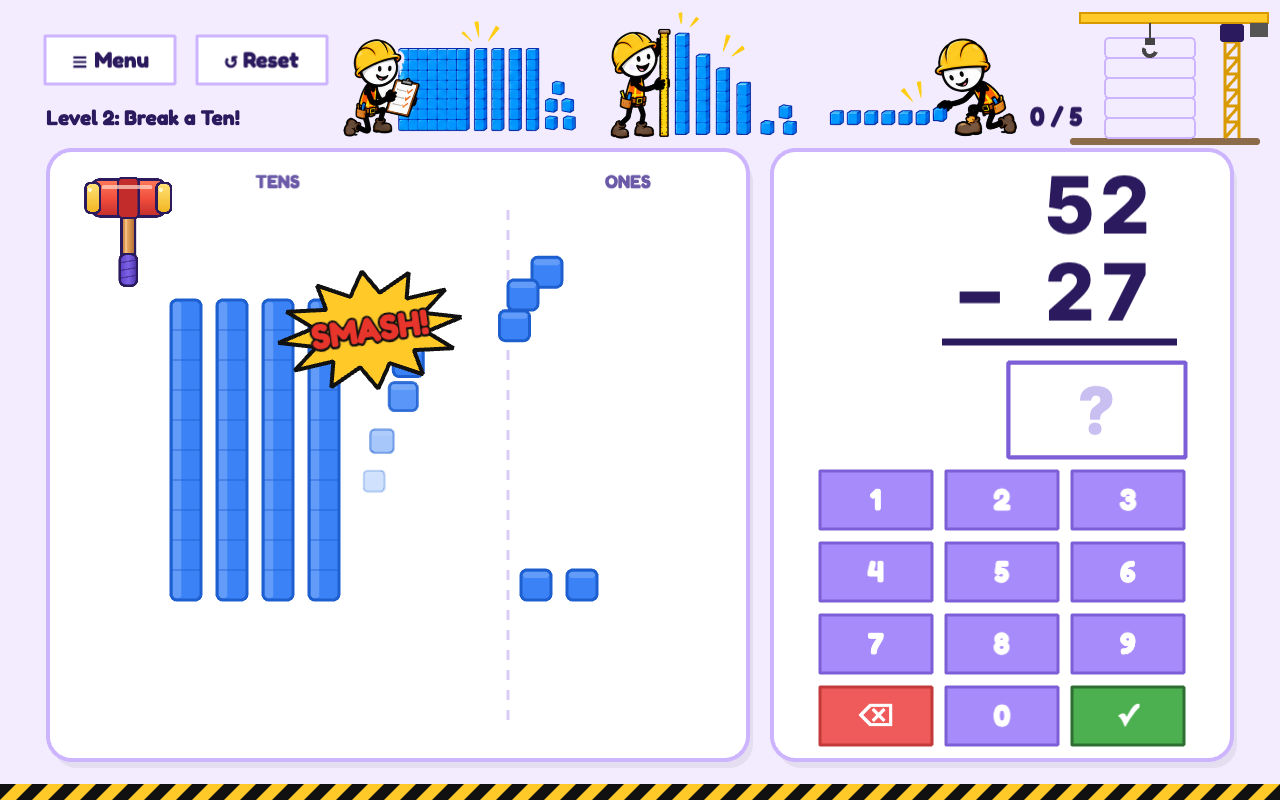
To take away 27, students need 7 ones, but there are only 2. One tap on the hammer and it swings down on a ten: SMASH! The rod bursts into 10 ones that tumble over to the ones column.
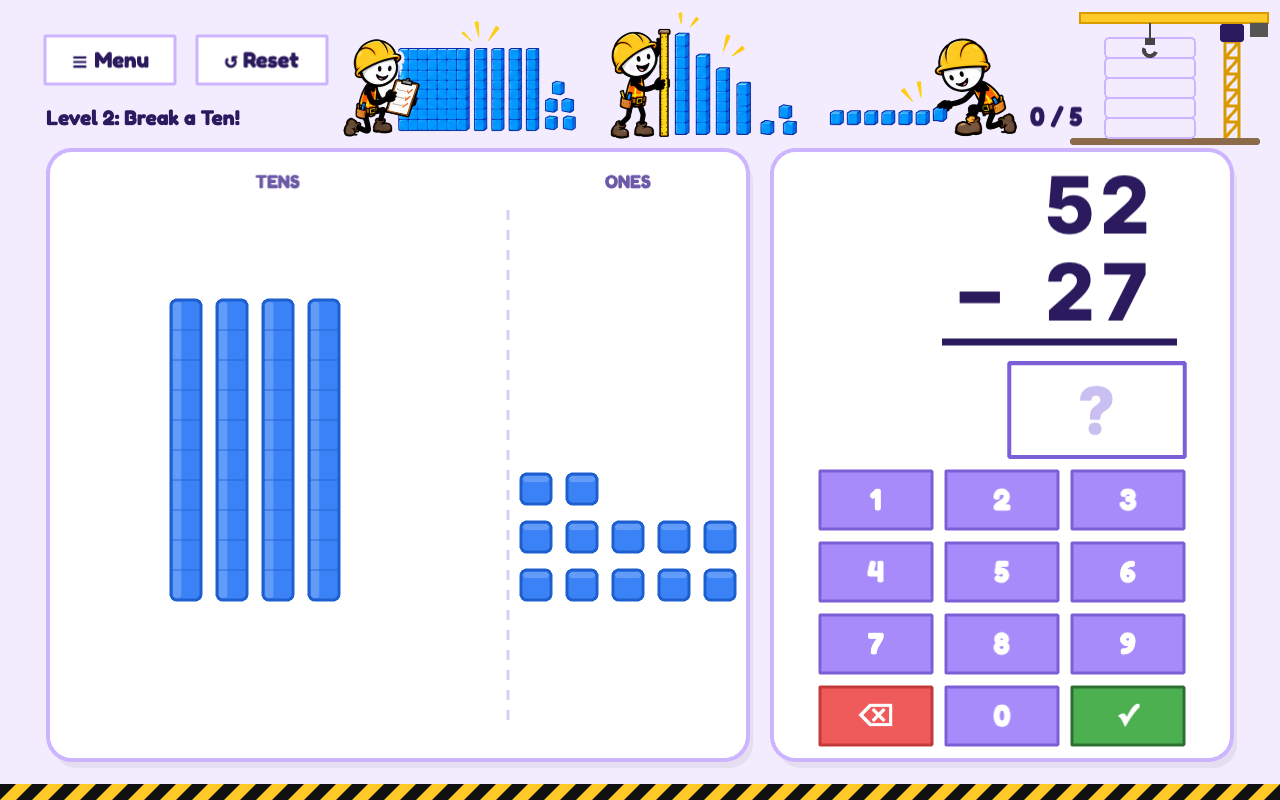
Now 52 is 4 tens and 12 ones. Same number, regrouped, and students watched it happen. That's the moment "borrowing" stops being a rule to memorise.
Take away with a tap, or draw a loop
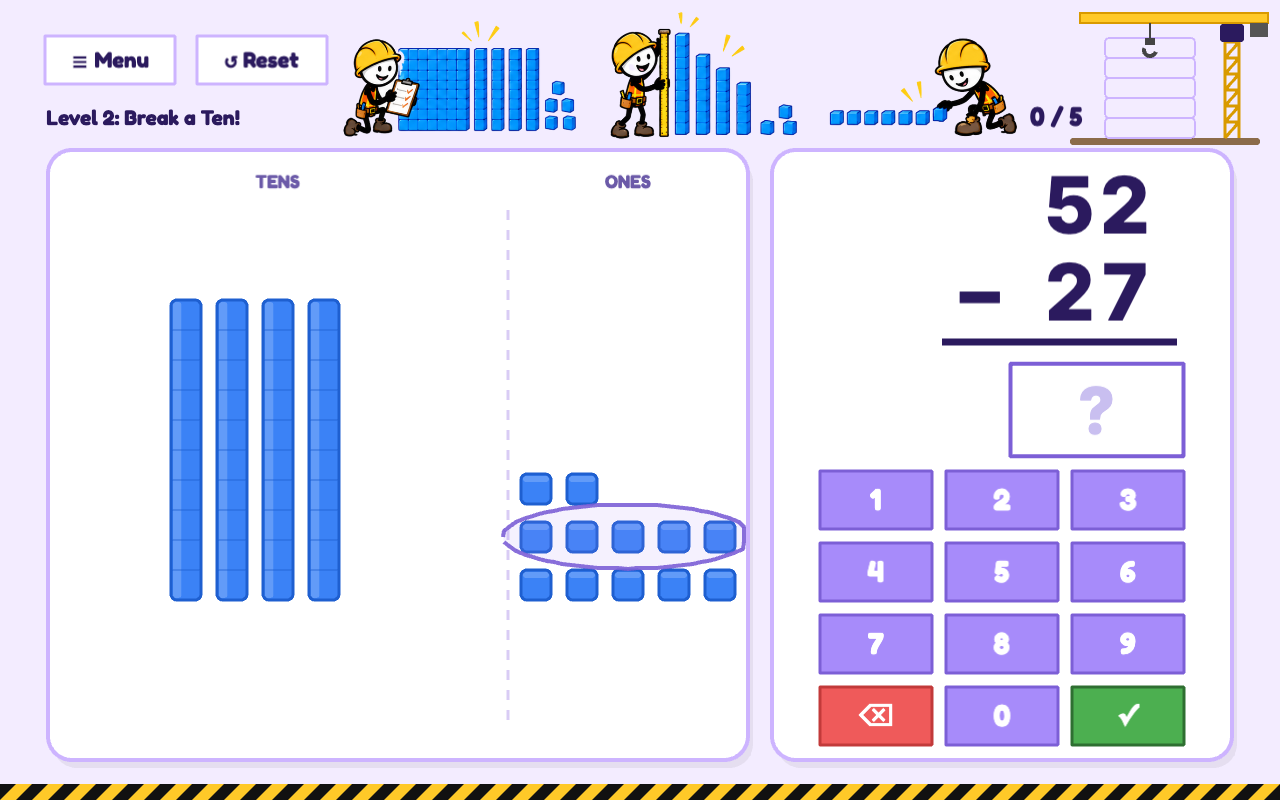
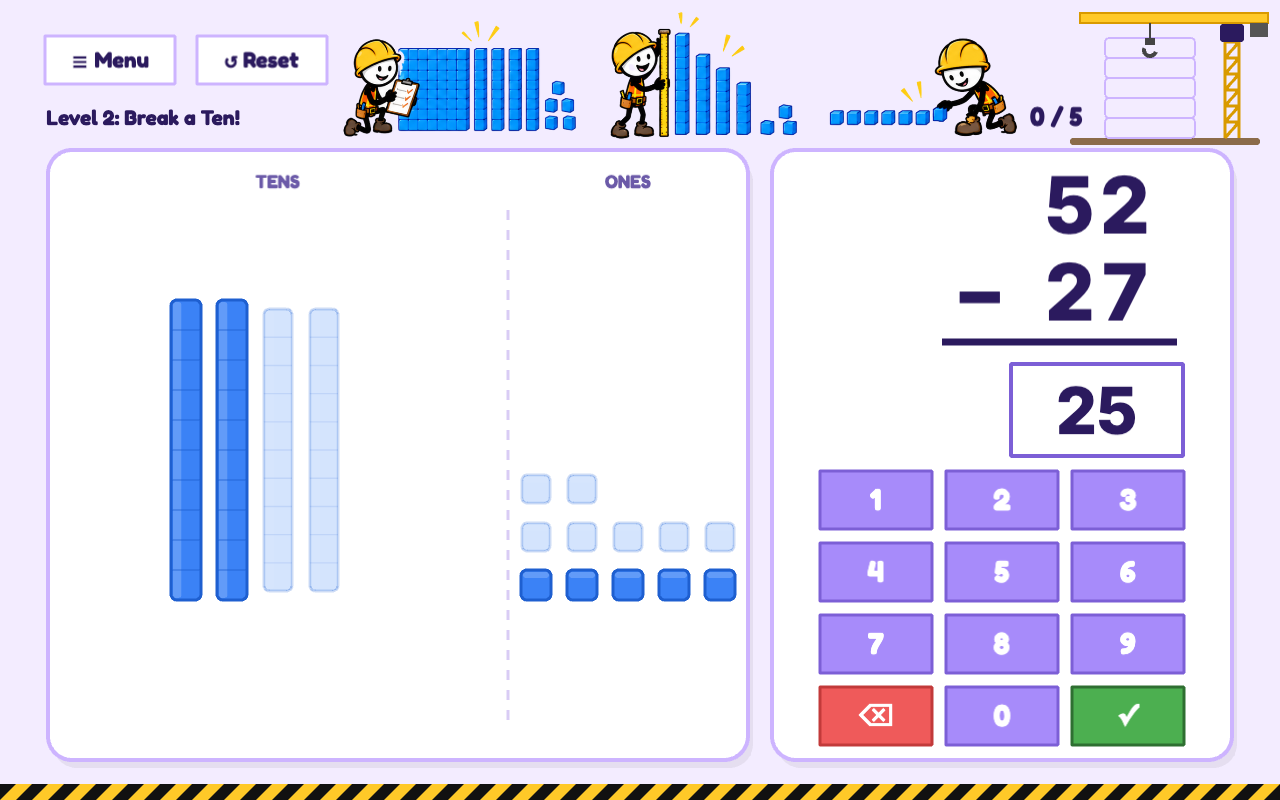
Students take away blocks by tapping them one at a time, or by drawing a loop around several at once. Taken blocks don't disappear. They stay faded in place, so students can see exactly what they took away and what is left. Took one too many? Tap it to put it back.
Count, check and celebrate
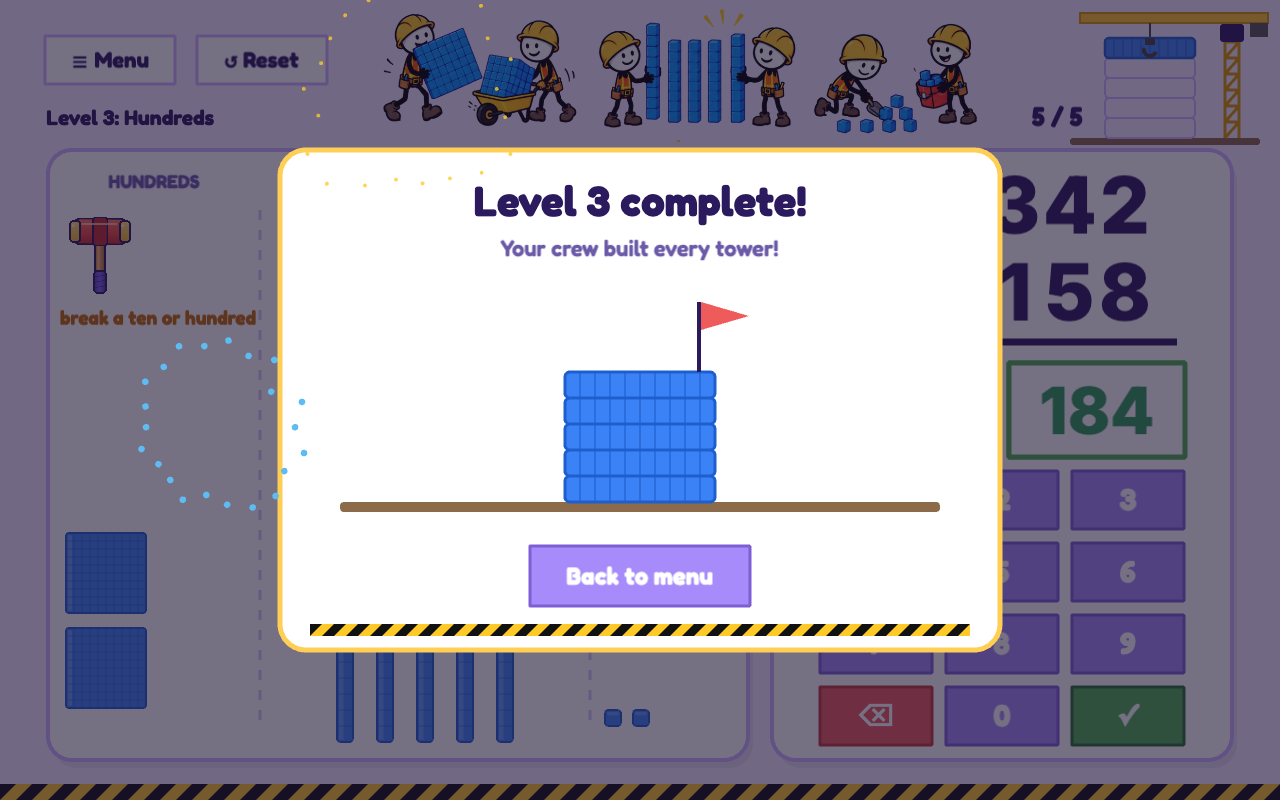
Students count what is left, type the answer and check it. A right answer gets a cheer from the builder crew: a rocket, a heart, a thumbs-up, a trophy or a happy dance, a different one each time. A crane adds a floor to the tower at the top of the screen, and five floors finish the level.
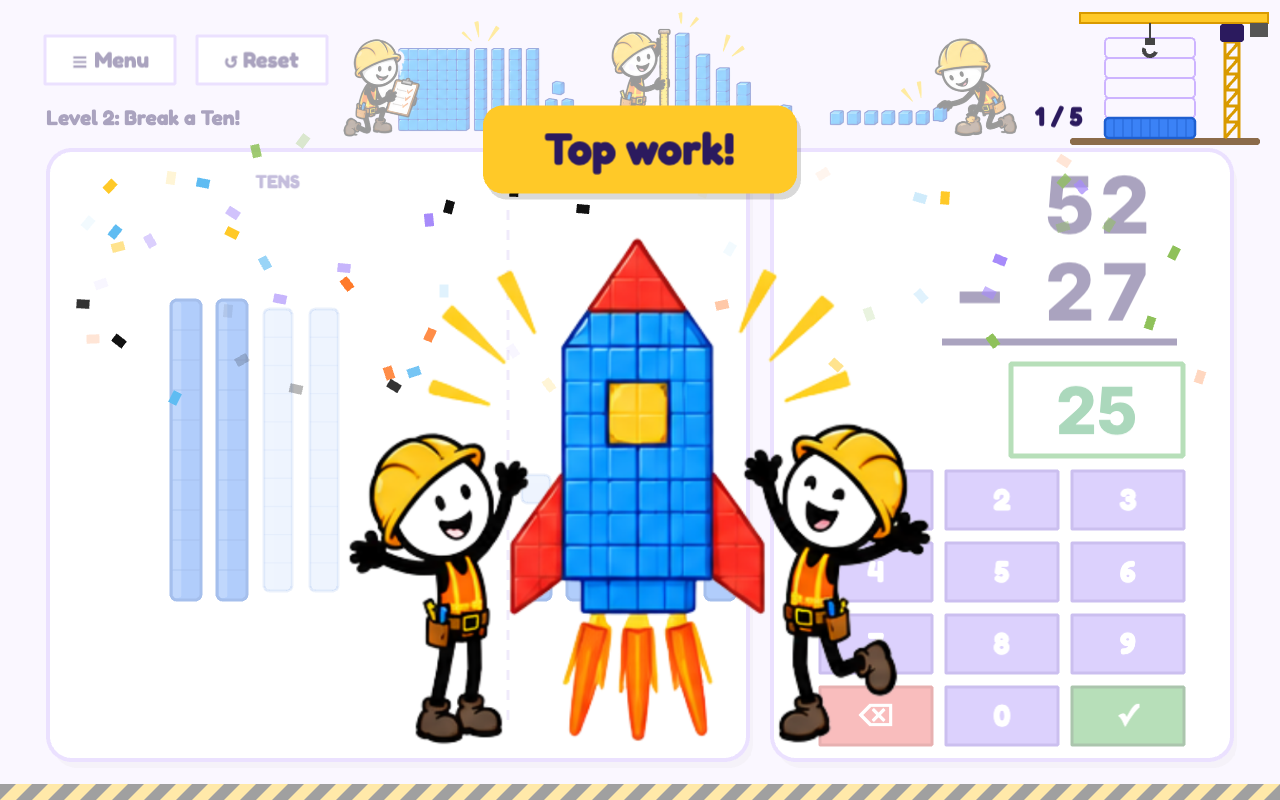
The game then waits for a Next tap, so there's time to talk about the problem before moving on. A wrong answer resets the blocks so students can try again, and a Reset button starts the blocks over any time.
3 levels
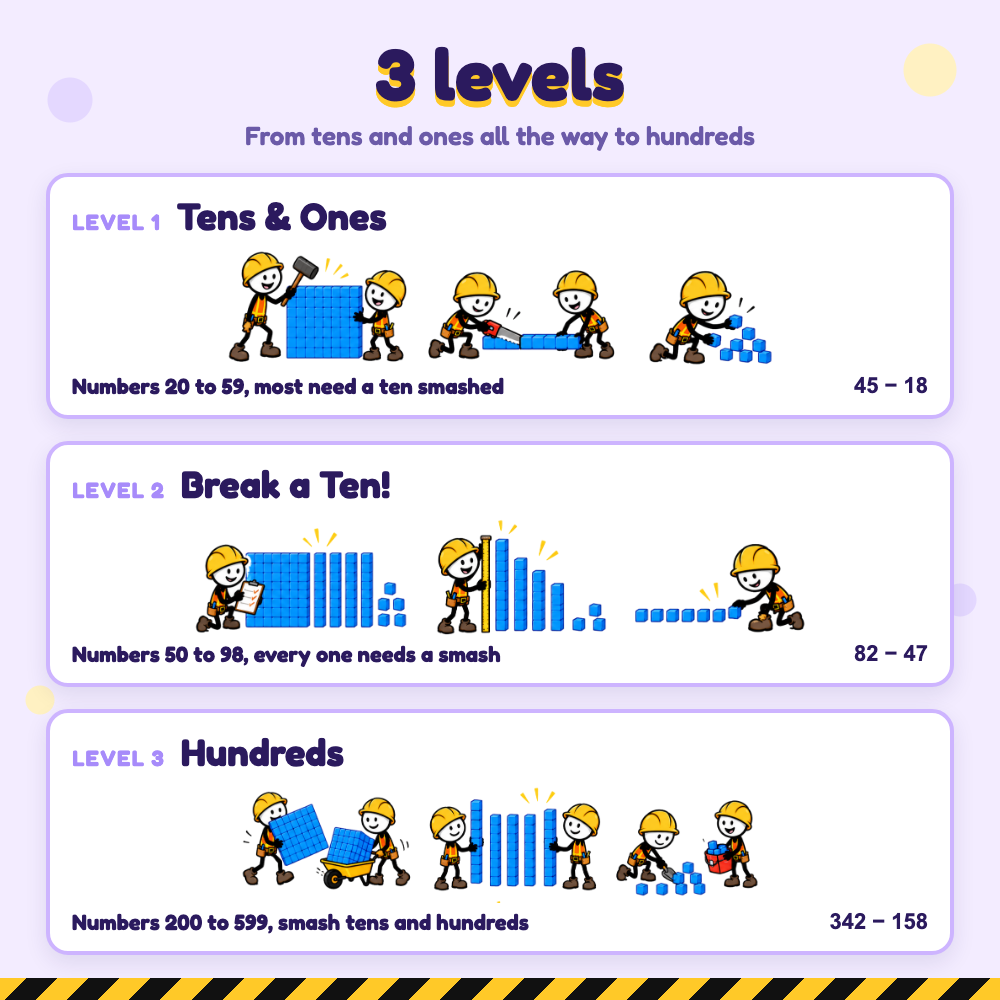
- Level 1, Tens & Ones: two-digit numbers from 20 to 59. Most problems need a ten smashed, but some don't, so students have to decide whether the hammer is needed.
- Level 2, Break a Ten!: two-digit numbers from 50 to 98. Every problem needs a ten smashed.
- Level 3, Hundreds: 200 to 599 minus a two- or three-digit number. Students smash a ten, a hundred, or both.
Level 3: smash a hundred into tens
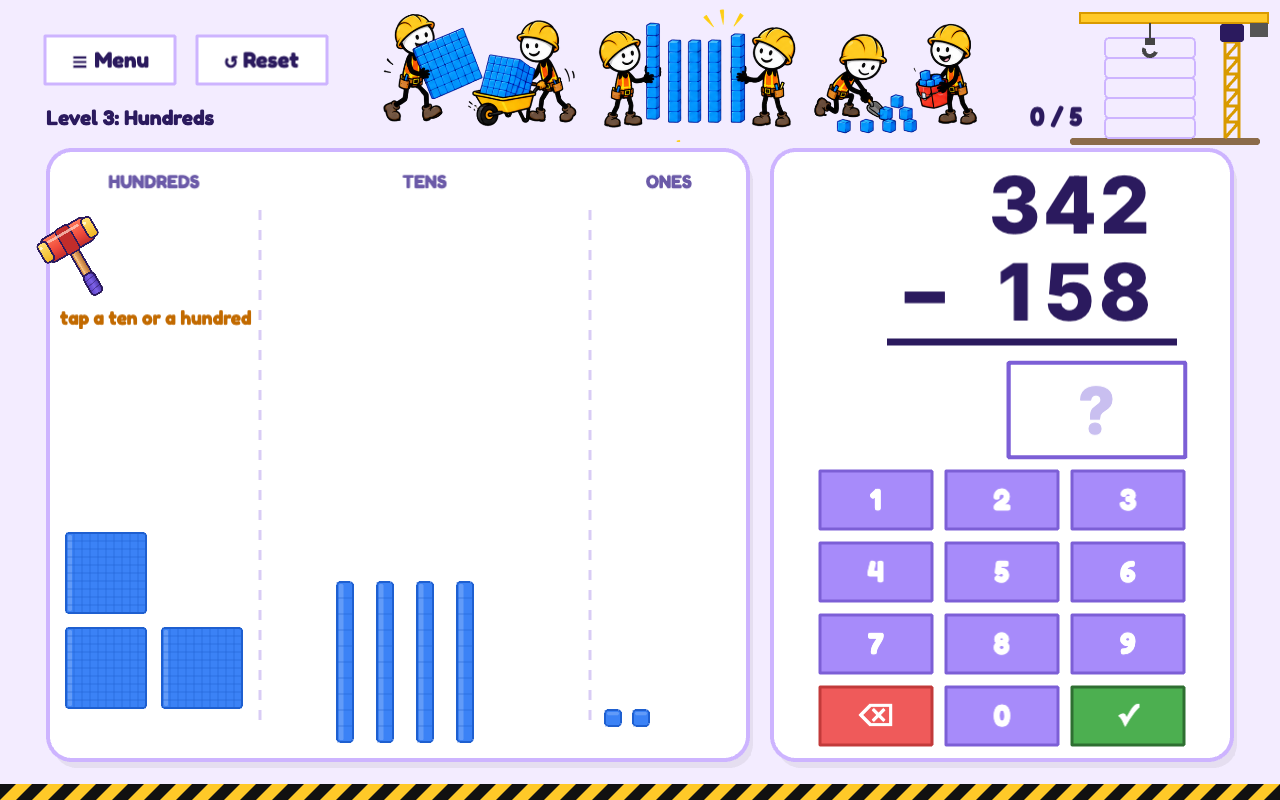
On the Hundreds level, students pick up the hammer and choose what to smash. In 342 − 158 they need more ones and more tens, so they smash a hundred into 10 tens, then a ten into 10 ones.
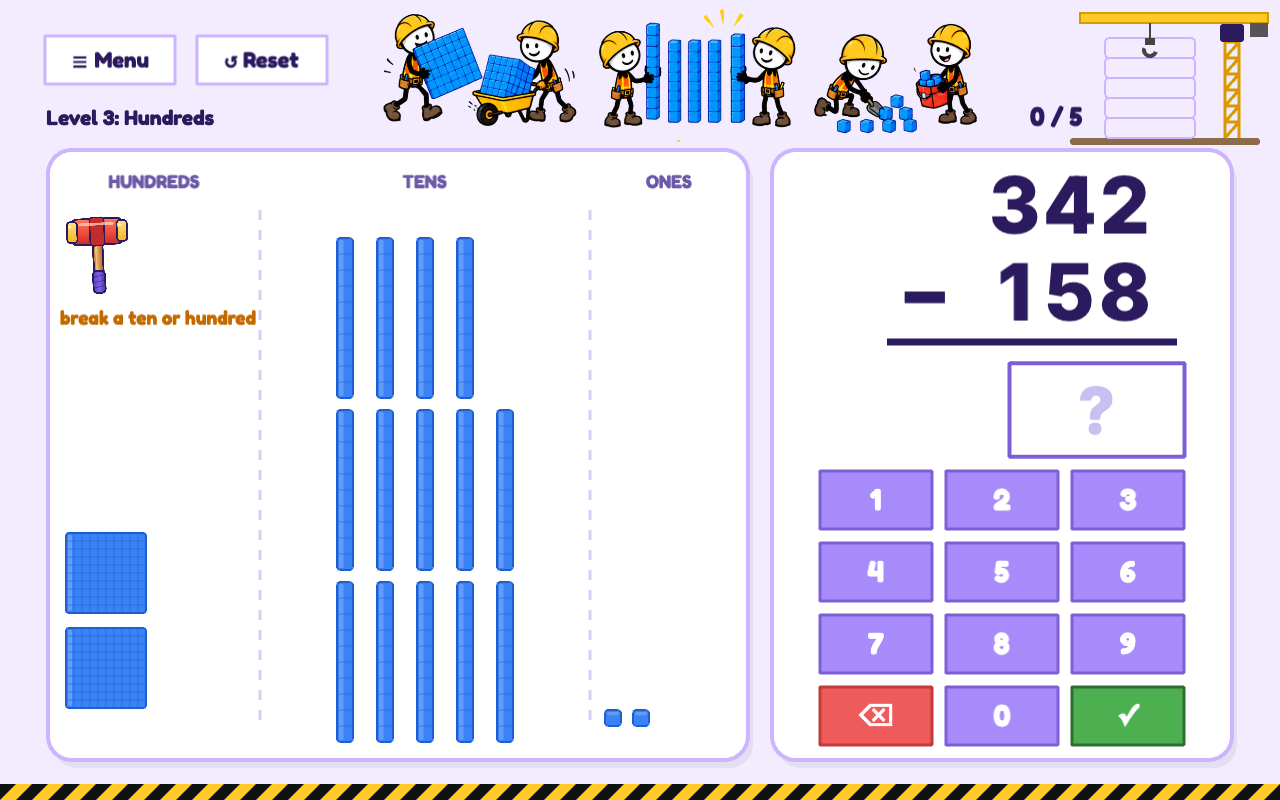
Tens line up in rows of five, so it's easy to see that 4 tens plus 10 more makes 14.
A How to Play demo, built in
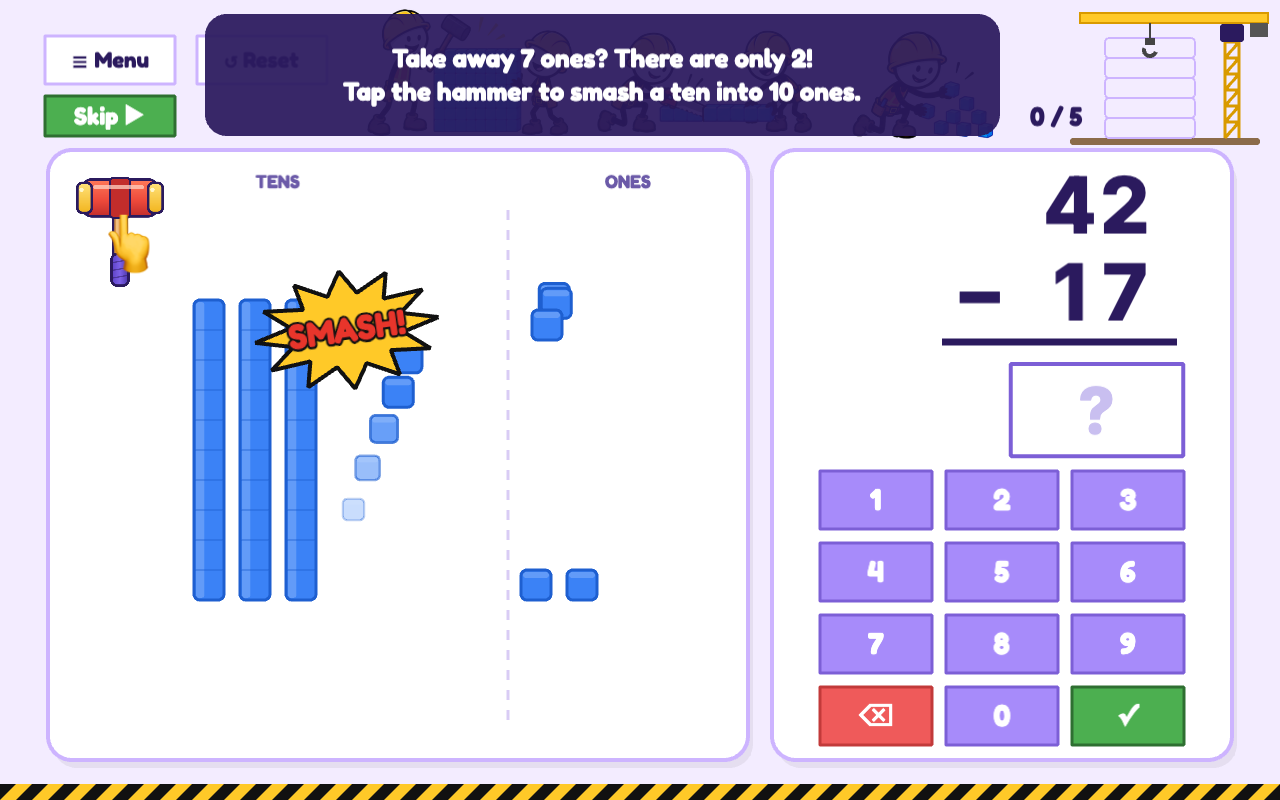
Tap How to play on the menu and a pointing hand solves 42 − 17 step by step, with a caption for each move: smash a ten, tap or loop to take away, put a block back, then type the answer. Students can watch it on their own, or you can play it on the board to introduce the game.
A builder crew for every right answer
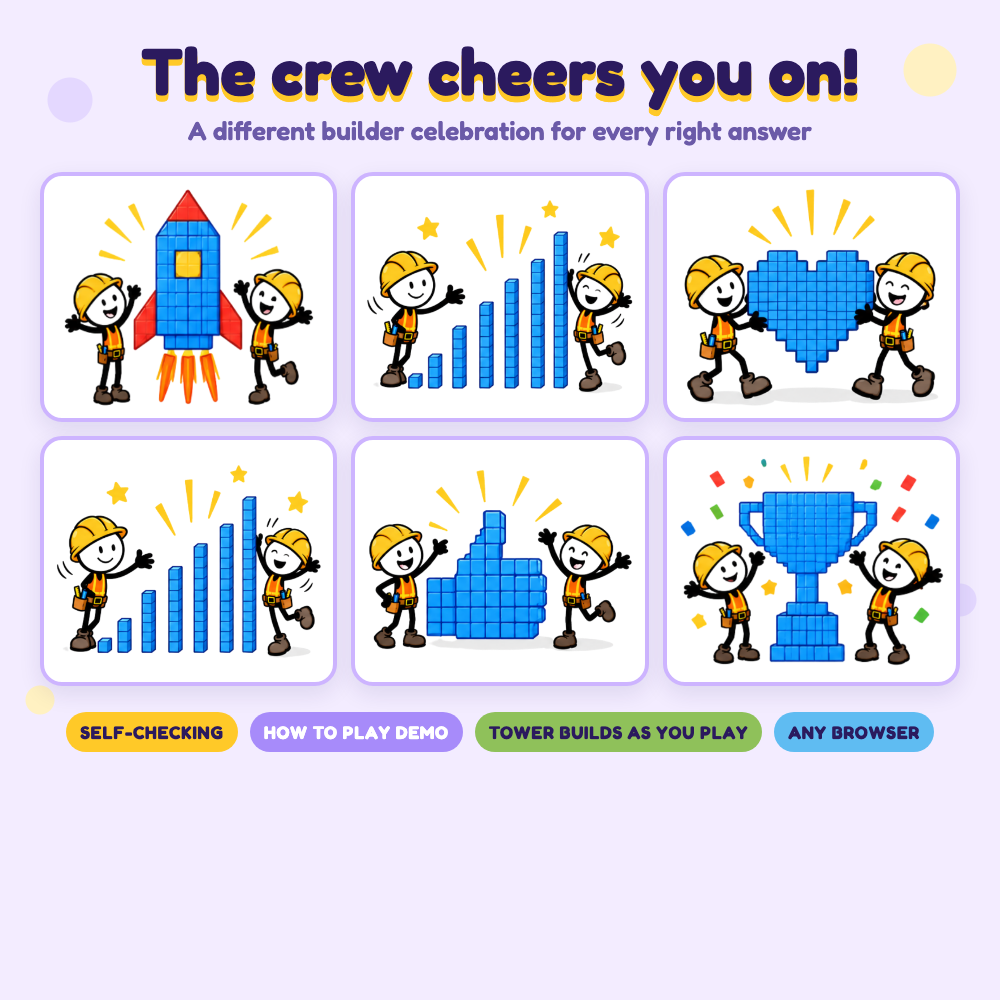
Seven different celebrations take turns, so the cheer still feels fresh on the fifth problem. Finish all five floors and the whole tower is complete.
What students practise
- Two-digit subtraction with and without regrouping
- Three-digit subtraction with regrouping across tens and hundreds
- Place value: 1 ten = 10 ones, 1 hundred = 10 tens
- Deciding when regrouping is needed, not just following a rule
- Connecting the model to the written method
Where it fits in your week
- Introducing regrouping. Play the How to Play demo on the board, then solve one together.
- Math centres and stations. One device per student or pair.
- Small groups and intervention for students who are still unsure when to regroup.
- Early finishers. Can they finish the tower on all three levels?
- Review before a subtraction with regrouping assessment.
Teaching tips
- Say it before you smash. "I need 7 ones but I only have 2, so I'll smash a ten."
- Write it as you go. Have students record the regrouping on paper as they play: cross out 5 tens, write 4 tens and 12 ones.
- Ask "Do I need the hammer?" Level 1 mixes in problems that don't need regrouping on purpose. Make students decide before they tap.
- Use the faded blocks. Point to what was taken away and what is left: the faded blocks are the 27, the bright ones are the answer.
- Talk about Level 3. Why did 342 − 158 need two smashes? Which one came first, and does it matter?
Standards
- 2.NBT.B.5: Fluently add and subtract within 100 using strategies based on place value
- 2.NBT.B.7: Add and subtract within 1000 using concrete models and place value strategies, including composing and decomposing tens and hundreds
- 2.NBT.B.9: Explain why addition and subtraction strategies work, using place value
- 3.NBT.A.2: Fluently add and subtract within 1000 using strategies based on place value
Quick answers
Do students need accounts? No. It's a link, so there's nothing to sign in to.
What devices does it work on? Any device with a web browser, including Chromebooks, tablets and the classroom board.
What grades is it for? Grades 1 to 3. Levels 1 and 2 fit second grade, and Level 3 brings in third grade three-digit subtraction.
Can students go at their own pace? Yes. The game waits for a Next tap after every right answer, and students choose their level from the menu.
Get Subtraction Smash
Give students a hammer and a reason to regroup, and subtraction with regrouping stops being a mystery rule.
Get Subtraction Smash on Teachers Pay Teachers
More from Math Curious
- 100 Monster Hunt: a hundred chart game for grades 1 to 3
- Chicken Escape: Chapter 1: making 10, place value and regrouping on the farm
- Digital Place Value Tools: build and represent numbers with base-ten blocks