Skull Island: A Fraction Escape Room set You Can Play Again and Again
Escape rooms are one of the best things you can bring to a math class. Students lean in, argue over answers and cheer when the lock opens. But they have one big problem: they only work once. As soon as students know the answers, the room is solved, and the codes travel around the class faster than you can say "no sharing."
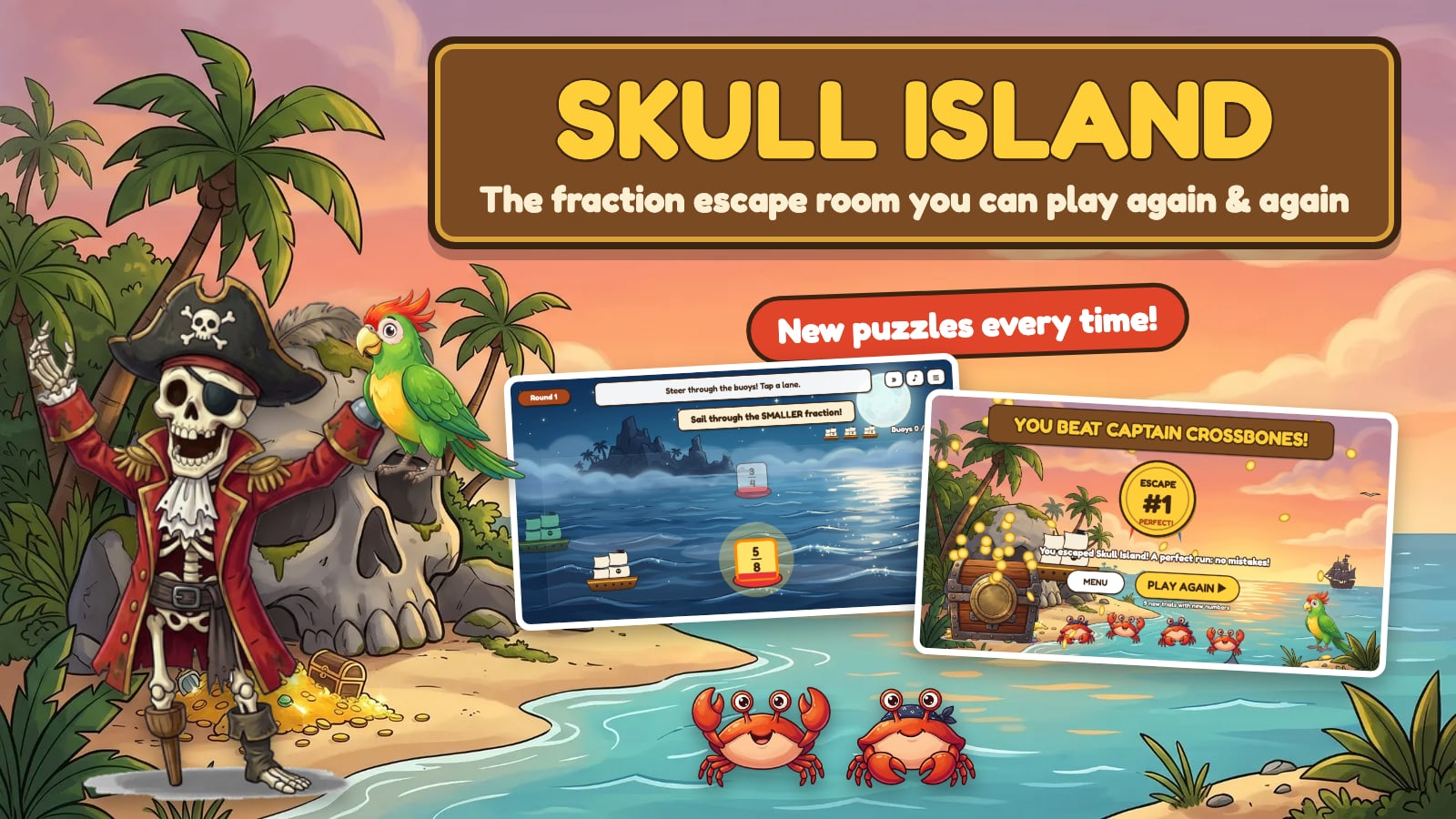
Skull Island is a digital fraction escape room for grades 4 to 7 that fixes that. Captain Crossbones has trapped your students on Skull Island, and the only way out is to beat his 9 fraction trials. And every time they play, the game makes 9 brand new trials with new numbers. So students can escape once, then escape again, and again.
Watch it in action
It plays in any web browser, on computers, Chromebooks, tablets and interactive whiteboards. There's nothing to print or set up, and students don't need logins.
How the escape works
Students press Escape the Island and choose which trial to start with. Then they go round the island, beating one trial after another, until all 9 are done.
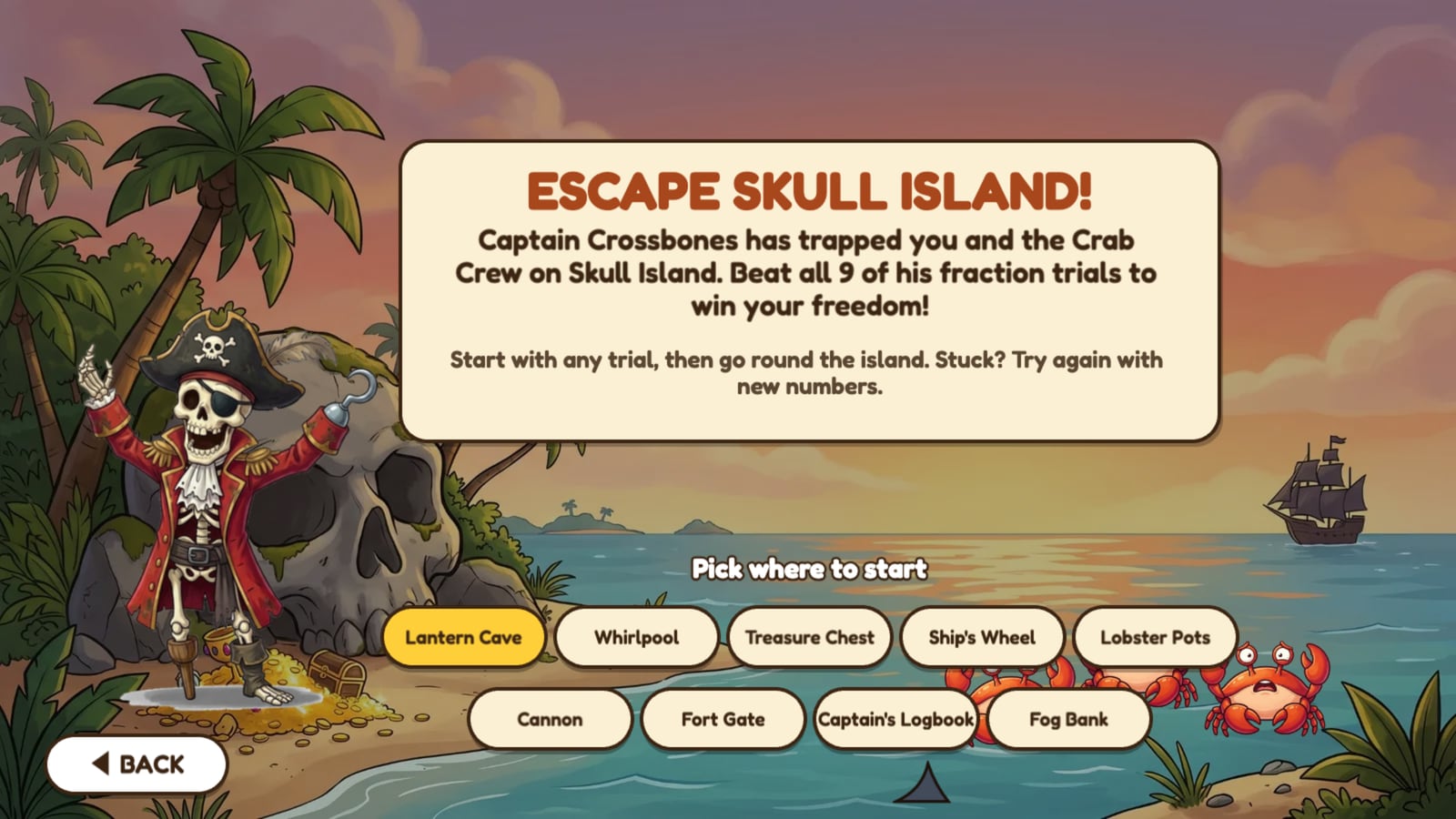
After each trial, a card shows their stars and how many of the 9 trials they've beaten. Every answer is checked as they play. A wrong answer brings Captain Crossbones, who gloats, but also gives a hint about what went wrong.
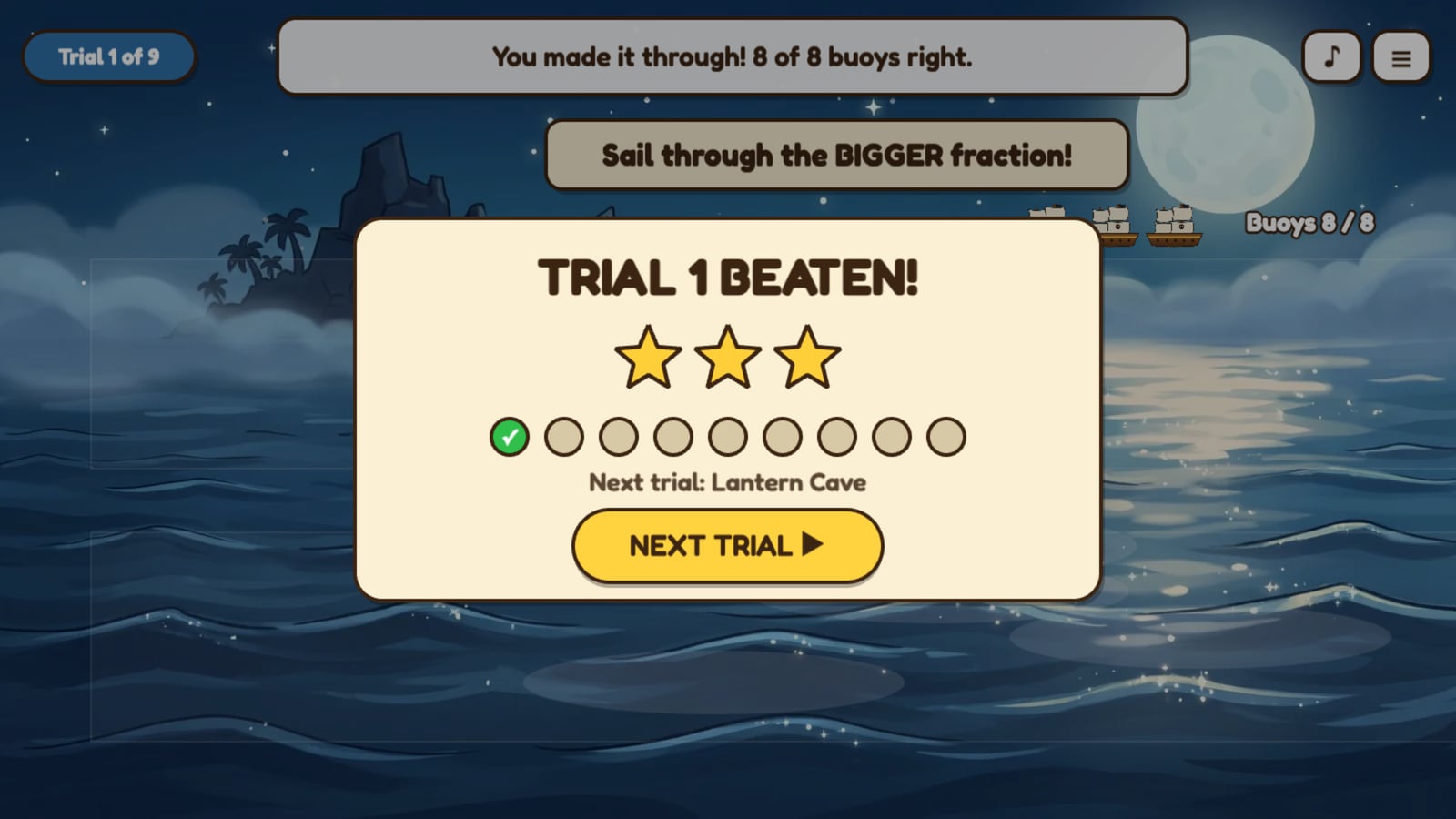
Some trials can be lost: the Treasure Chest only allows two wrong tries, and the Fog Bank has three ships. If that happens, students try again, and the trial comes back with new numbers. Nobody gets stuck for good, and nobody can just remember the answer.
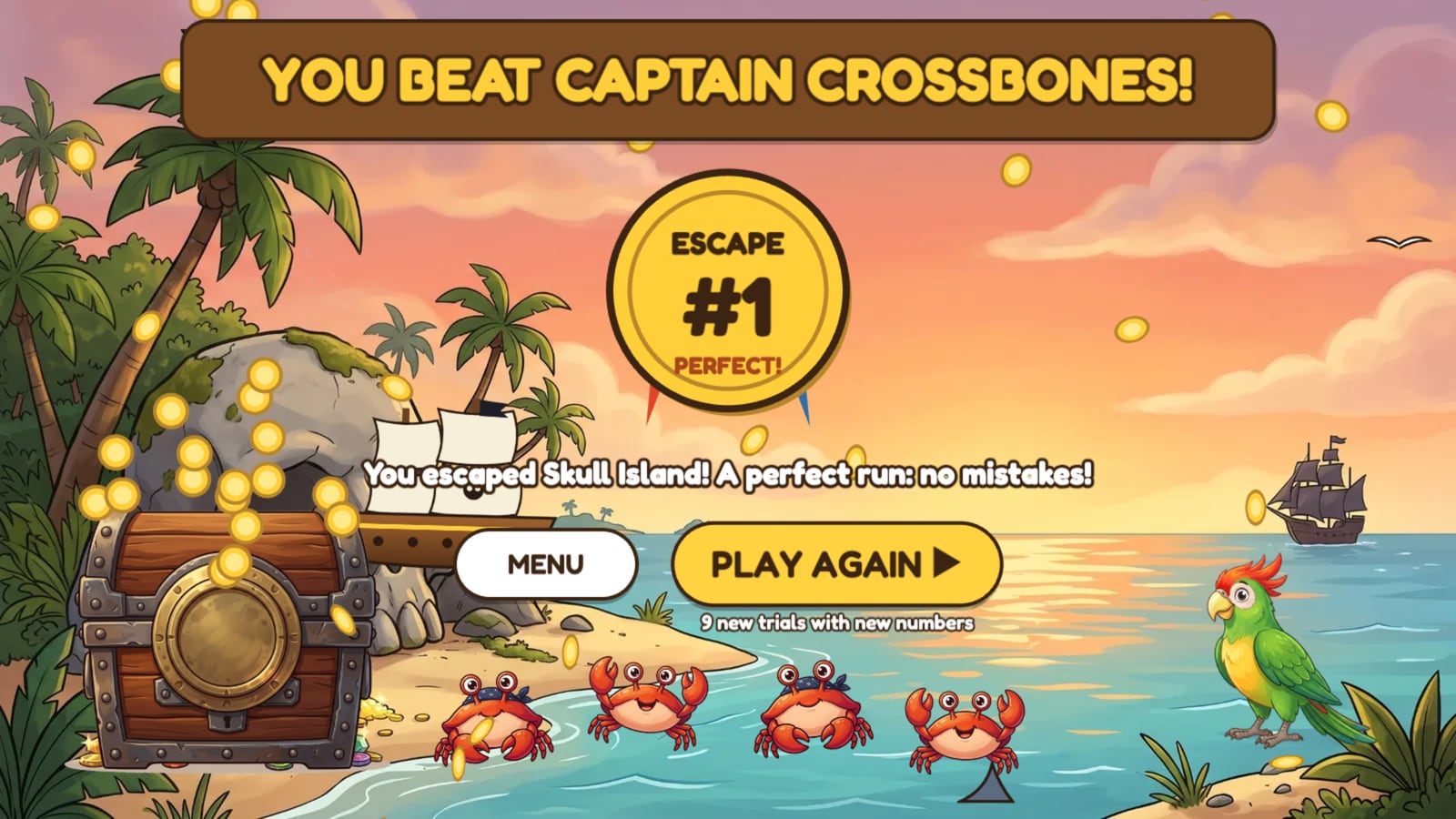
Beat all 9 trials and the reward is big: "You beat Captain Crossbones!", a gold medal with their escape number, a shower of treasure, fireworks and a dancing Crab Crew.
A new game every time
This is the part that makes Skull Island different from a printed escape room. Press Play Again and every one of the 9 trials is made fresh, with new fractions. There are millions of possible puzzles in each trial, so:
- No answer sharing. The student next to you has different numbers.
- Real practice. Students can't memorise their way out. Every escape means working out the fractions again.
- A reason to keep going. An escape counter shows how many times each student has escaped, and their best (fewest mistakes) escape. "I've escaped 4 times!" is a great thing to hear in a math lesson.
- All year long. Use it for a fraction unit, then come back to it for review and test prep. It's a new game every time.
The 9 trials
Each trial is its own pirate mini game, and each one practises a different fraction skill.
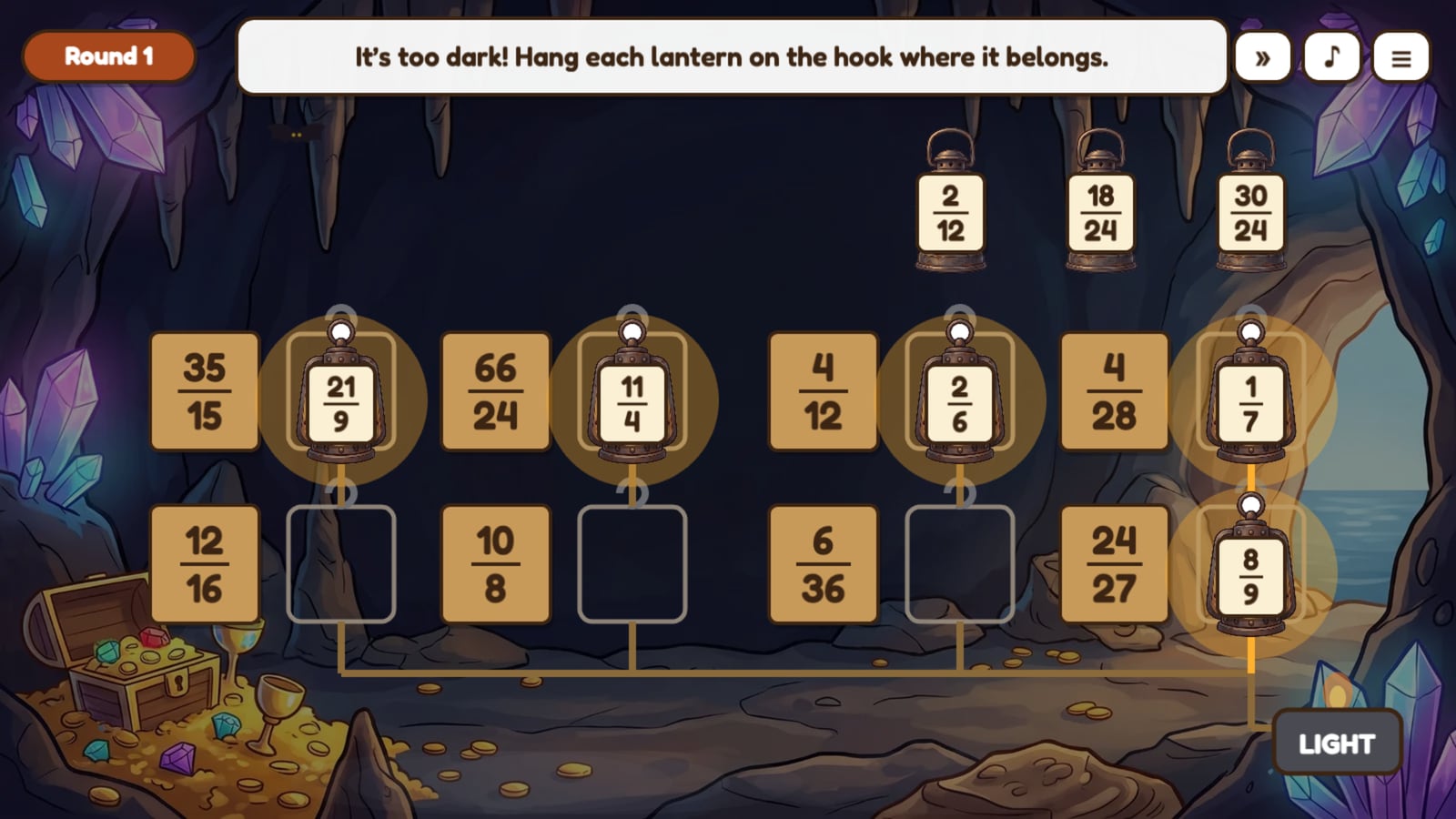
1. Lantern Cave: equivalent fractions
The cave is dark. Students hang each lantern on the hook beside an equivalent fraction, and the fuses light the way out.
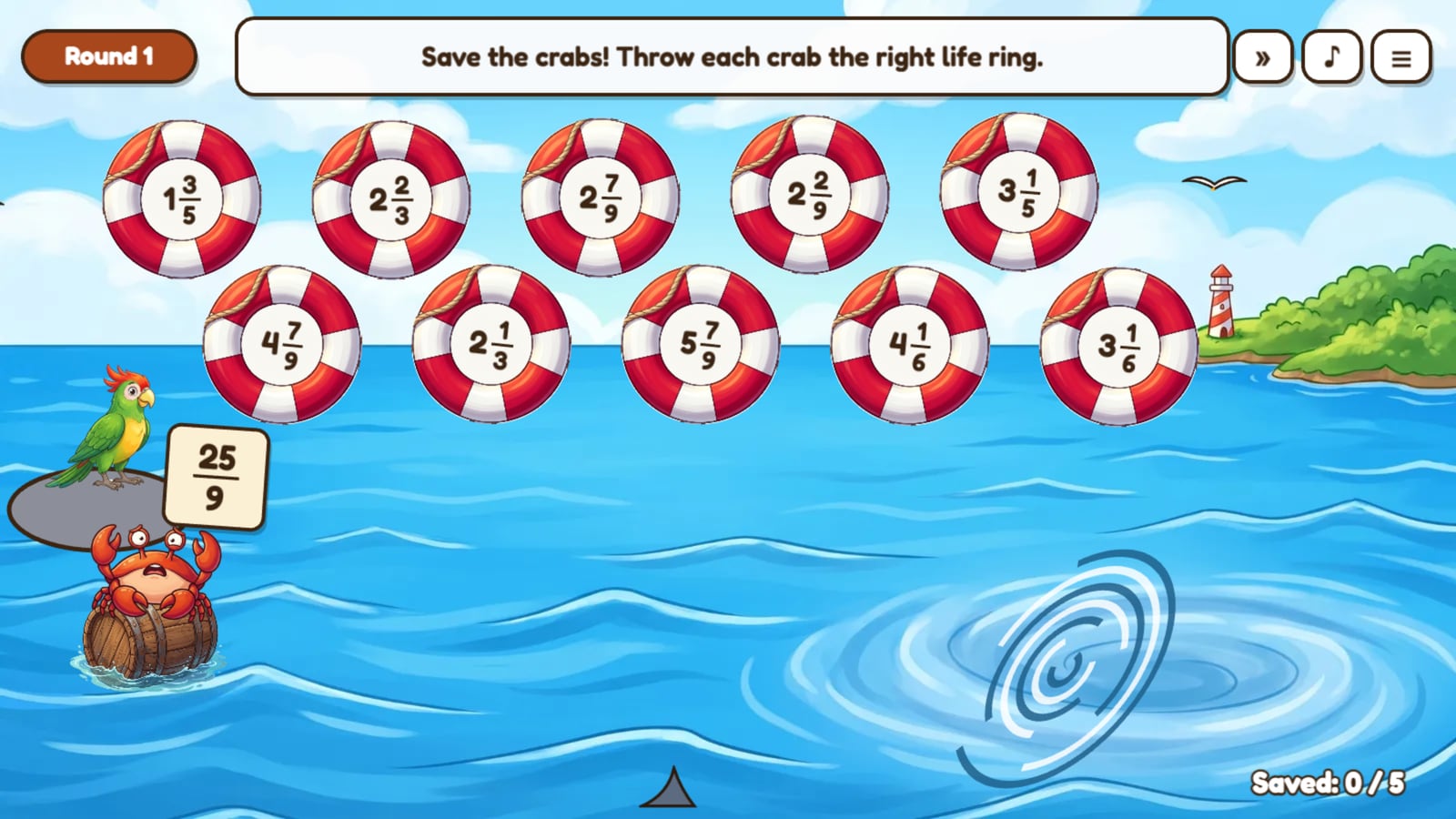
2. The Whirlpool: improper fractions and mixed numbers
Crabs drift towards a whirlpool on barrels, each holding an improper fraction. Students throw each crab the life ring with the matching mixed number before it's swept away.
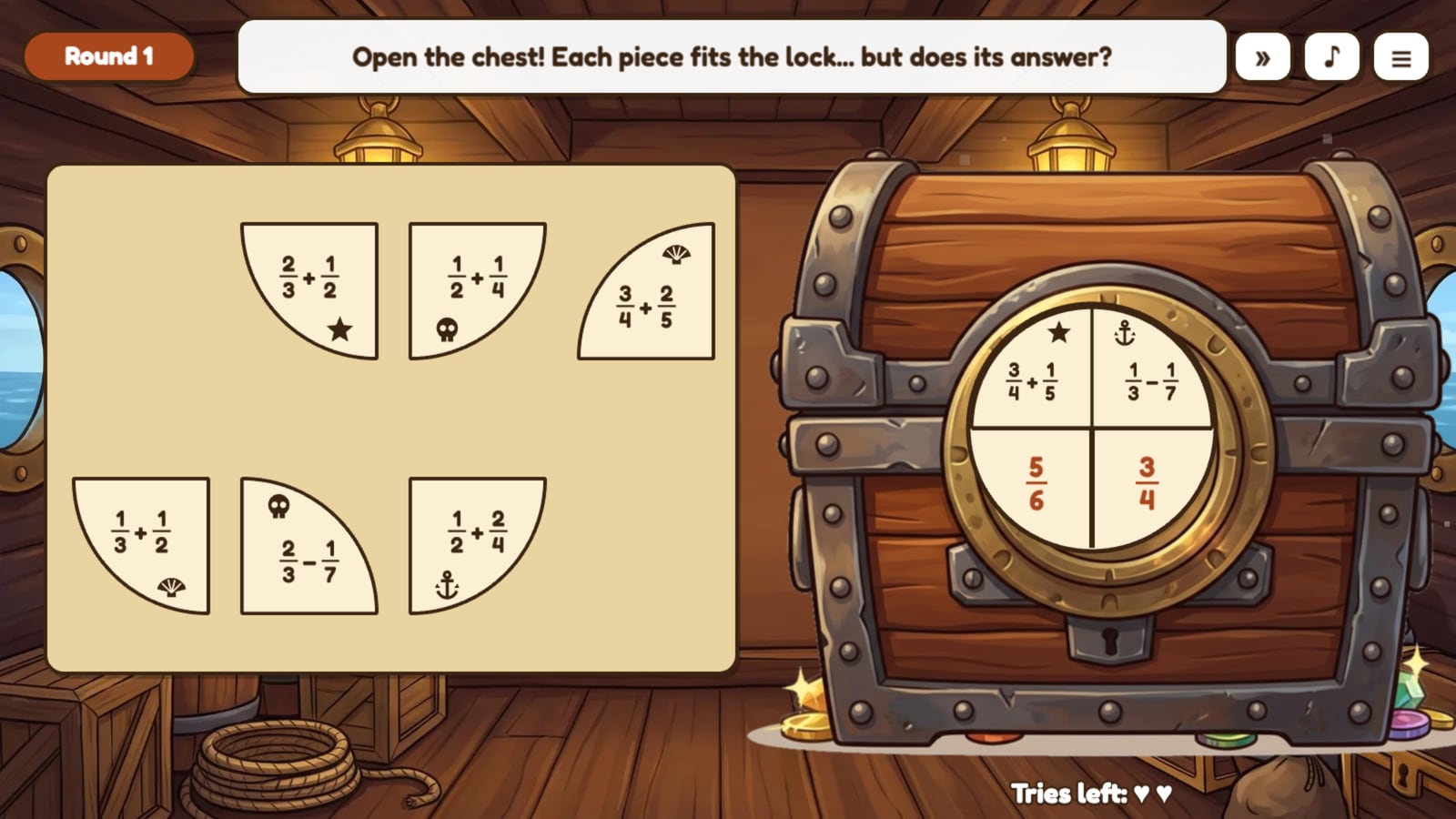
3. The Treasure Chest: adding and subtracting fractions
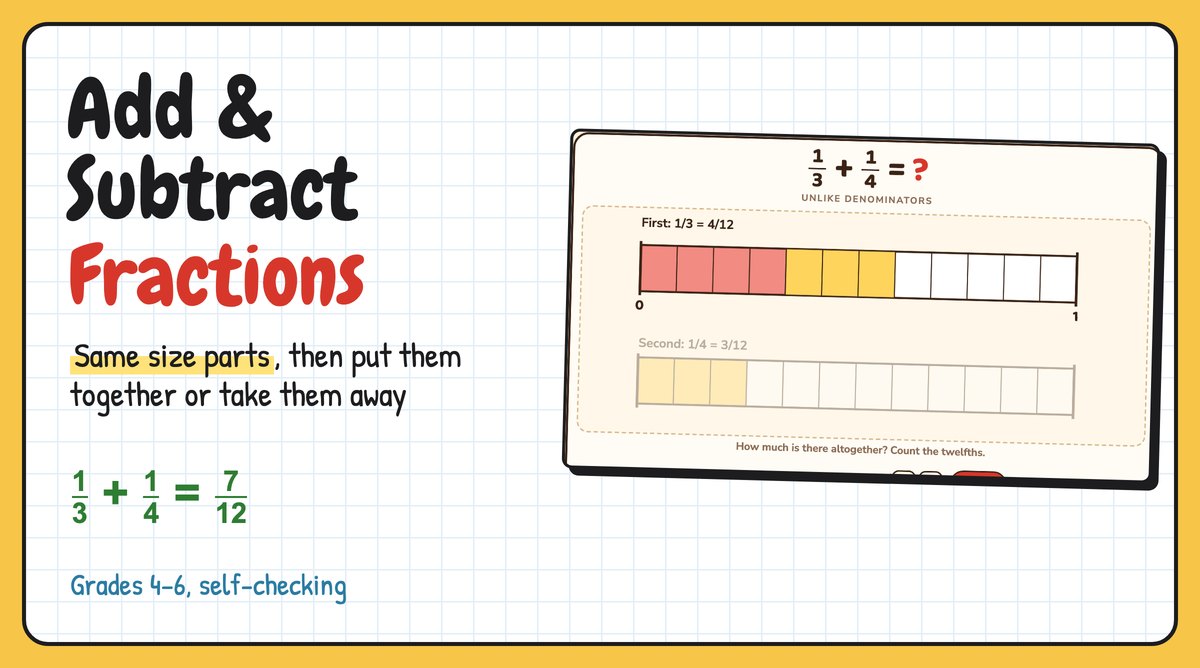
Each quarter of the chest's lock shows an answer. Students add and subtract fractions with unlike denominators to find which piece fits each part, then pick the lock combination. Only two wrong tries!
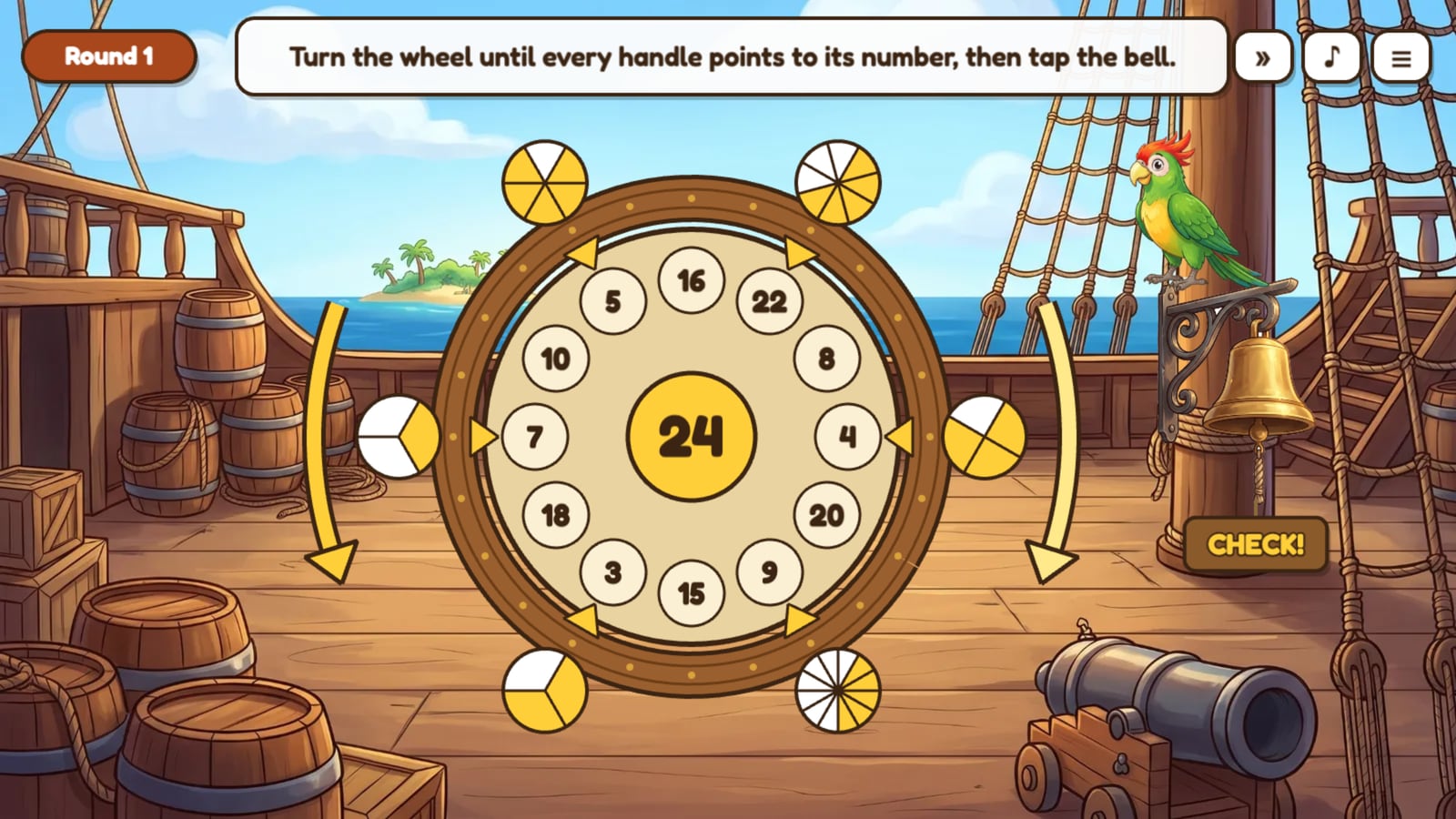
4. The Ship's Wheel: fraction of a number
Students turn the ship's wheel until every fraction points to that fraction of the number in the middle, then ring the bell to check.
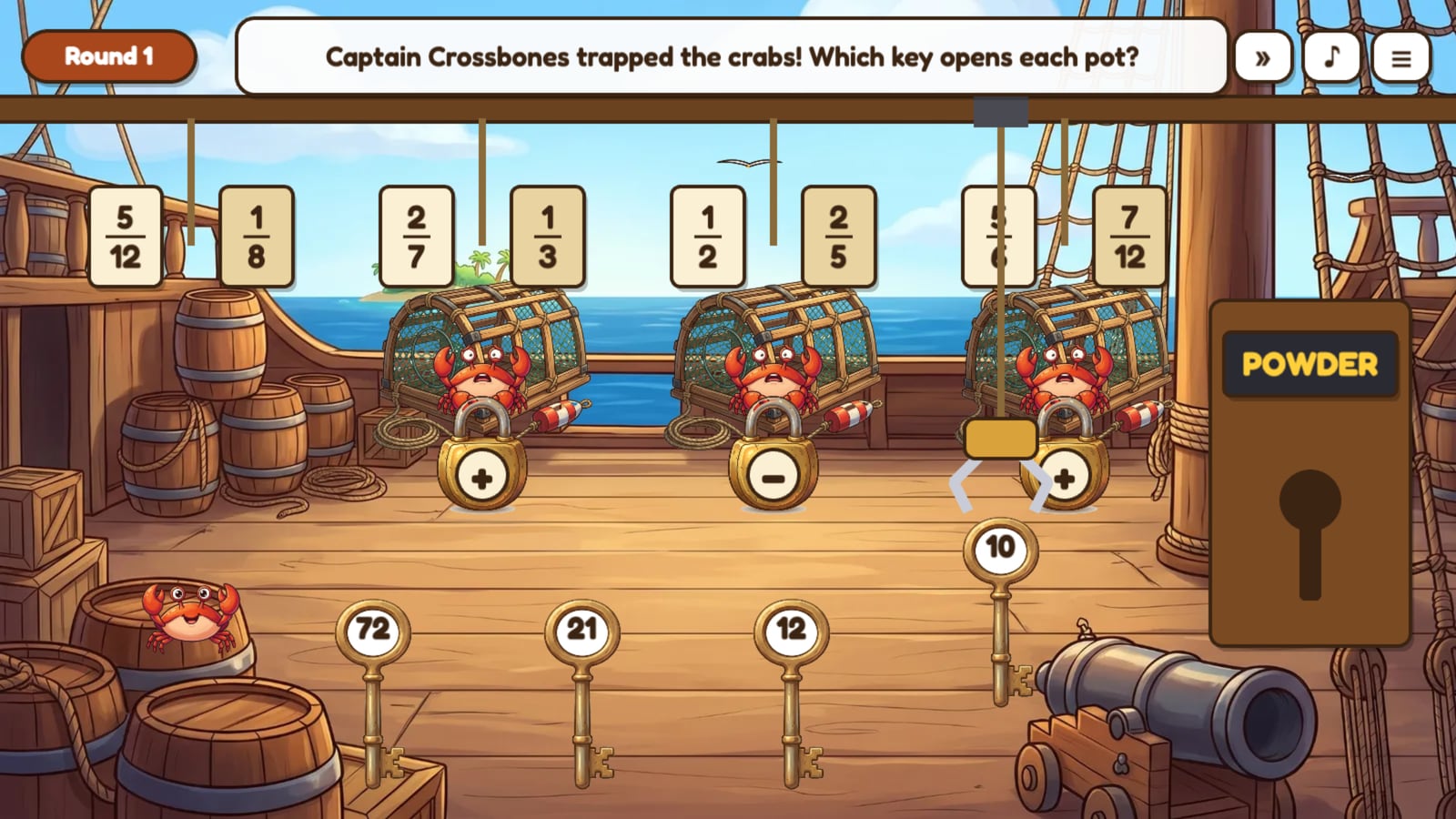
5. The Lobster Pots: least common denominator
Captain Crossbones has trapped crabs in lobster pots. Each padlock needs the key with the least common denominator of two fractions. The leftover key opens the powder store.
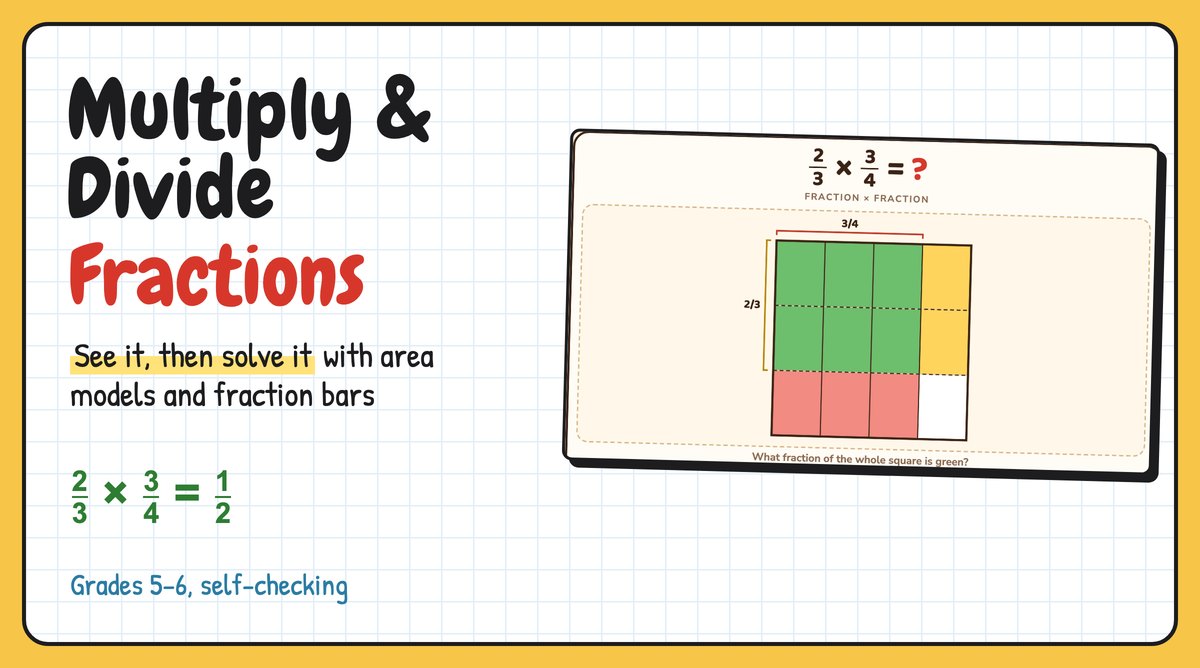
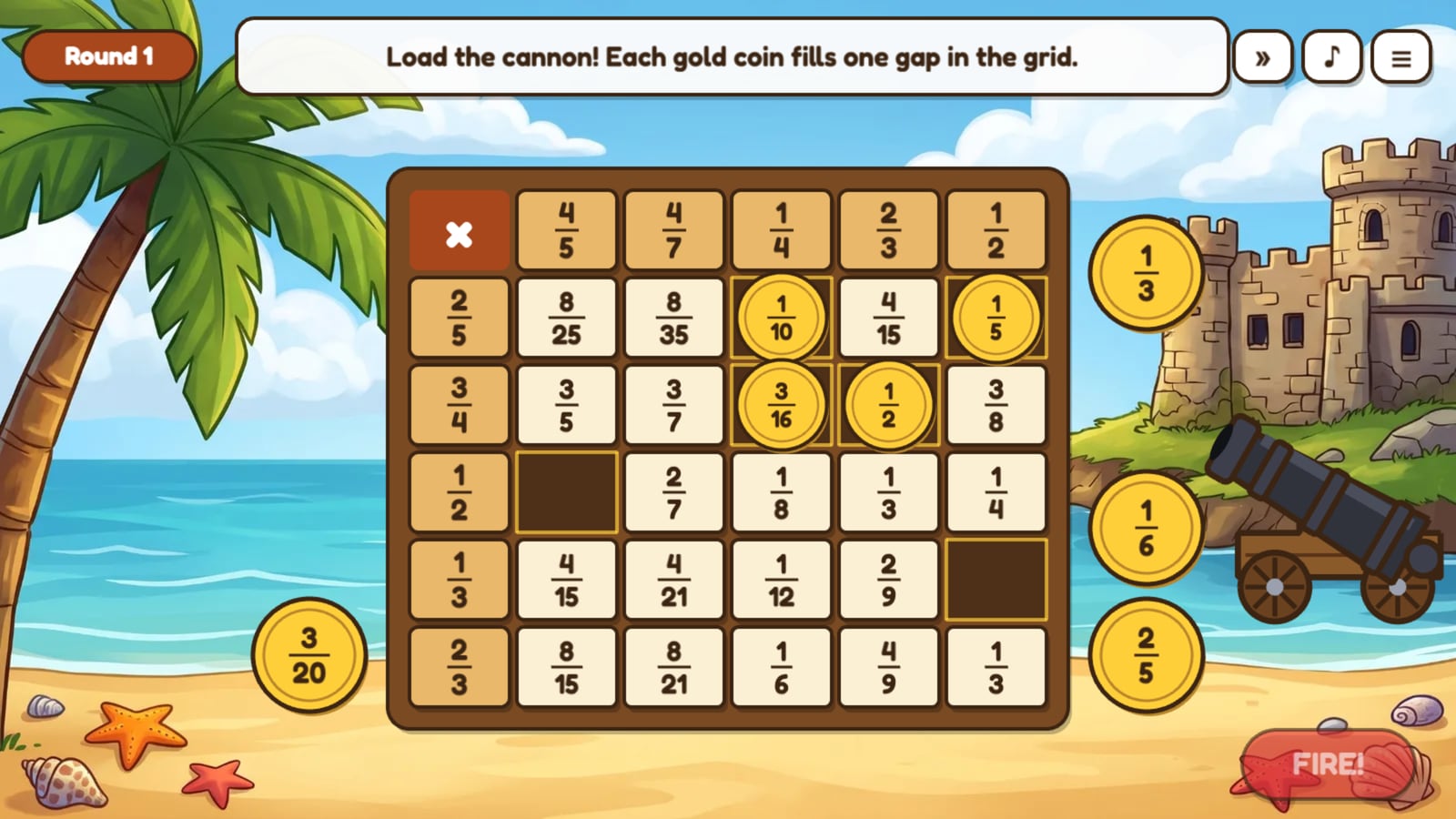
6. The Cannon: multiplying fractions
Students drag gold coins into the gaps of a fraction multiplication table to load the cannon, then press FIRE!
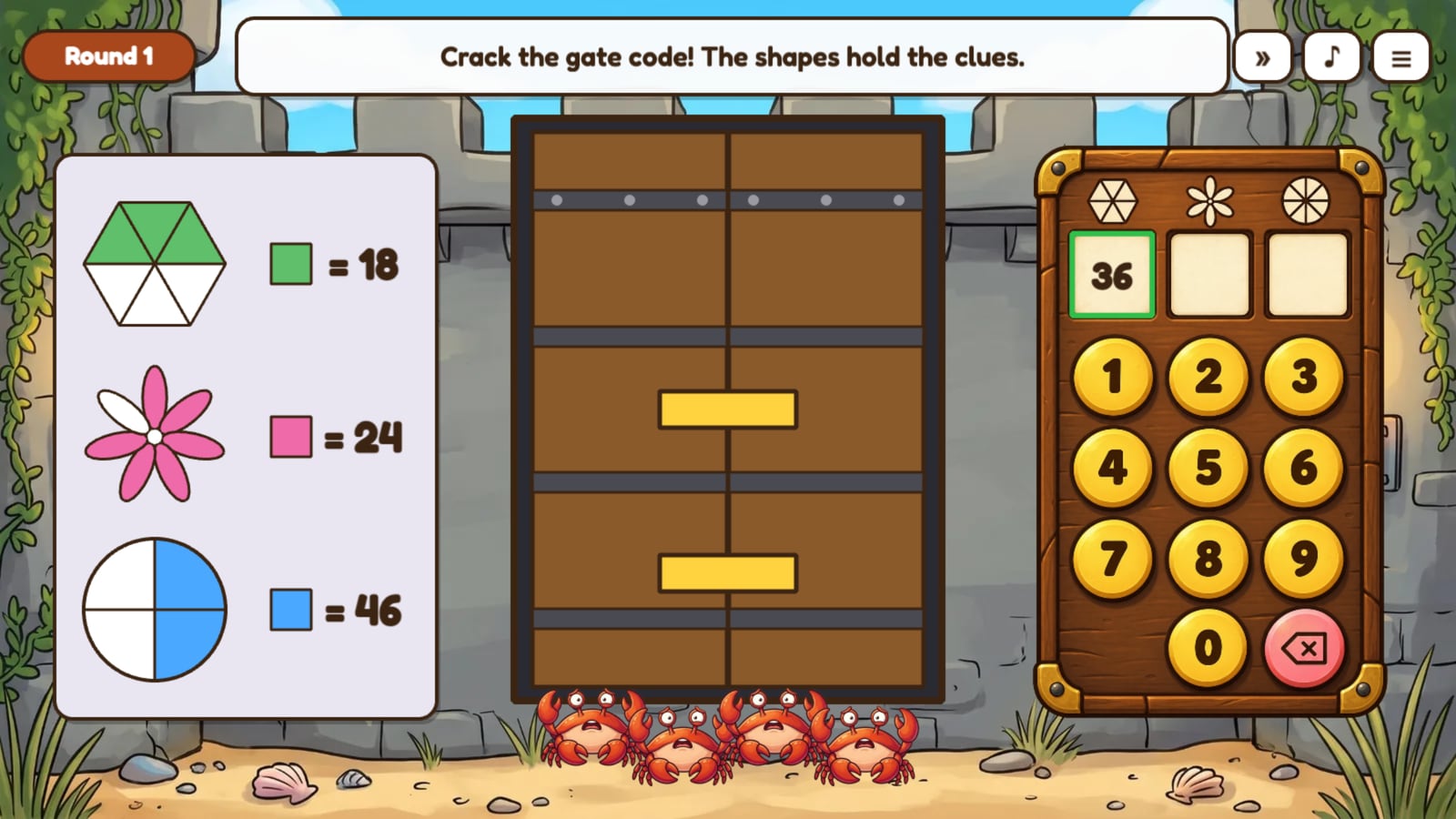
7. The Fort Gate: finding the whole
The shaded part of each shape is worth a number. Students work out the whole for each one and type the gate code on the keypad.
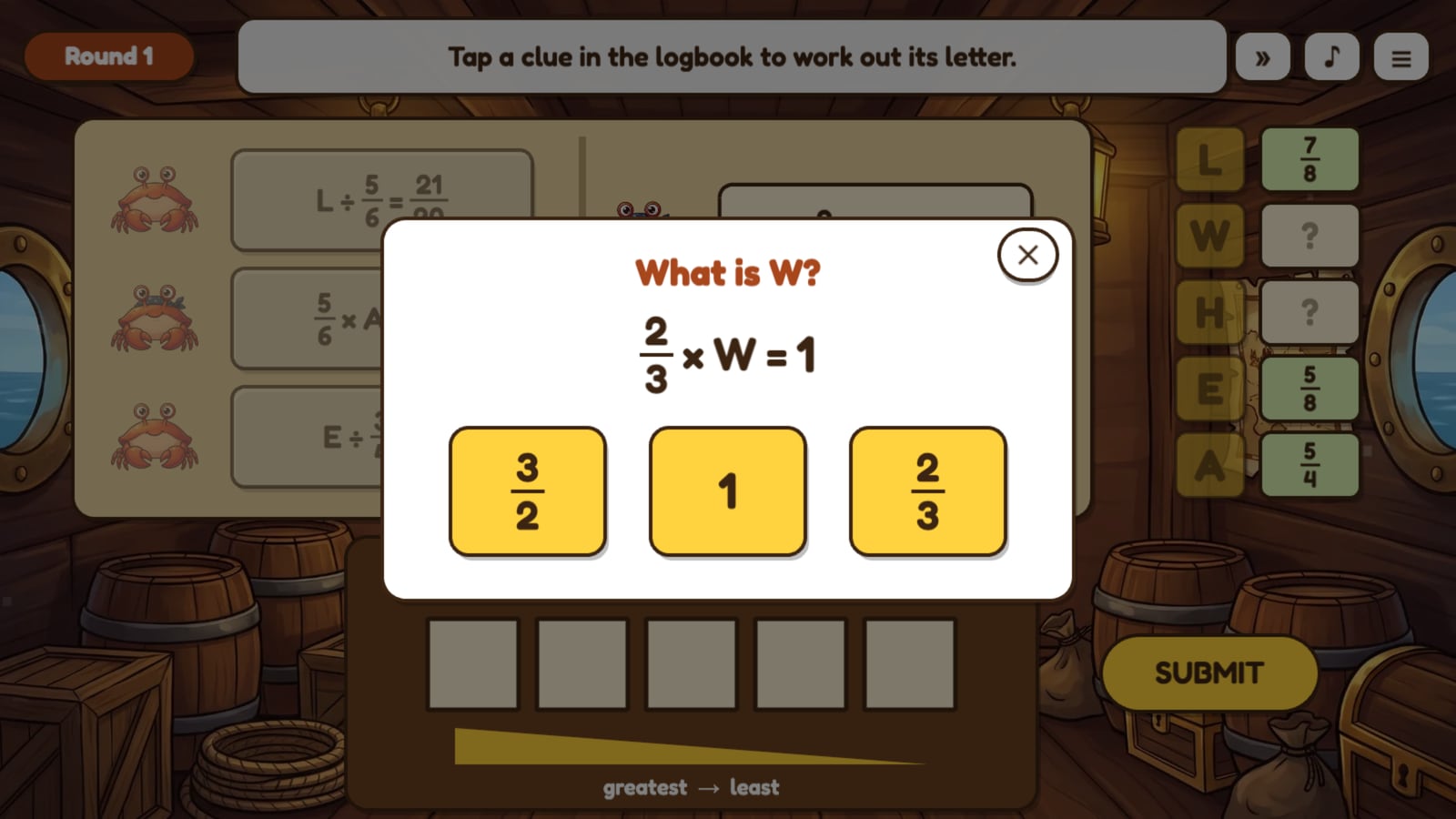
8. The Captain's Logbook: multiplying and dividing fractions
Each clue in the logbook hides a letter's value. Students multiply and divide fractions to find them all, then put the letters in order from greatest to least to spell the password.
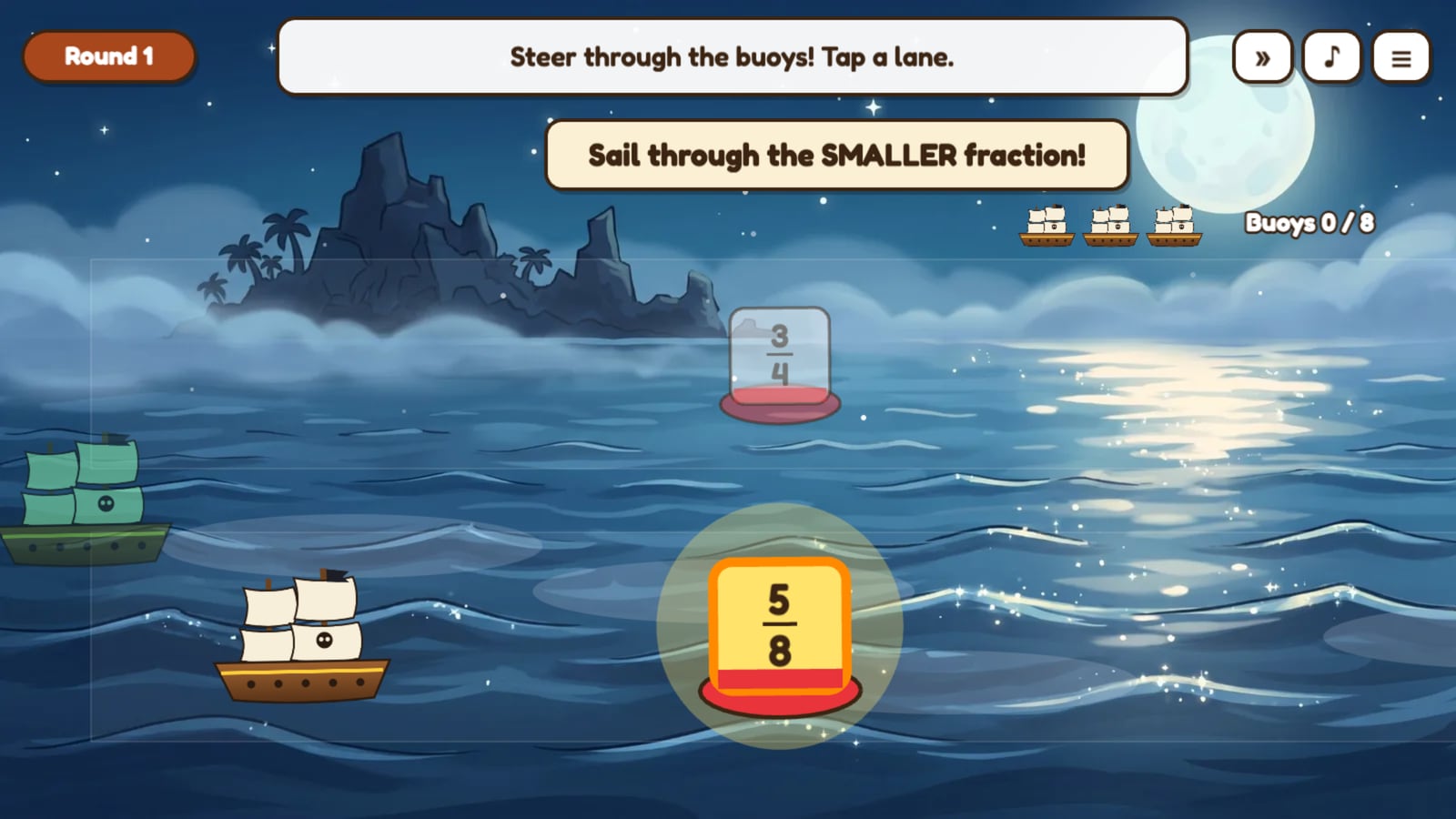
9. The Fog Bank: comparing fractions
Students race their ship through the fog, steering through the bigger or smaller fraction at each pair of buoys. The fraction they choose lights up gold, a right choice makes the ship leap ahead, and a wrong one sinks it!
Self-checking, with a hint
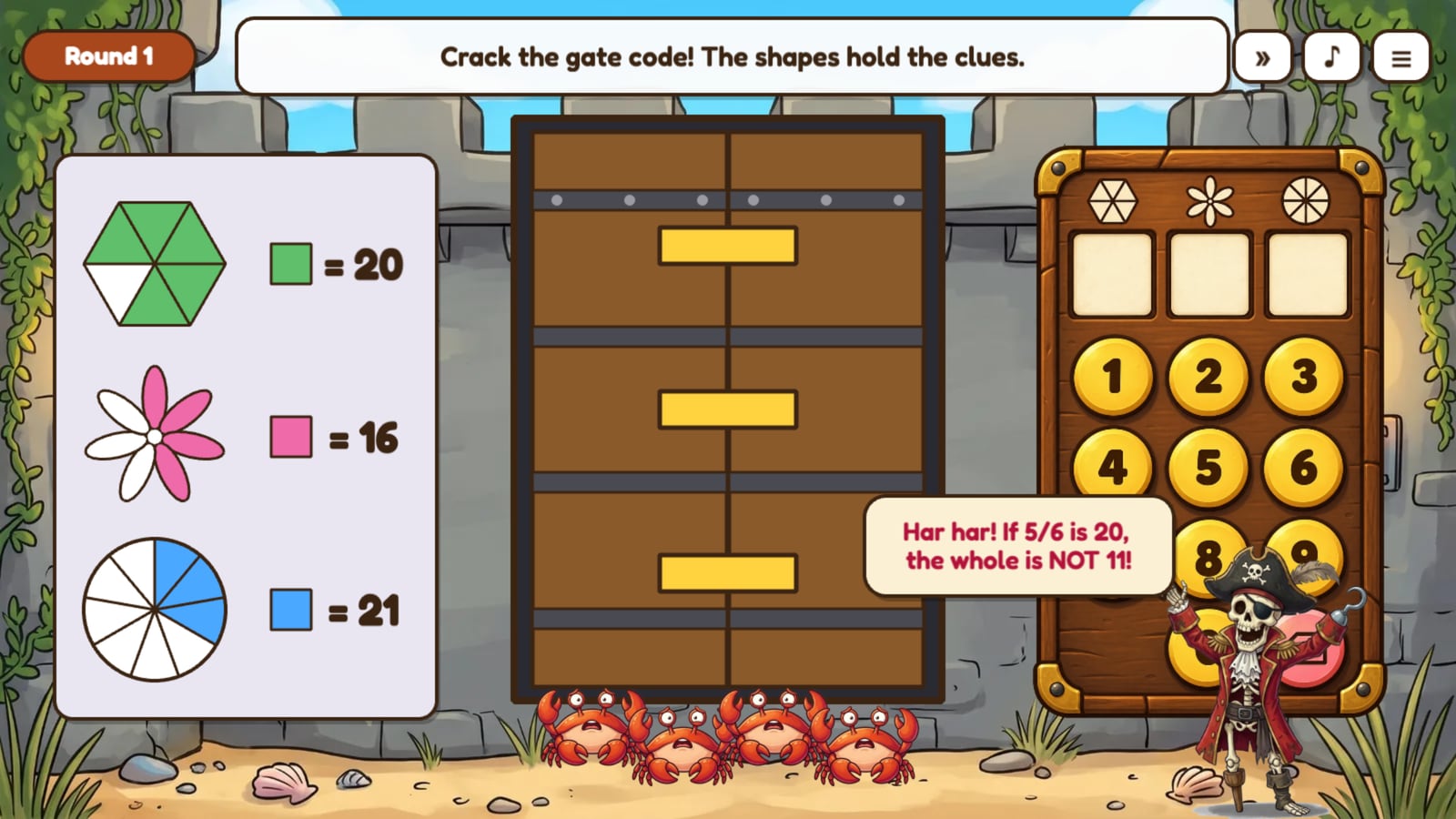
Every answer is checked straight away. When students get one wrong, Captain Crossbones pops up with a hint like "If 1/6 is 8, the whole is NOT 11!" so they know what to look at again. The instructions in each trial are short on purpose, so students do the thinking.
Tips for the classroom
- Let students choose where to start. Students who need a warm-up can start at Lantern Cave. Confident students can jump in at a harder trial like the Captain's Logbook.
- Use it in centers. Students play one escape after another, and the escape counter keeps them motivated.
- Race teams on the board. Play a whole-class escape on the interactive whiteboard, or race teams: who escapes with the fewest mistakes?
- Talk about the hints. When the Captain pops up, ask students to explain their thinking: "If 2/5 is 8, then 1/5 is 4, so the whole is 20."
- Come back for review. Because every escape is new, it works just as well months later as on the first day.
Get Skull Island: the fraction escape room
9 fraction trials, a big escape reward, and a brand new game every time your students play.