Adding and Subtracting Fractions with Unlike Denominators: A Self-Checking Lesson
Save to PinterestAdding and subtracting fractions with unlike denominators is where a lot of students get stuck. They can add 2/7 + 3/7 without a second thought, but 2/5 + 3/4 sends them straight to adding the tops and the bottoms. The fix is understanding why the pieces have to be the same size, and then having a reliable way to make them the same.
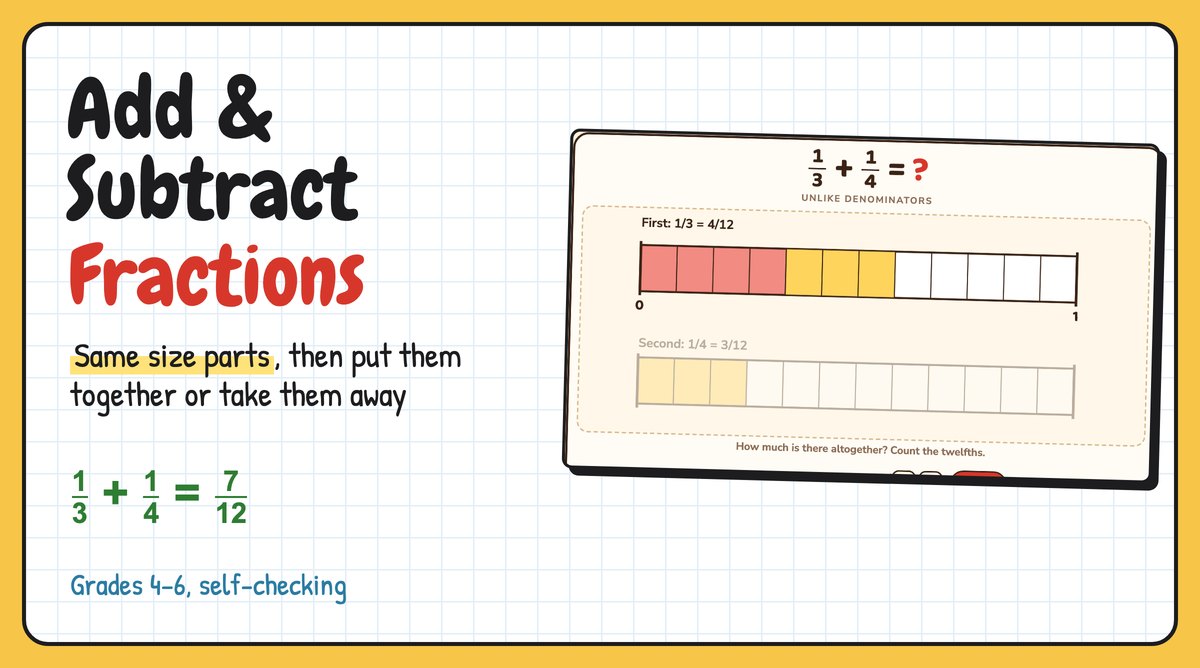
Adding & Subtracting Fractions with Unlike Denominators is a self-checking digital lesson for grades 4 to 6 that covers the whole journey in 195 slides: from pies cut into different pieces, through equivalent fractions and the least common multiple, to mixed numbers and word problems. Students type their answers right into the slides and press Check, so they know straight away whether they are on track.
Watch it in action
It runs in any web browser: computers, Chromebooks, tablets and interactive whiteboards. There's nothing to print, nothing to install and no student logins.
It starts with why
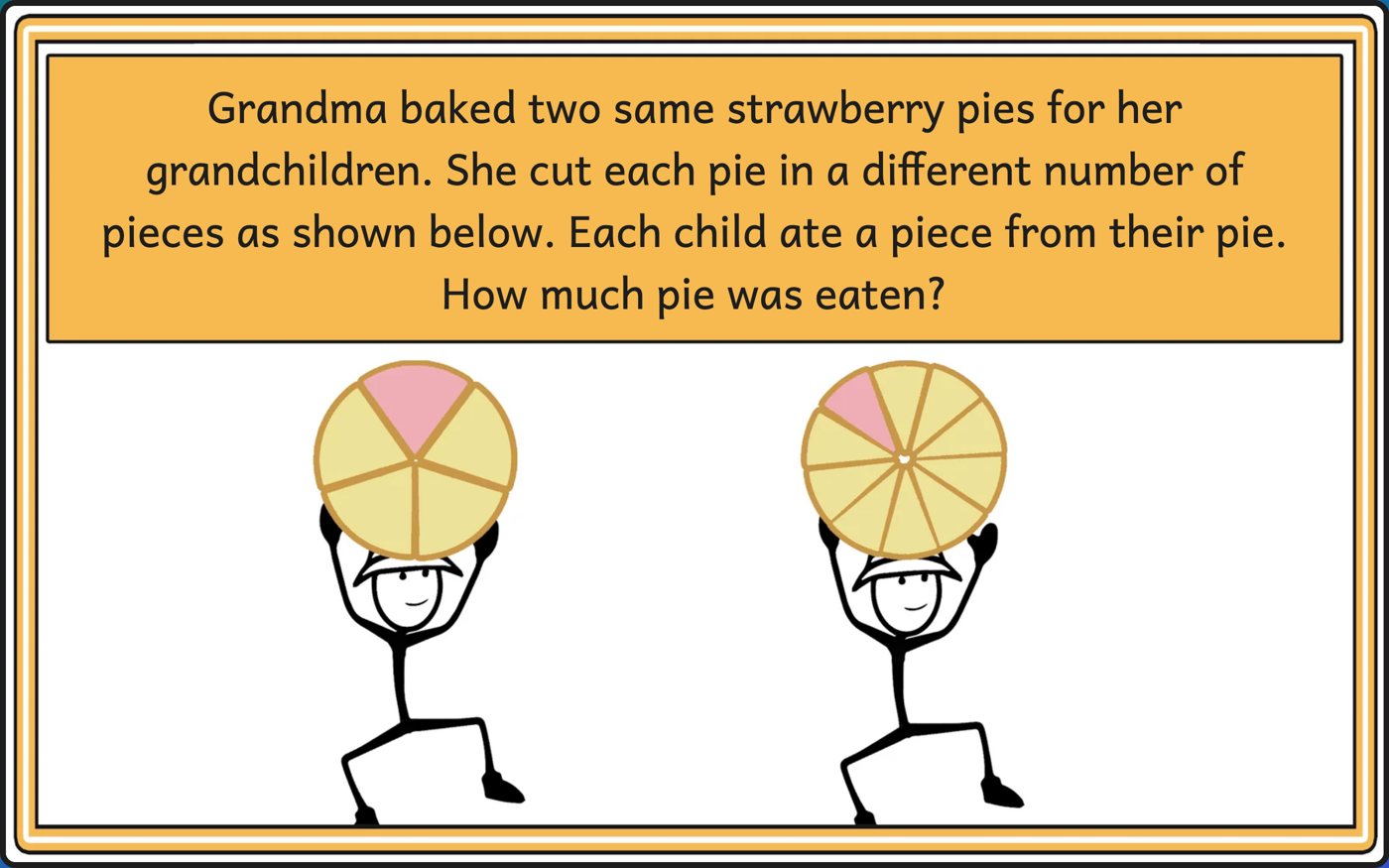
The lesson opens with a story. Grandma bakes two pies and cuts them into different numbers of pieces. Each grandchild eats one piece. How much pie was eaten? Students see that the two pieces aren't the same size, so they can't simply be added, and then they see what happens when one pie is cut again so every piece matches.
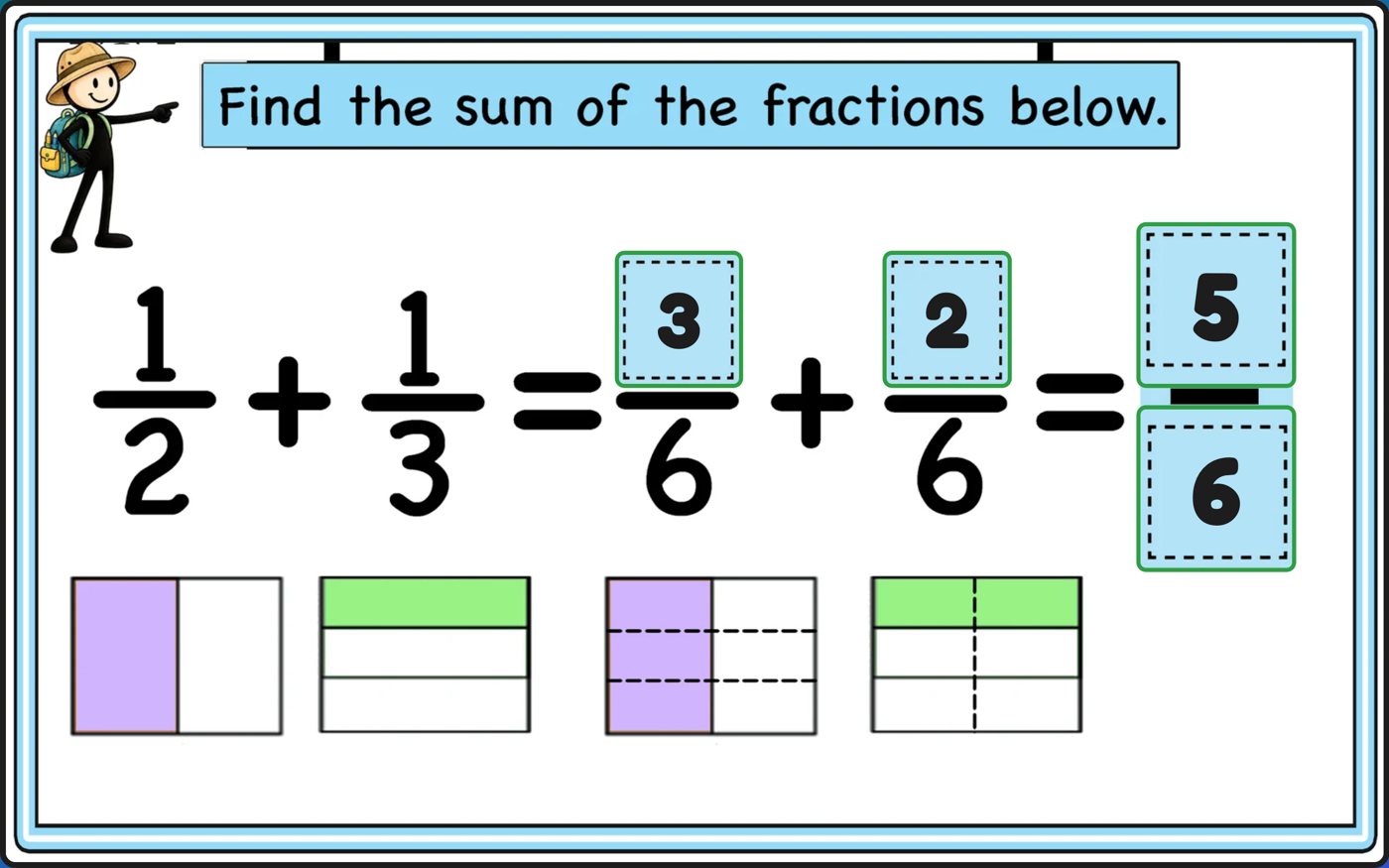
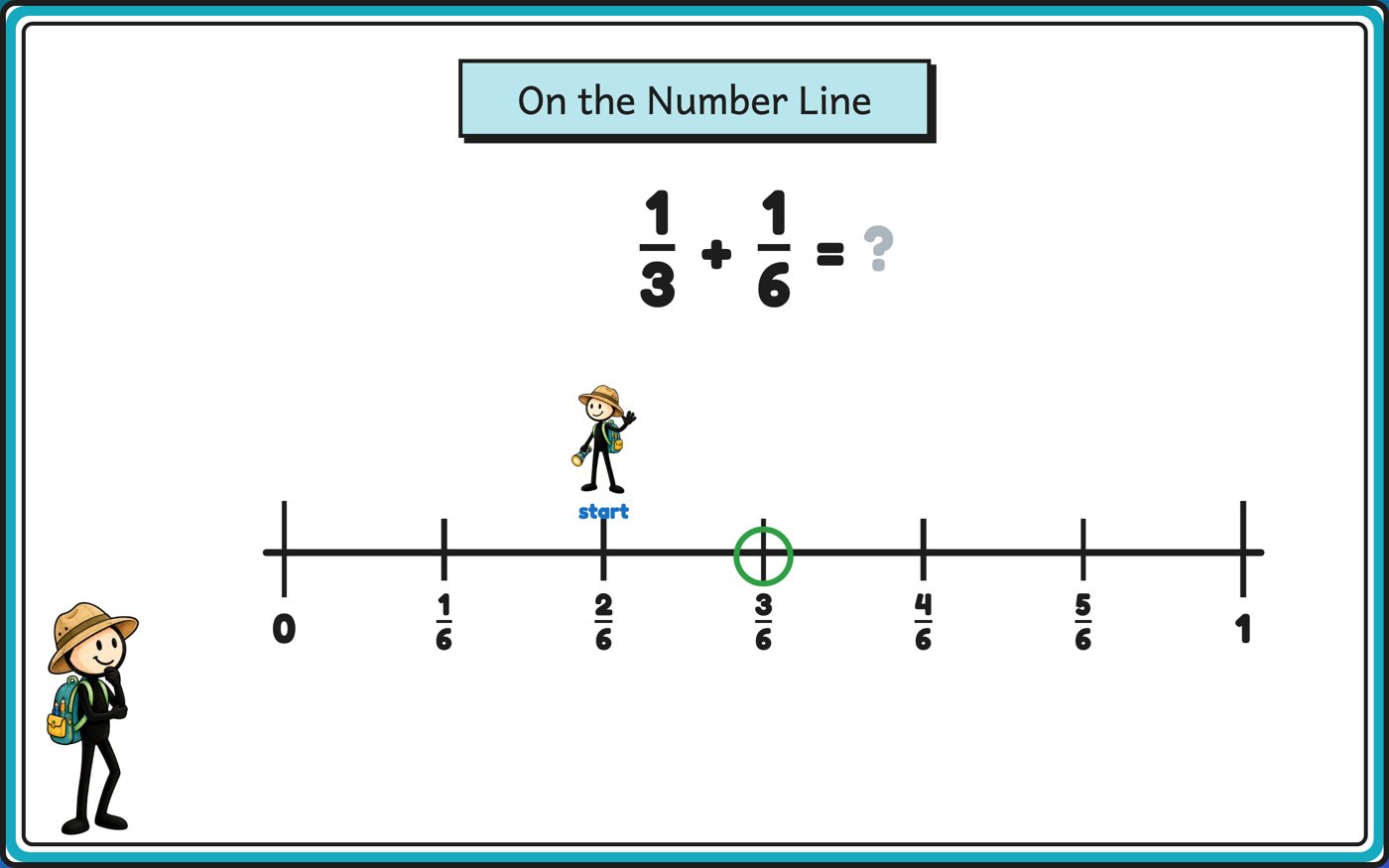
From there, Visual Help slides show fraction bars and circles being cut into smaller pieces, and a number line section shows adding as a jump: start at one fraction, jump the other, and tap where you land.
Equivalent fractions and fraction bars
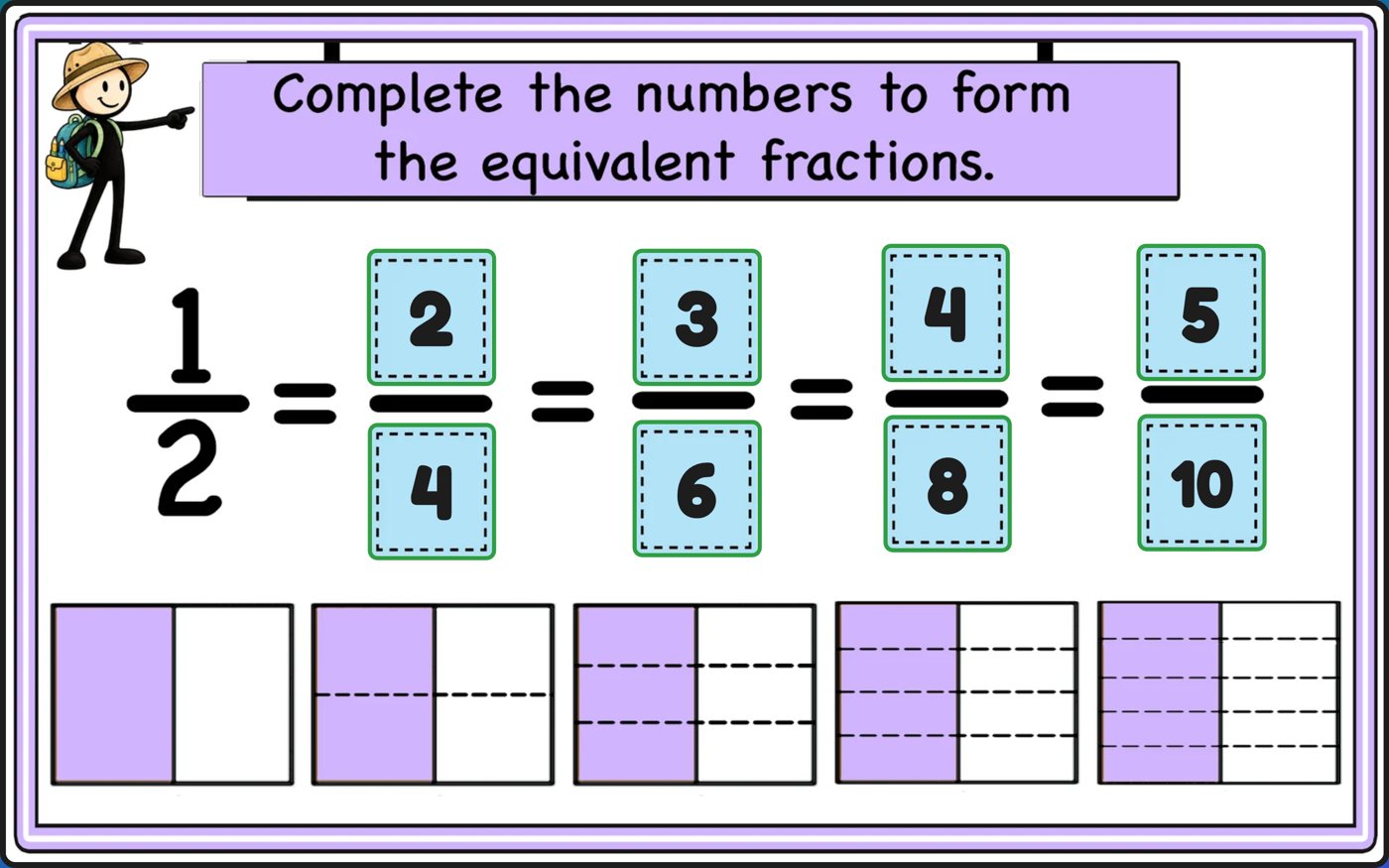
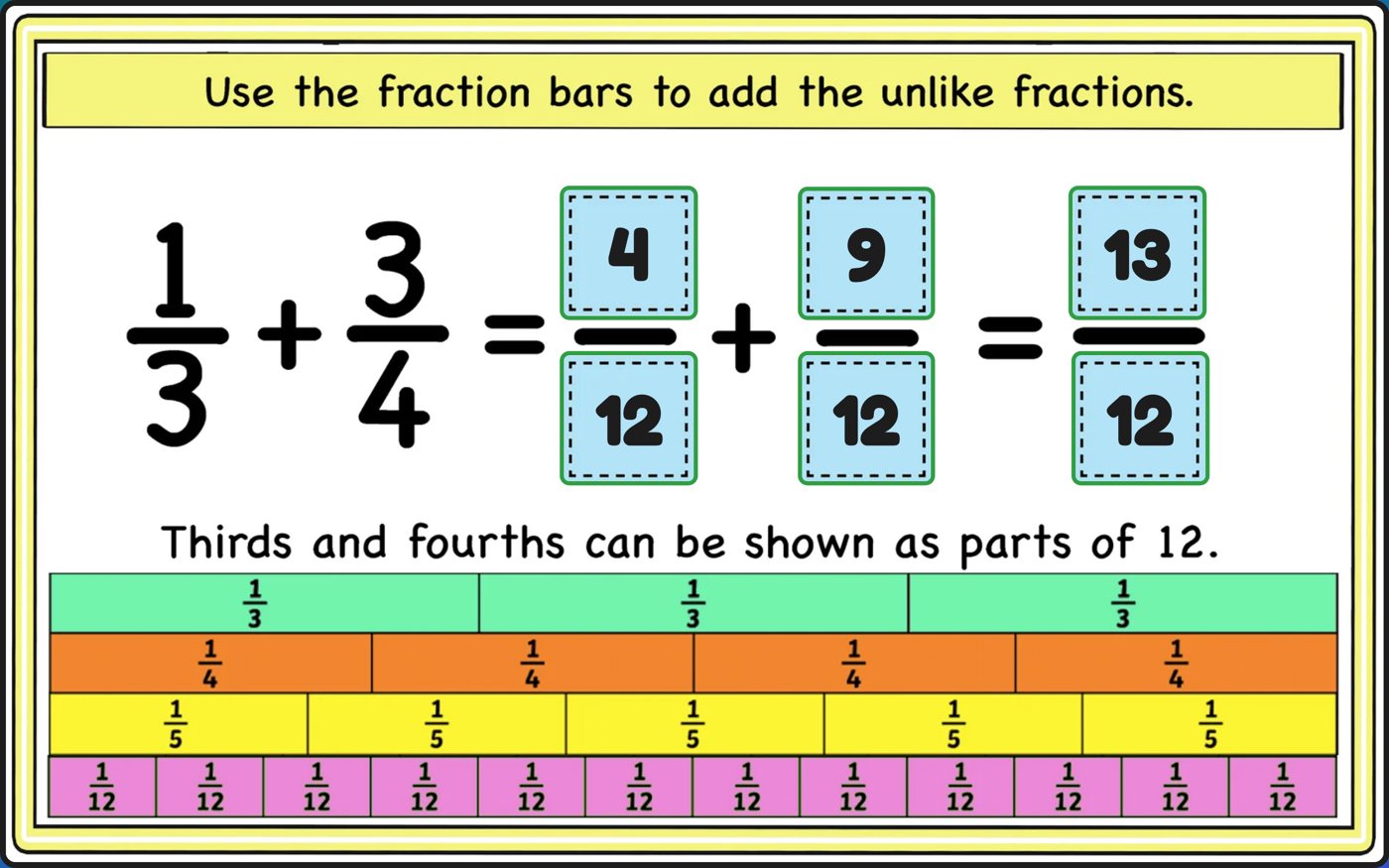
Next, students build equivalent fractions, then use a set of fraction bars to find one bar that shows both fractions. In this section any common denominator is accepted, so students can find their own way in.
The least common multiple, four ways
To make the common denominator efficient, the lesson teaches four ways to find the least common multiple: lists of multiples, the multiplication table, circling the LCM from three choices, and prime factorization.
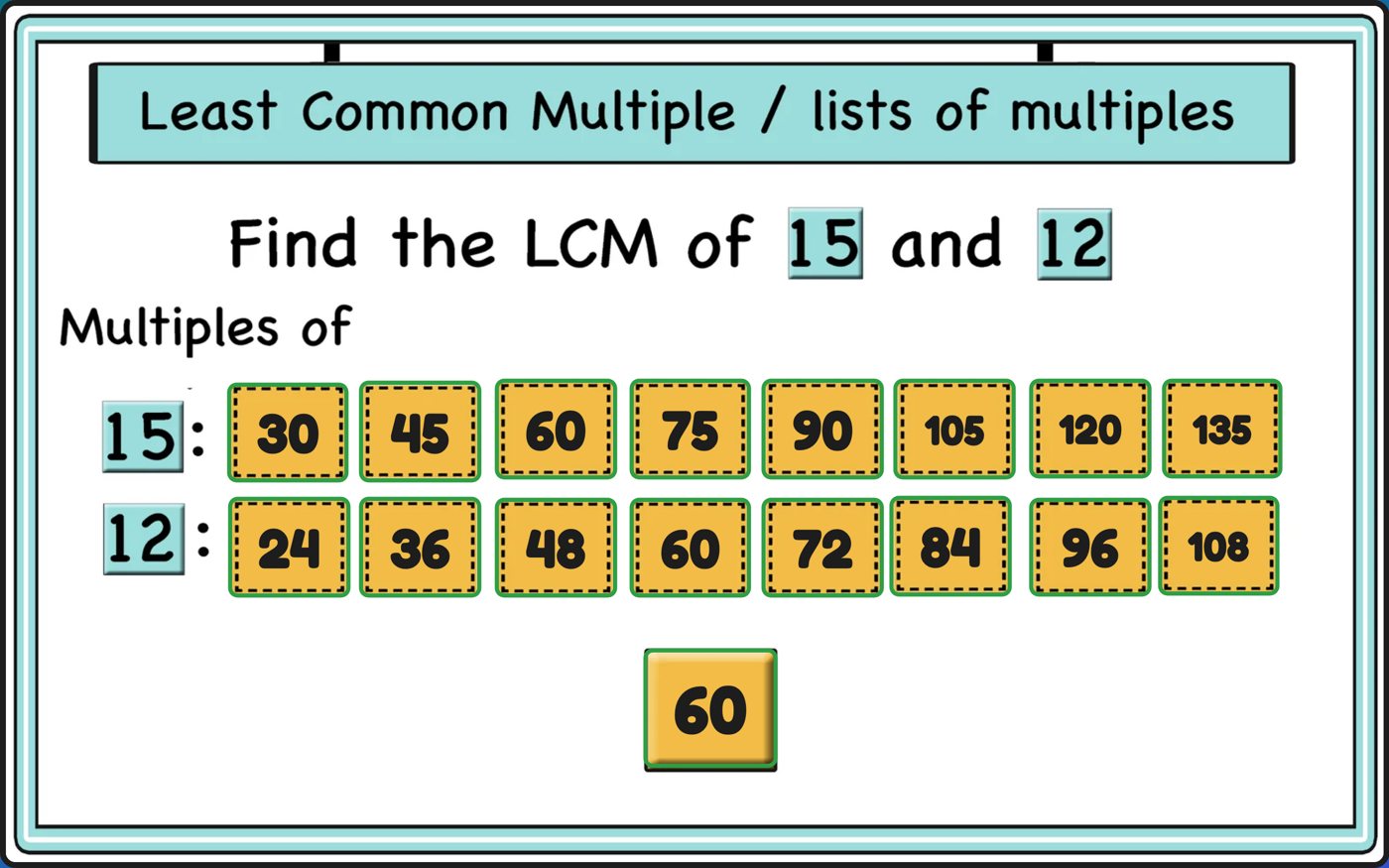
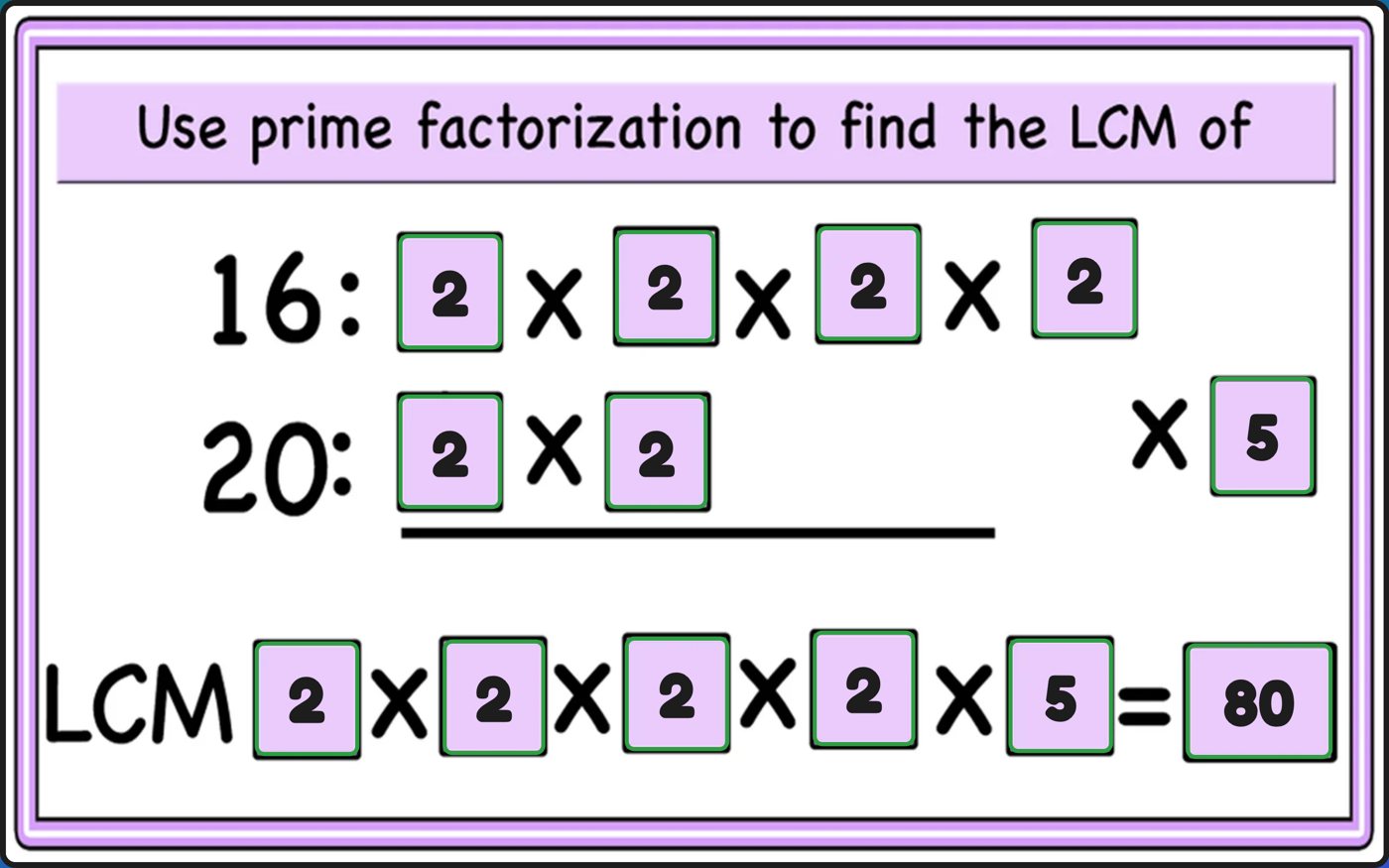
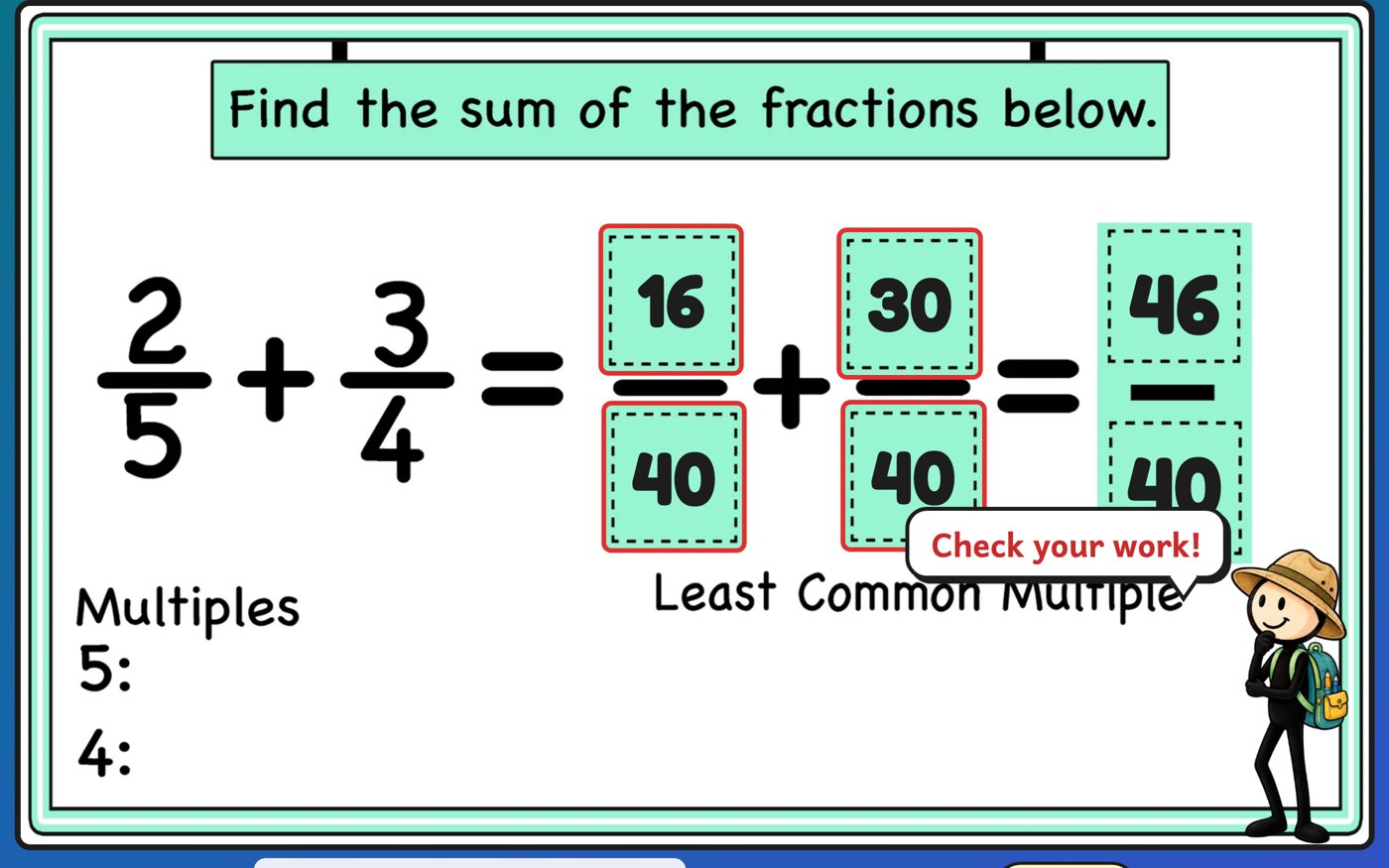
Then it's time to put it to work. In the Add & Subtract with the LCM section the common denominator has to be the least one, and the slides tell students when a denominator works but isn't the smallest.
Simplest form and estimating
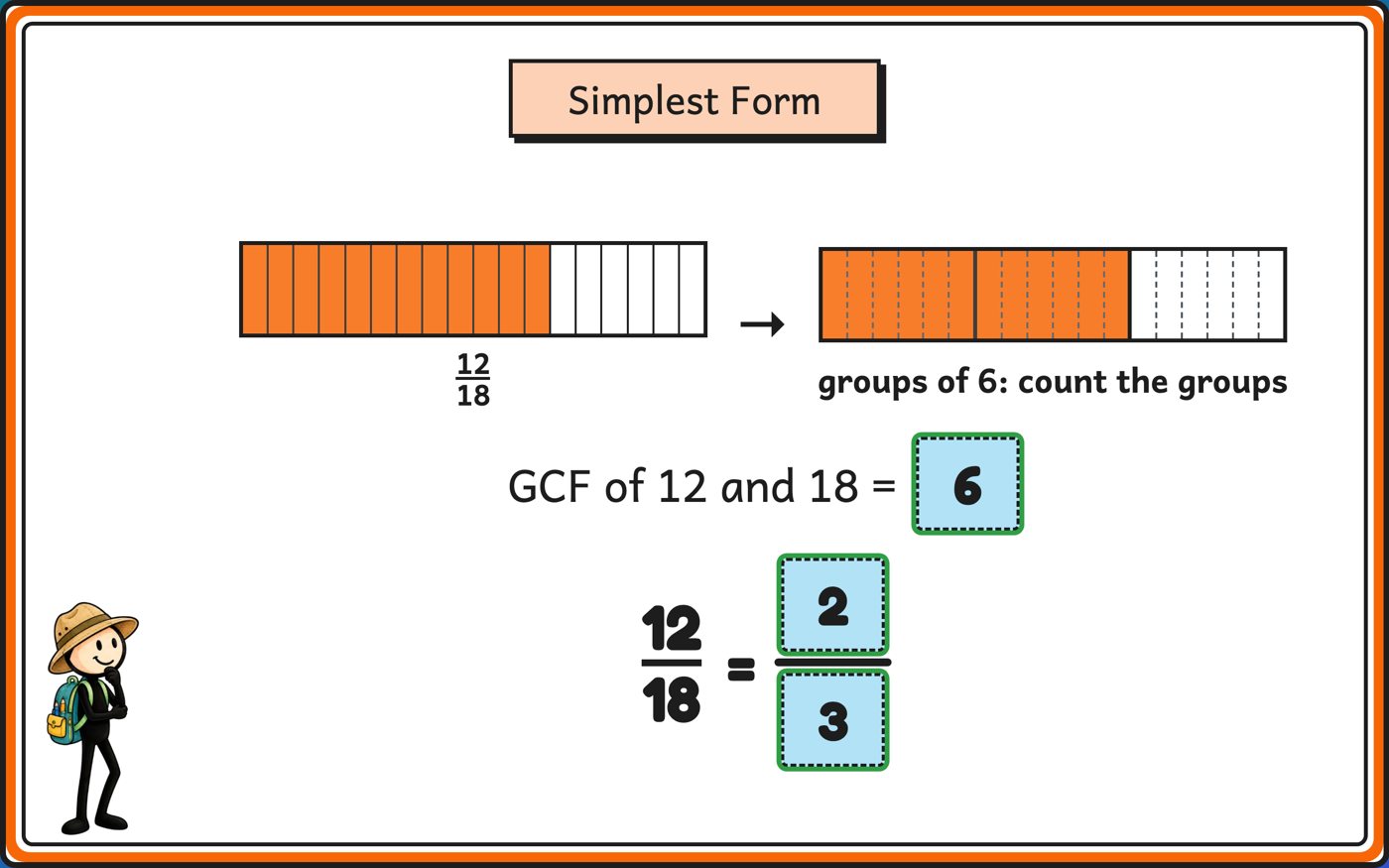
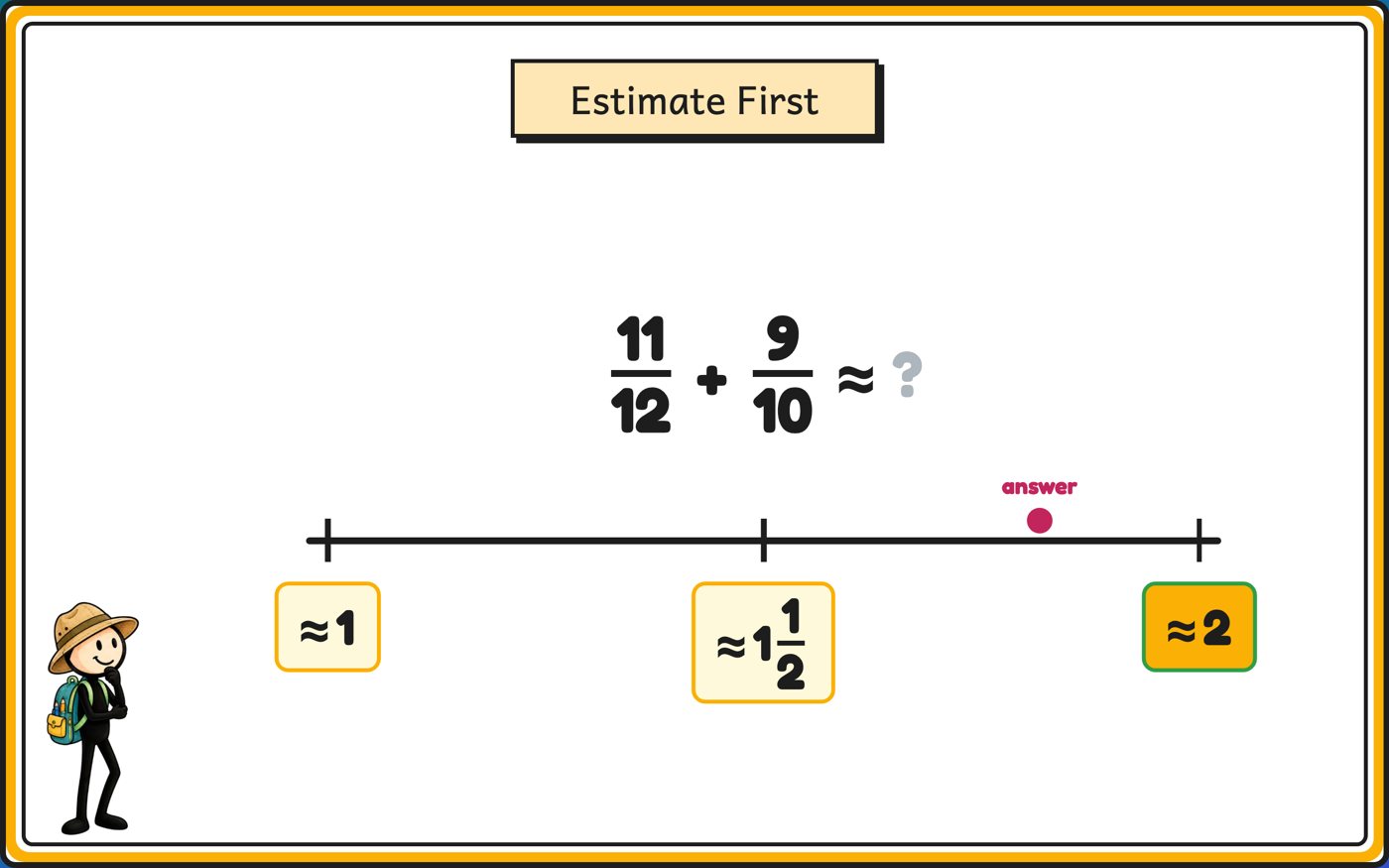
Two sections help students check their own answers. In Simplest Form, typing the greatest common factor groups the pieces of a fraction bar, so students can see 12/18 becoming 2/3. In Estimate First, they round each fraction to 0, 1/2 or 1 and pick the benchmark the answer is closest to, without solving. It's a quick way to spot an answer that can't be right.
Comparing fractions and mixed numbers
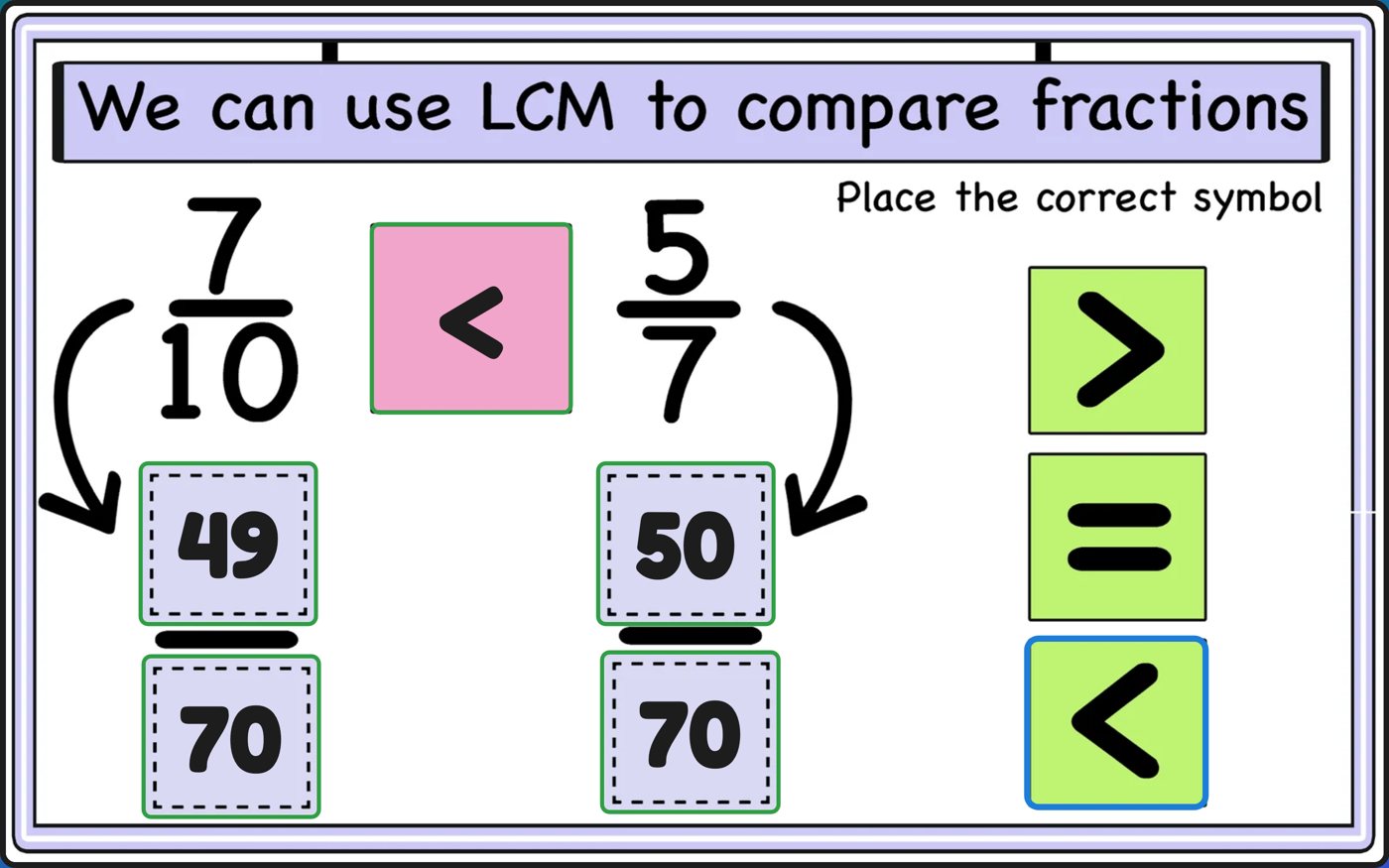
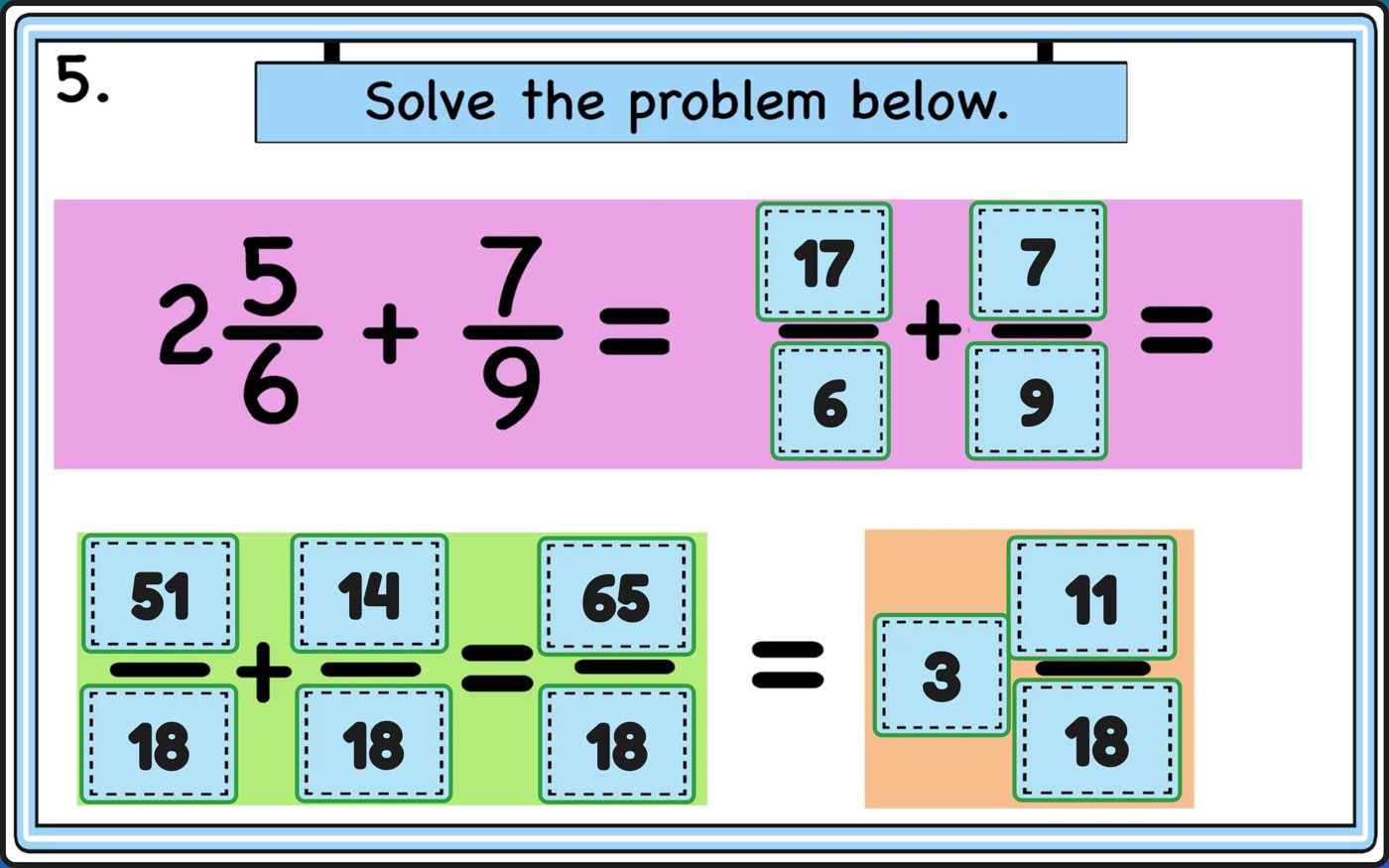
The same idea compares fractions: write both over a common denominator, then compare the numerators and tap >, = or <. Mixed numbers follow three steps: convert to fractions, find the LCM and solve, then convert back to a mixed number.
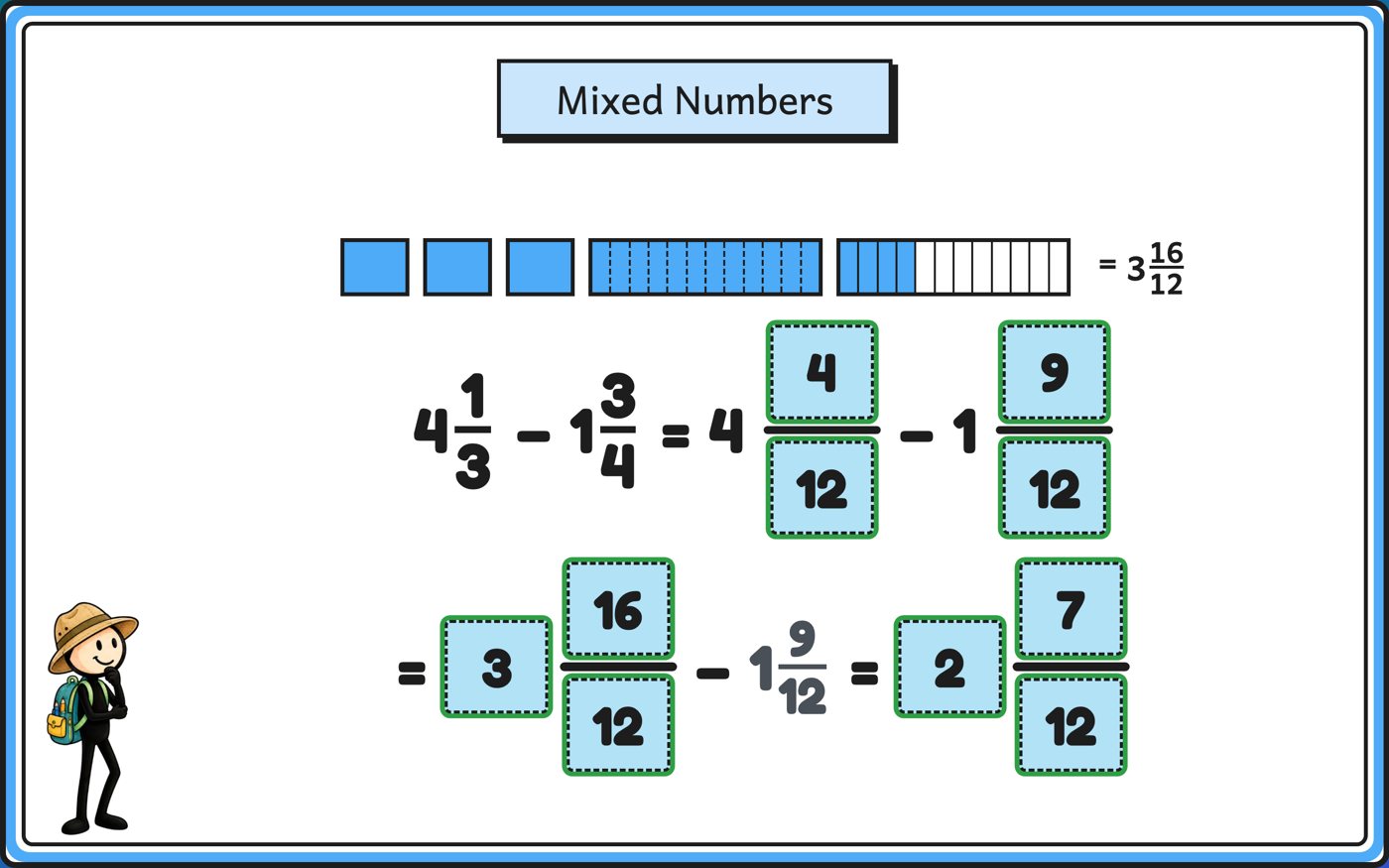
When the first fraction is too small to subtract from, students regroup a whole: a whole block turns into twelfths and moves across to the fraction.
Spot the mistake
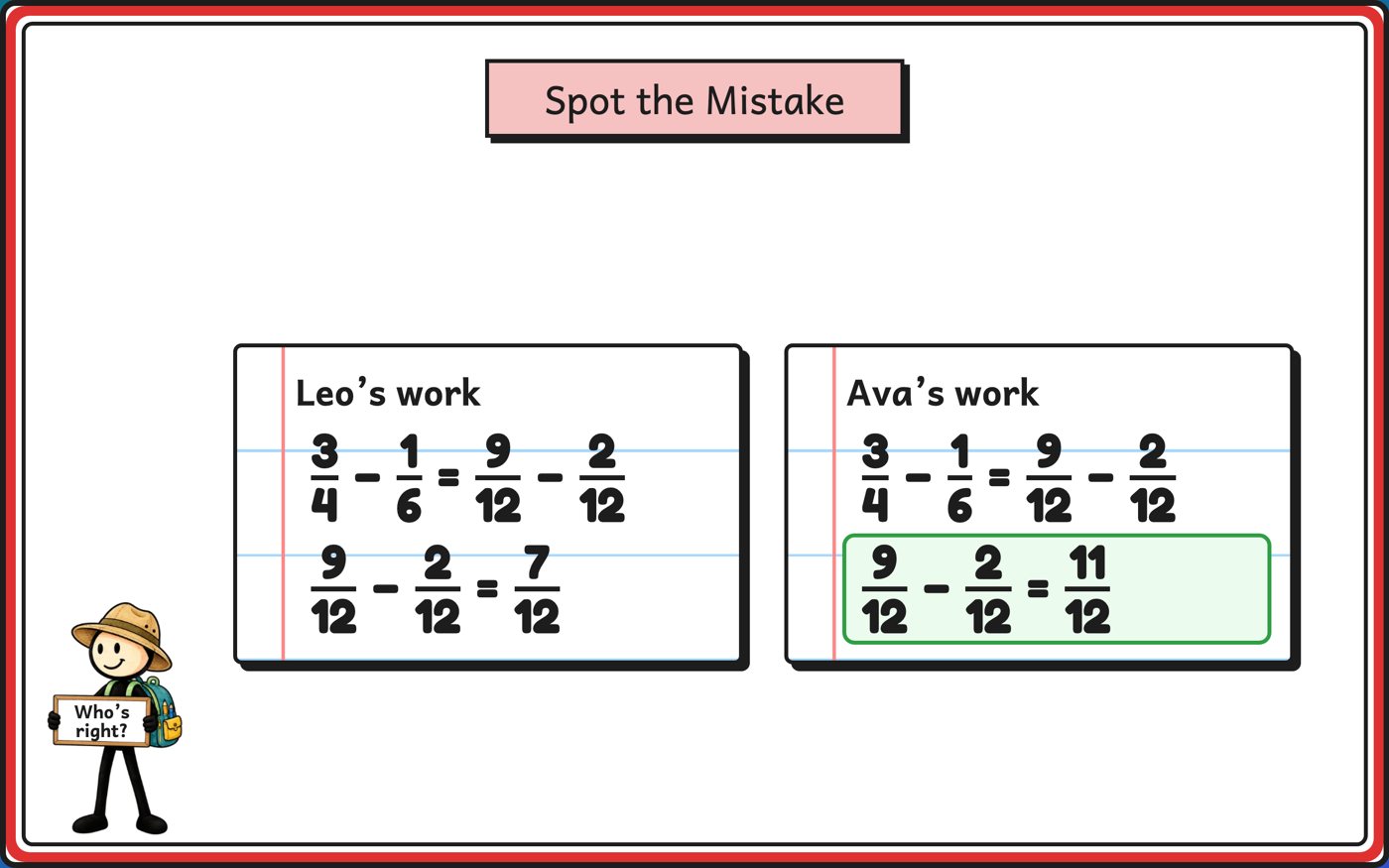
Two students solved the same problem and got different answers. Students check every step of both notebooks and tap the one where the mistake happened. It's a great one to do in pairs, with each student explaining who is right and why.
Word problems, challenges and a final quiz
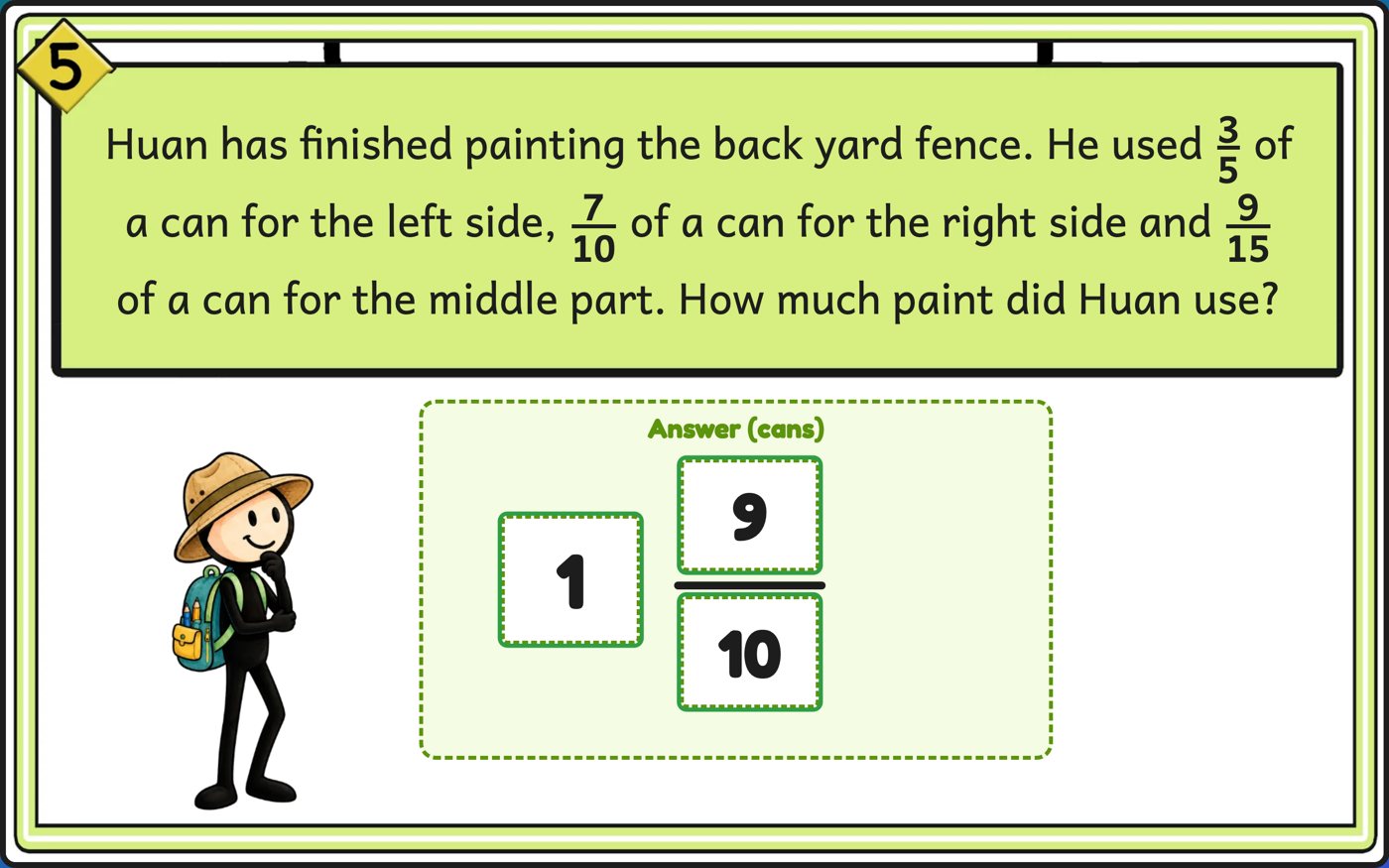
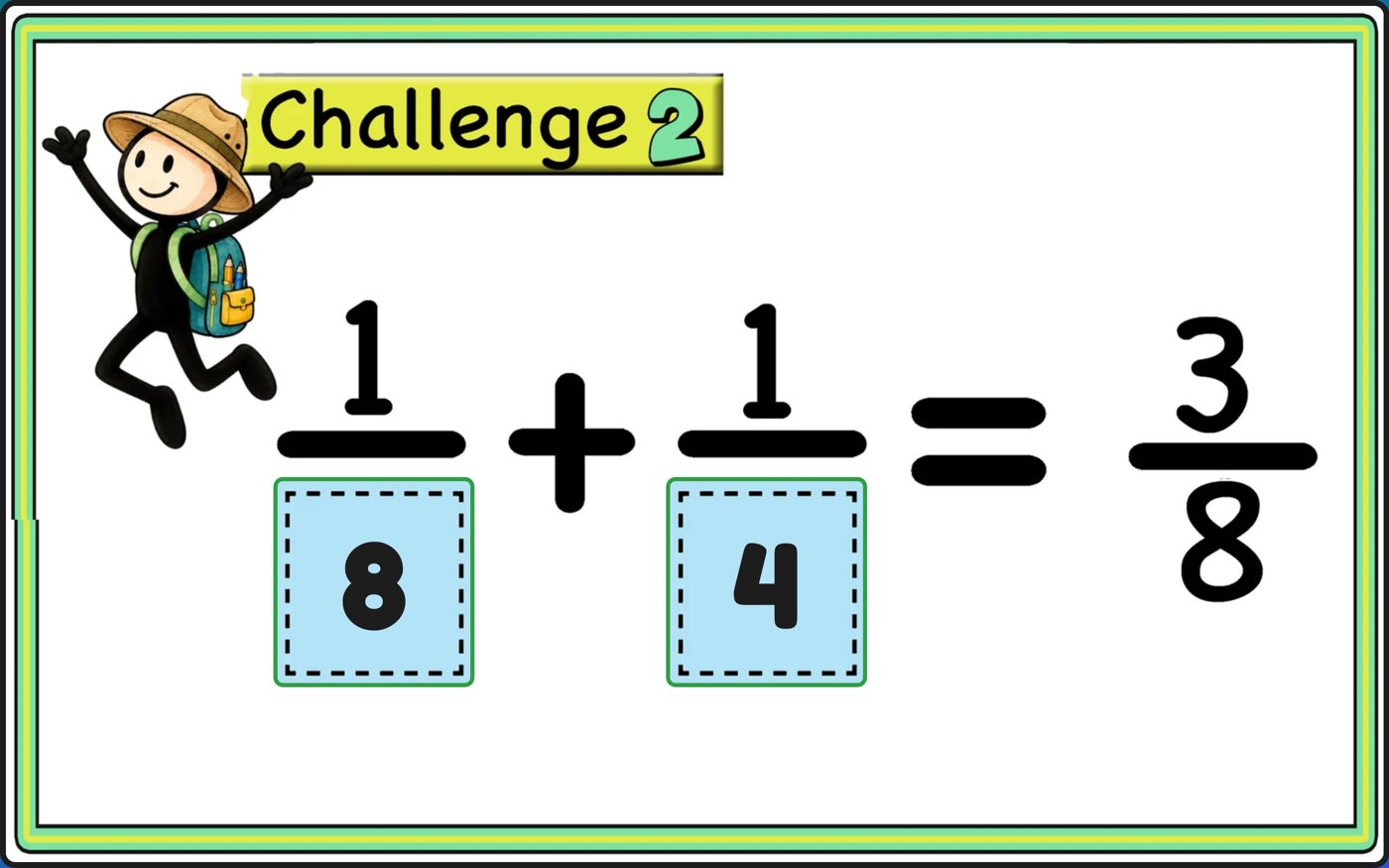
The lesson finishes with word problems, where students can give the answer as a whole number, a fraction or both, then challenge puzzles with missing unit fractions, and a 10-question final quiz. The quiz has no Show answer button, and its stars are for first-try answers only, so it works well as an exit ticket.
Self-checking, with a reason to keep going
Every answer is checked as soon as students press Check. A wrong box turns red, a thinking explorer pops up and a hint shows what to look at. A right answer brings confetti, a cheering explorer and a star, and a streak counter shows how many answers in a row were right the first time. Finishing a section brings a celebration and a button straight to the next one.
Any correct form of an answer is accepted, so 13/12, 26/24 and 1 1/12 all count, except where a slide specifically asks for the least common multiple or simplest form.
Tips for the classroom
- Teach the first sections together. Put the story slides on the board and let students argue about the pies before you show the answer.
- Talk about the least common multiple. The fraction bars accept any common denominator, but the LCM section asks for the least one. Ask students why the smaller one is easier.
- Estimate before word problems. A minute of estimating helps students notice when an answer is far too big or too small.
- Pair up for Spot the Mistake. Explaining someone else's mistake is a powerful way to avoid making it.
- Use the quiz to check in. One try for each star makes it a quick check at the end of the unit.
More fraction practice
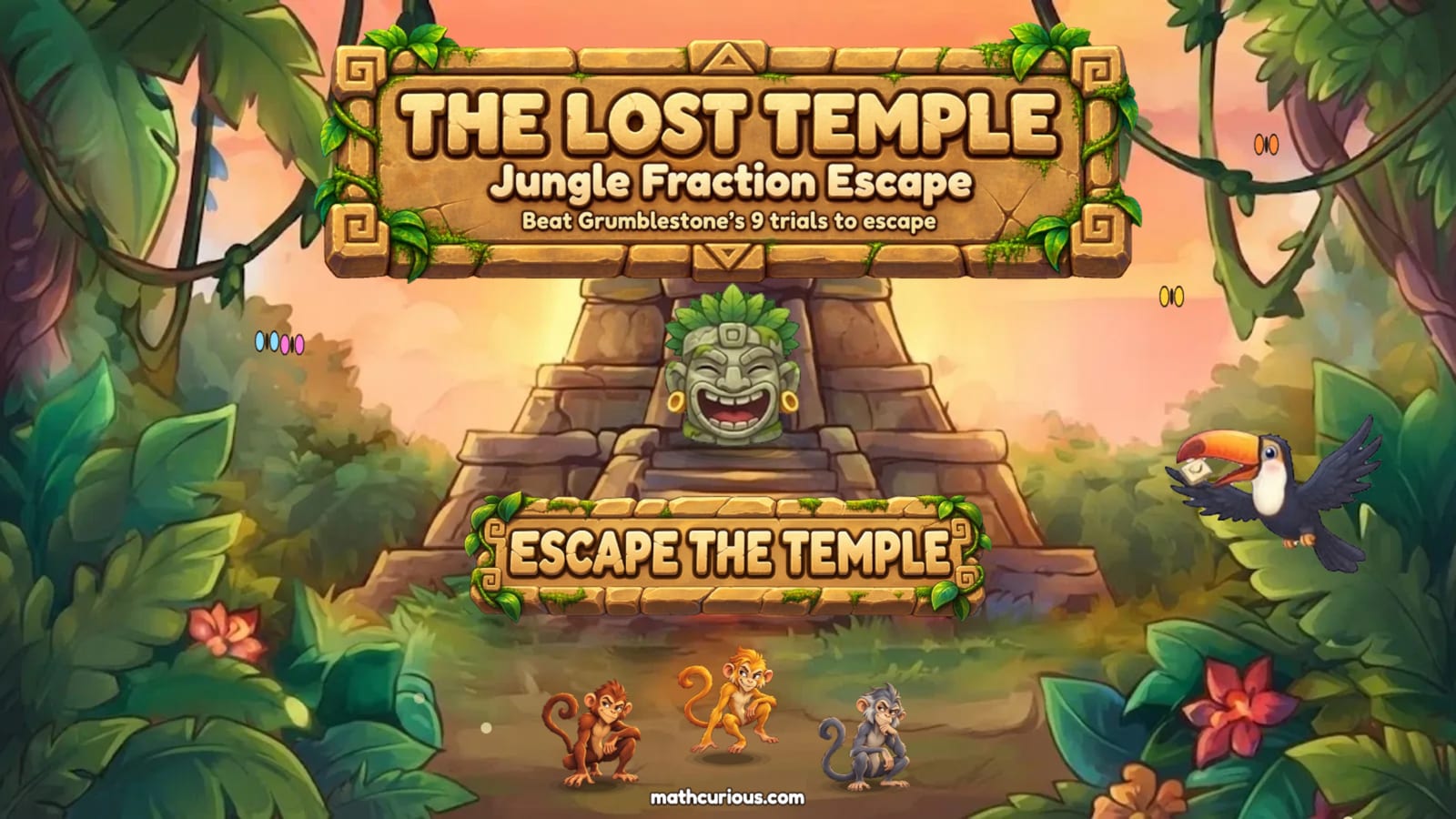
Looking for more? Add & Subtract Fractions with fraction bars lets students build the common denominator with fraction bars, and the escape rooms The Lost Temple and Skull Island turn fraction practice into an adventure with brand new puzzles every time.